
What Happened: The Core Developments
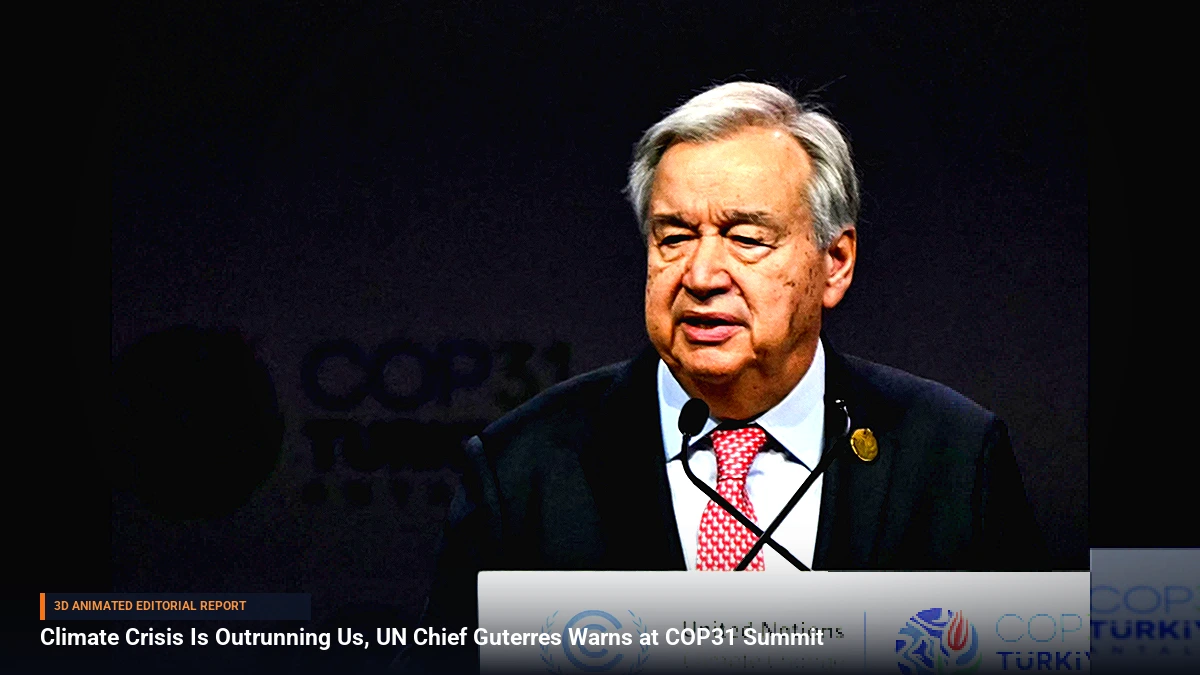
As delegates gathered for the opening sessions of the COP31 climate summit, United Nations Secretary-General Antonio Guterres did not mince words regarding the current trajectory of global environmental policy. In a fiery address that set the tone for the international gathering, Guterres declared that the “climate crisis is outrunning us,” emphasizing that current worldwide efforts to curb emissions and adapt to rising temperatures are falling dangerously short of what is required to prevent catastrophic ecological disruption.
A focal point of the UN chief’s address was a direct accusation leveled against the fossil fuel lobby. Guterres asserted that powerful corporate and industrial interests tied to oil, gas, and coal have actively worked to delay critical climate action, obstructing legislative progress and weakening multilateral commitments. This hard-hitting rhetoric underscored the immense frustration felt by international officials as mounting scientific data highlights the accelerating speed of global heating.
Background & Key Context
The opening of COP31 arrives amid a backdrop of intensifying climate anomalies, record-breaking global temperatures, and mounting economic losses tied to extreme weather events. Despite successive years of international climate negotiations and incremental pledges under the Paris Agreement, emissions trajectories continue to challenge global carbon-budget goals. Analysts and environmental advocates note that while technological advancements in clean energy and electrification are expanding, the policy implementation gap remains wide.
Furthermore, this year’s summit has drawn intense scrutiny not only for its agenda but also for its attendee list. Observers noted the notable absence of several key world leaders, raising immediate questions regarding political will and high-level commitment at a time when unified global leadership is deemed most essential. The disconnect between urgent scientific warnings and shifting geopolitical priorities threatens to undermine the cohesion of multilateral climate diplomacy.
Key Takeaways
- Alarming Pace of Change: UN Secretary-General Antonio Guterres warned that global climate change is currently outpacing international policy and mitigation responses.
- Fossil Fuel Lobby Blamed: Guterres explicitly accused the fossil fuel industry of orchestrating delays against critical climate action.
- High-Level Absences: The summit commenced under the shadow of several prominent world leaders failing to attend, stirring concerns over global political momentum.
- Call for Radical Acceleration: Leadership emphasized that incremental changes are no longer sufficient to secure a sustainable future.
- Focus on Electrification: Discussions are increasingly pivoting toward large-scale electrification and structural economic overhauls as primary pathways for decarbonization.
Impact, Analysis & Global/National Reactions
The stark warnings delivered by the UN leadership have intensified debates among policymakers, financial institutions, and civil society groups regarding accountability and transition speed. Market analysts point out that while clean energy investments are scaling up globally, resistance from entrenched energy incumbents continues to create friction in regulatory arenas.
Environmental watchdogs have echoed Guterres’s sentiments, arguing that transparency and accountability mechanisms must be strictly enforced to prevent greenwashing and intentional legislative stalling by carbon-intensive sectors. Conversely, representatives from industrial sectors maintain that rapid transitions must be carefully balanced against energy security and economic stability to avoid severe market shocks.
What's Next: Looking Ahead
As COP31 progresses through its scheduled negotiations and committee sessions, all eyes will be on whether participating nations can translate severe warnings into binding, enforceable commitments. Observers will be closely tracking upcoming policy announcements related to national climate targets, climate finance mechanisms for developing nations, and potential frameworks to restrict fossil fuel expansion. The ultimate success of COP31 will be judged by its ability to bridge the gap between rhetoric and actionable, long-term implementation.





Be the first to comment
Start a useful conversation around this story.