
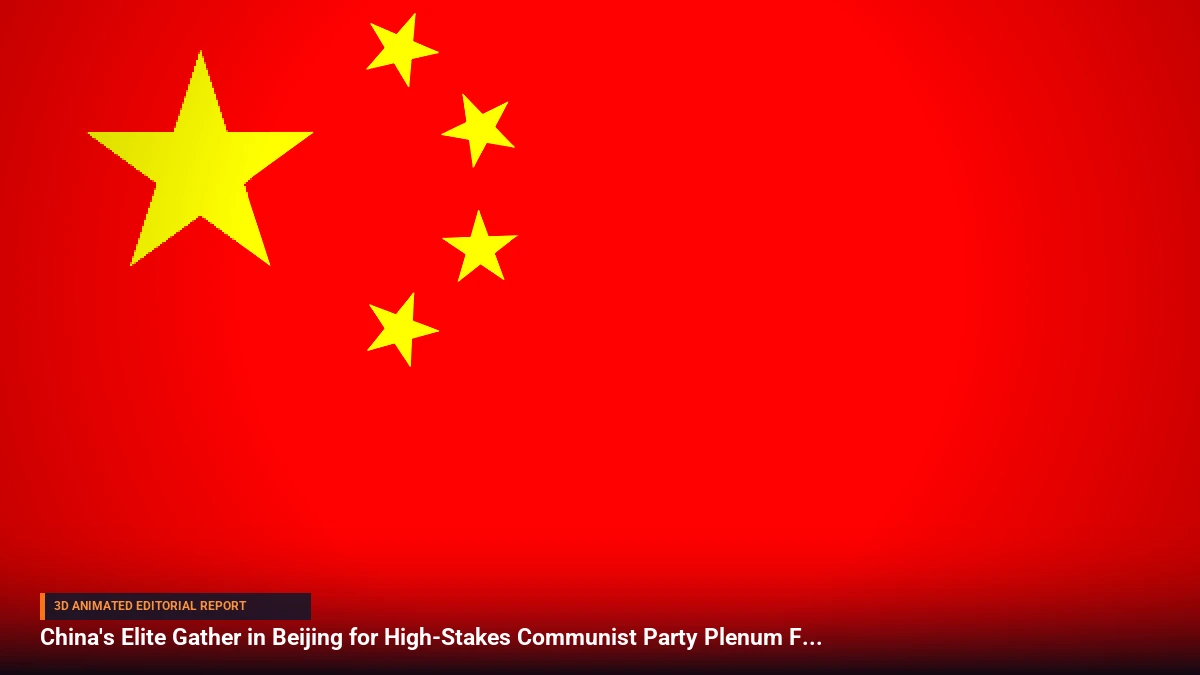
What Happened: The Core Developments
China's top political echelon has gathered behind closed doors in Beijing for a consequential four-day Communist Party plenum. Kicking off on Monday, the high-level gathering has drawn intense international and domestic scrutiny as observers look for definitive signals regarding the world's second-largest economy's political trajectory and leadership signals.
The central focus of the deliberations centers heavily on internal party discipline, governance frameworks, and the continued intensification of President Xi Jinping's signature anti-corruption drive. While specific policy communiqués and institutional decisions remain tightly managed under Beijing's opaque political procedures, preliminary reports indicate that delegates are reviewing exhaustive measures aimed at enforcing stricter ideological alignment and institutional accountability across all levels of the party apparatus.
Background & Key Context
Plenums—formal plenary sessions of the Central Committee—serve as vital milestones in Chinese domestic politics, historically utilized to chart broad economic strategies, structural adjustments, and ideological directives. This particular meeting arrives at a critical juncture for the ruling administration, which has consistently prioritized state control and party orthodoxy as foundational pillars of national governance.
Over the past decade, President Xi’s sweeping anti-corruption crackdown has targeted millions of officials, reshaping the political landscape by rooting out both low-level bureaucrats and high-ranking political rivals. By anchoring governance reforms directly to party discipline, the current leadership aims to consolidate institutional resilience against systemic risks and bureaucratic complacency, framing internal purity as an indispensable prerequisite for national rejuvenation.
Key Takeaways
- High-Level Convening: China's political elite commenced a secretive four-day Communist Party plenum in Beijing on Monday.
- Core Agenda: Discussions are heavily concentrated on internal party discipline, rigorous governance measures, and administrative oversight.
- Anti-Corruption Focus: President Xi Jinping's ongoing and extensive anti-corruption campaign remains a central theme of the closed-door evaluations.
- Global Observation: International markets and political analysts are closely monitoring the proceedings for indications of broader economic and structural direction.
Impact, Analysis & Global/National Reactions
Political analysts note that the heavy emphasis on discipline underscores the administration's persistent drive to eliminate internal dissent and align bureaucratic performance with overarching central directives. By tightening party discipline, the leadership seeks to ensure swift execution of economic and national security policies without internal friction.
"The reinforcement of ideological and operational control within the party apparatus remains the absolute cornerstone of Xi Jinping's governance model," remarked a Beijing-based political analyst tracking the plenum. "Institutional loyalty and anti-corruption compliance are not merely regulatory tasks; they are viewed by the leadership as existential guarantees for the party's enduring monopoly on power."
Market participants and international observers are equally attentive, weighing how heightened administrative oversight might influence regulatory enforcement, corporate compliance, and broader economic policymaking in the months ahead.
What's Next: Looking Ahead
As the four-day plenum concludes, attention will immediately pivot to the official state communiqués and policy readouts expected to be released by state media. These documents will be meticulously parsed by economists and diplomats for concrete evidence of structural adjustments, personnel shifts, or new administrative decrees that will dictate China's domestic and economic agenda moving forward.


Be the first to comment
Start a useful conversation around this story.