
What Happened: The Core Developments
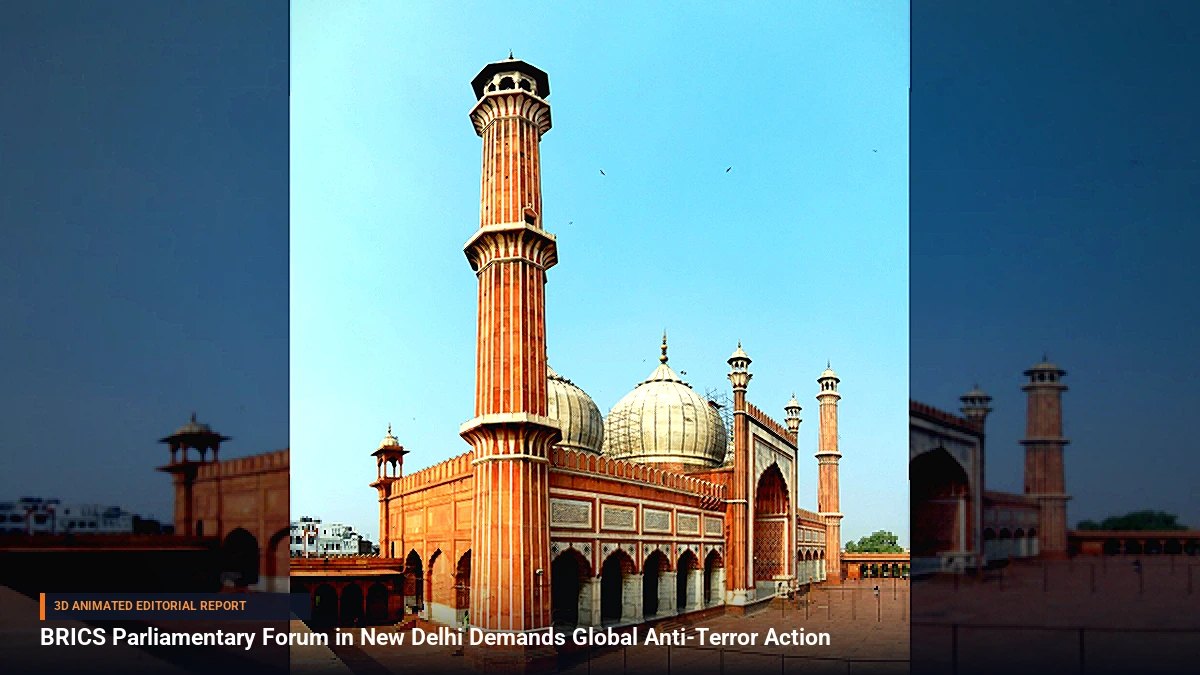
The 12th BRICS Parliamentary Forum concluded in New Delhi, India, bringing together prominent lawmakers and delegates from member countries to address pressing international issues. The high-profile gathering culminated in the adoption of a comprehensive joint declaration that takes a firm stance against global terrorism, notably condemning the recent Pahalgam attack.
During the multi-day summit, parliamentary leaders engaged in extensive deliberations centered on regional security, economic cooperation, and multilateral governance. Indian Prime Minister Narendra Modi personally interacted with visiting MPs, while Vice President Jagdeep Dhankhar hosted a special luncheon for the delegates, emphasizing the critical need for unified parliamentary action to navigate complex geopolitical landscapes.
Background & Key Context
The BRICS alliance—expanding its footprint and diplomatic gravity—has increasingly utilized parliamentary dialogues to foster legislative cooperation beyond traditional executive-led summits. Lok Sabha Speaker Om Birla opened discussions by highlighting that modern regional conflicts and cross-border terrorism do not respect national boundaries, making collaborative legislative frameworks indispensable.
Parallel to security talks, bilateral engagements flourished on the sidelines. Notably, Russian State Duma Chairman reported a 20 percent year-on-year growth in bilateral trade between India and Russia, reflecting resilient economic corridors amid shifting global supply chains. Iranian parliamentary representatives also engaged in high-level courtesy calls with Prime Minister Modi and External Affairs Minister S. Jaishankar.
Key Takeaways
- Counter-Terrorism Consensus: The forum adopted a unified declaration explicitly condemning terror operations, with specific reference to the Pahalgam attack.
- Institutional Reform Mandate: Member states pushed strongly for structural overhauls, advocating for long-overdue United Nations Security Council (UNSC) reforms to better reflect contemporary global realities.
- Bilateral Economic Expansion: Strong trade metrics were highlighted, including a 20 percent growth in India-Russia trade transactions over the past year.
- High-Level Diplomatic Engagements: Prime Minister Modi, Vice President Dhankhar, and External Affairs Minister S. Jaishankar held substantive interactions with international delegates, including Iranian parliamentary representatives.
- Legislative Diplomacy: Lawmakers underscored the potential of parliaments to act as diplomatic bridges, helping ease international tensions and foster people-centric development.
Impact, Analysis & Global/National Reactions
The outcomes of the New Delhi forum signal a concerted effort by the Global South to assert greater influence in multilateral institutions. By focusing sharply on cross-border terrorism and UNSC restructuring, BRICS parliamentary leaders are laying the groundwork for a more multipolar governance model.
"Parliaments could be bridges of understanding and ease international tensions," noted Lok Sabha Speaker Om Birla during his address, capturing the core ethos of the summit. Analysts point out that leveraging legislative networks helps insulate cooperative frameworks from executive-level diplomatic frictions, providing a resilient channel for sustained international dialogue.
What's Next: Looking Ahead
As the momentum from the New Delhi forum carries forward, member states are expected to translate parliamentary resolutions into actionable policy positions ahead of upcoming multilateral leader summits. Observers will be closely monitoring whether these legislative joint declarations can successfully drive tangible reforms at the United Nations and strengthen regional security pacts across Eurasia and the Global South.

Be the first to comment
Start a useful conversation around this story.