
What Happened: The Core Developments
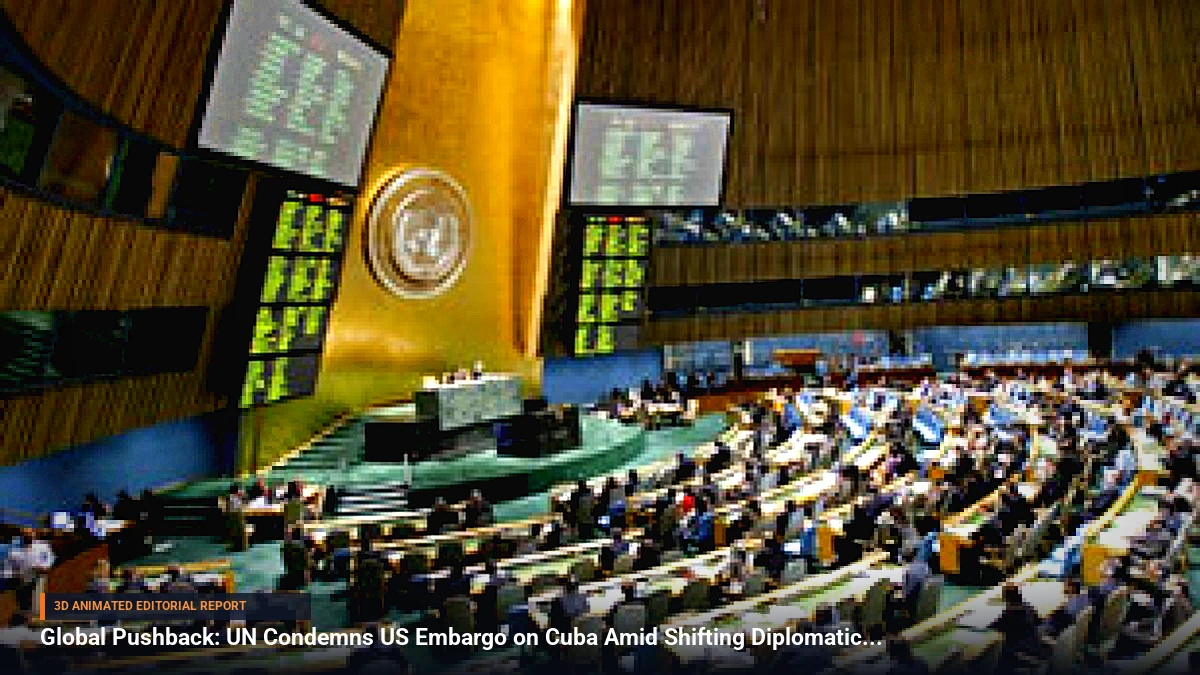
The international community has once again made its stance clear on the decades-long economic restrictions placed upon Havana. During a pivotal session, the UN General Assembly voted to condemn the United States embargo against Cuba, sustaining a decades-old tradition of near-unanimous global rejection of the policy. Nations from across continents, including major democracies like India, lined up to cast affirmative votes calling for an immediate end to the restrictions.
However, the aftermath of the vote revealed a nuanced narrative. While the overwhelming majority of member states voted against the embargo, Washington drew attention to a distinct metric: an incremental increase in the number of abstentions during the General Assembly roll call. American officials framed this minor shift as evidence that its sustained diplomatic lobbying push and efforts to isolate Cuba are slowly gaining traction.
Background & Key Context
The United States trade embargo against Cuba dates back to the Cold War era, initially imposed in the early 1960s following the nationalization of American-owned properties by Fidel Castro's government. Over the decades, the restrictions have evolved through various legislative acts, creating profound economic challenges for the island nation. For more than thirty years, Havana has brought an annual resolution before the United Nations General Assembly calling for the blockade's termination.
Year after year, the resolution passes by massive margins, rendering it one of the most consistent displays of international consensus against a unilateral US policy. Despite the UN's non-binding nature, the annual vote serves as a crucial barometer of global sentiment, illustrating the persistent diplomatic friction between Washington and the broader international community regarding Latin American policy.
Key Takeaways
- Overwhelming Opposition: The UN General Assembly once again voted decisively to condemn the US embargo against Cuba.
- Strategic Alignment: India was among the prominent nations that officially voted in favour of the resolution, echoing calls to dismantle the economic restrictions.
- Washington's Counter-Narrative: The United States pointed to a noticeable rise in abstentions as an indicator of a successful diplomatic lobbying push.
- Continued Isolation Debate: While the global south and numerous allies reject the embargo, Washington maintains that its containment strategies continue to bear fruit on the margins.
Impact, Analysis & Global/National Reactions
The annual UN vote is far more than a symbolic ritual; it serves as a high-stakes arena for geopolitical signaling. Major powers utilized the platform to reiterate their long-standing positions. China, for instance, once again urged the United States to immediately lift the blockade and associated sanctions, citing the severe humanitarian and economic toll on ordinary Cuban citizens.
Conversely, Washington's focus on abstention metrics reflects a calculated effort to manage the optics of its diplomatic isolation at the UN. By emphasizing that more countries are either stepping back or withholding their support for the total condemnation, American diplomats argue that the international consensus is fracturing, even if the core resolution continues to pass comfortably.
What's Next: Looking Ahead
As the diplomatic fallout from the latest UNGA session settles, attention turns to bilateral relations and upcoming policy reviews in Washington and Havana. While a sudden legislative reversal of the embargo remains unlikely in the near-term domestic political climate of the United States, the shifting patterns in UN voting behavior and abstentions will likely influence future foreign policy calculations.
Observers will monitor whether the subtle increase in abstentions translates into broader diplomatic shifts or if it remains a temporary anomaly in an otherwise deeply entrenched global stalemate.






Be the first to comment
Start a useful conversation around this story.