
What Happened: The Core Developments
Tensions across the Persian Gulf reached a dangerous new inflection point following a targeted United States military strike on an Islamic Revolutionary Guard Corps (IRGC) missile launch site located on Qeshm Island. The kinetic action, designed to degrade Iranian offensive capabilities, immediately upended a relatively quiet two-month period of regional de-escalation.
In the wake of the strike on Qeshm, neighboring Gulf nations quickly found themselves under direct threat. Kuwaiti military authorities reported successfully intercepting and repelling hostile drone attacks, marking the first major hostile action directed at the country in eight weeks. Simultaneously, Bahrain reported intercepting incoming Iranian air attacks. The IRGC openly claimed responsibility for the barrage, asserting that its operations successfully targeted a critical US military radar system situated in Bahrain.
Background & Key Context
The sudden flare-up shatters what international observers had hoped was a durable, if tentative, cooling-off period in the region. For the past two months, diplomatic backchannels and cautious military positioning had kept direct, kinetic exchanges between Washington and Tehran largely subdued.
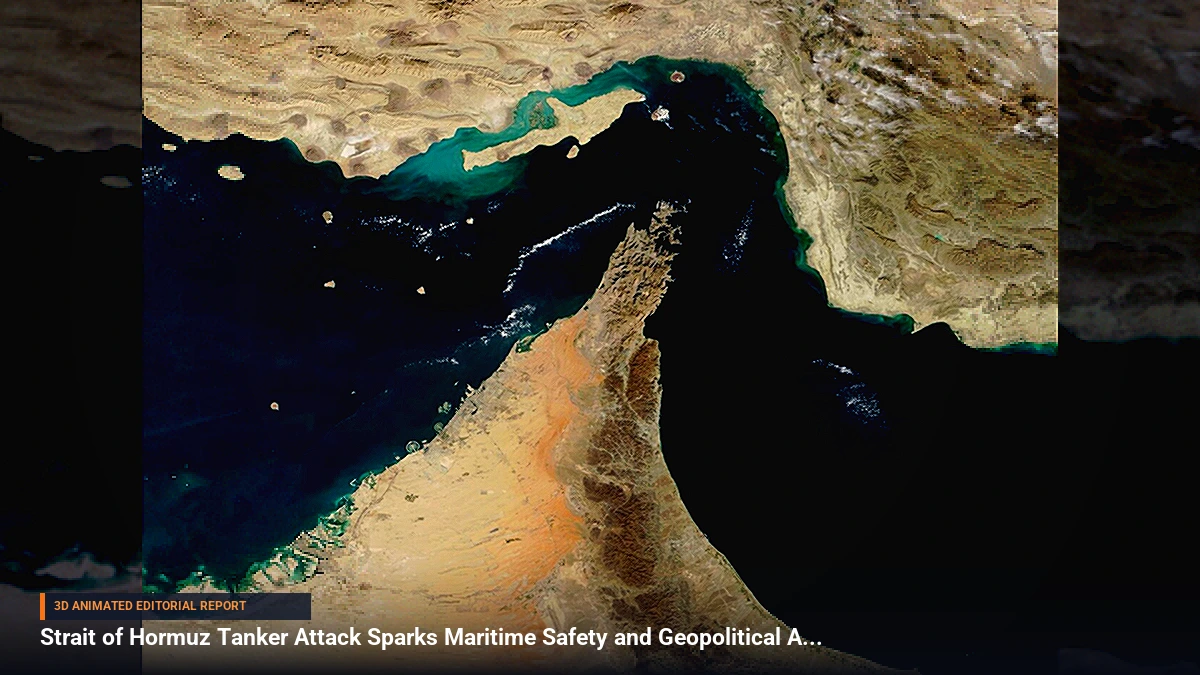
However, the underlying structural drivers of the conflict—disputes over regional maritime security, freedom of navigation in the Strait of Hormuz, and Iran's expanding missile and drone architecture—have remained entirely unresolved. Qeshm Island, strategically positioned at the mouth of the Persian Gulf, has long served as a vital staging ground for IRGC naval and missile assets, making it a recurring focal point for US and allied containment strategies.
Key Takeaways
- Renewed Kinetic Exchange: A US strike targeting an IRGC missile launch site on Qeshm Island abruptly ended a two-month regional lull.
- Cross-Border Fallout: Kuwait activated its air defense systems to repel incoming hostile drone incursions for the first time in months.
- Bahraini Interceptions: Bahraini forces successfully intercepted incoming Iranian aerial attacks aimed at regional assets.
- IRGC Targets: The Islamic Revolutionary Guard Corps explicitly claimed responsibility for striking a US radar installation in Bahrain.
- Widening Fronts: The exchange highlights how localized US-Iran confrontations immediately spill over into sovereign Gulf airspace and territory.
Impact, Analysis & Global/National Reactions
The latest round of strikes underscores the extreme fragility of regional deterrence frameworks. Security analysts point out that despite ongoing diplomatic engagement involving international mediators, the threshold for renewed military escalation remains alarmingly low.
Bahraini officials strongly condemned what they termed "criminal" Iranian attacks, urging citizens to remain calm while maintaining heightened defensive postures. Regional capitals are increasingly anxious that their territories are being treated as secondary battlegrounds in a broader geopolitical struggle between Washington and Tehran. Conversely, Tehran's willingness to strike targets in Kuwait and Bahrain demonstrates an aggressive posture aimed at raising the economic and security costs for host nations accommodating American military infrastructure.
What's Next: Looking Ahead
As defense forces across Kuwait and Bahrain remain on high alert, diplomatic channels are scrambling to prevent a full-scale spiral. Regional mediators face renewed pressure to revive emergency talks and establish immediate de-escalation corridors.
Market watchers and maritime insurers are closely monitoring the Strait of Hormuz for potential disruptions to vital energy shipping lanes. Meanwhile, military planners in Washington and regional capitals will assess whether additional defensive reinforcements are required to shield Gulf partners from further retaliatory volleys.



Be the first to comment
Start a useful conversation around this story.