
What Happened: The Core Developments
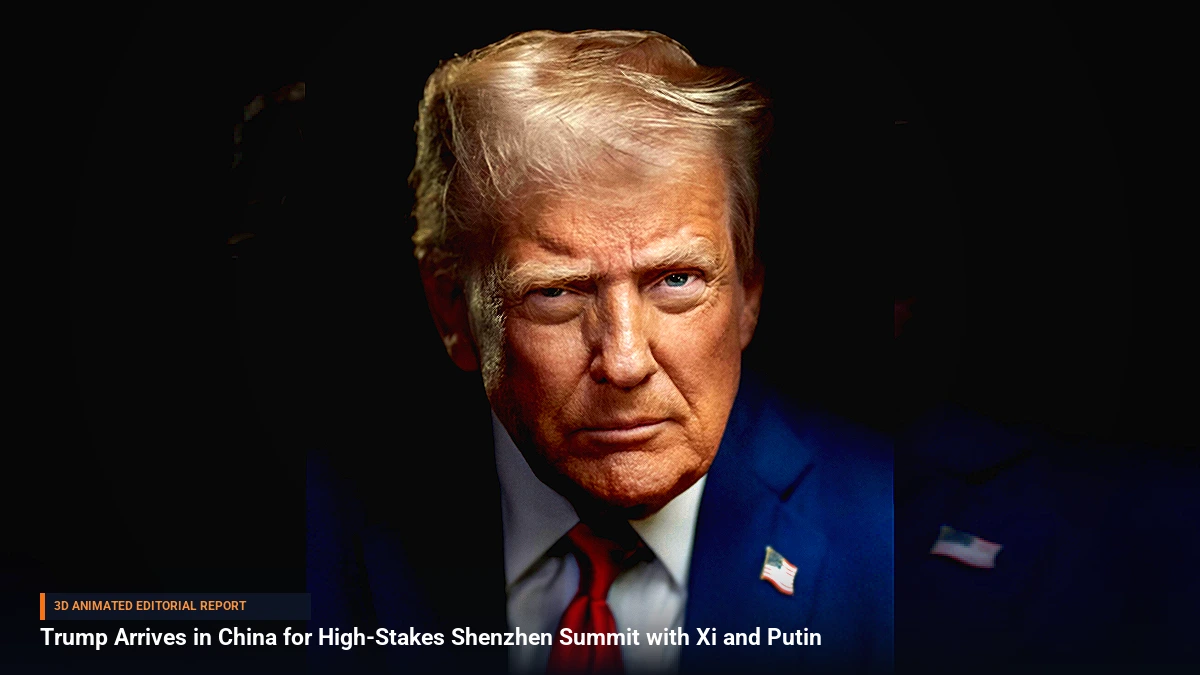
US President Donald Trump arrived in China to a formal welcome by Chinese President Xi Jinping, setting the stage for a highly anticipated diplomatic encounter. The leaders have converged in the vibrant Chinese tech hub of Shenzhen for a series of high-level discussions, highlighted by an upcoming trilateral meeting that will bring together Xi, Trump, and Russian President Vladimir Putin.
While official agendas remain tightly managed, the optics of the initial interactions have signaled a distinct shift in major-power dynamics. Alongside the diplomatic pleasantries, Russian President Vladimir Putin used the broader atmospheric backdrop of the summit to launch a scathing rhetorical attack, claiming that Europe is currently experiencing a "humiliating decline."
Background & Key Context
This high-level convergence in Shenzhen represents a major pivot in contemporary international relations. The arrangement of a summit featuring the world’s most influential leaders has drawn inevitable historical comparisons to 20th-century partitioning conferences, where major powers carved out spheres of influence.
Diplomatic analysts have pointed out a fundamental rule of international relations: if a nation or region is not at the negotiating table, its interests risk becoming secondary. The unusual alignment of interests and direct dialogue between Beijing, Washington, and Moscow has intensified focus on how these three leaders intend to reshape bilateral trade, regional security frameworks, and global governance.
Key Takeaways
- High-Profile Arrival: US President Donald Trump touched down in China and was personally welcomed by President Xi Jinping.
- Tech Hub Venue: The diplomatic meetings and associated gatherings are taking place in Shenzhen, highlighting China's technological and economic prominence.
- Trilateral Format: A historic three-way meeting involving Trump, Xi, and Vladimir Putin forms the core of the summit events.
- Sharp Rhetoric: Russian President Vladimir Putin used the occasion to assert that Europe is sliding into a humiliating decline.
- Exclusion Anxieties: Frontline and unrepresented nations are watching closely, worried about the potential for behind-the-scenes bargains.
Impact, Analysis & Global/National Reactions
The gravity of the Shenzhen summit extends far beyond the participating delegations. For regions excluded from the inner circle—most notably Ukraine, eastern European nations, the Baltic states, Taiwan, and Iran—the gathering has generated palpable anxiety.
Diplomatic observers note that these capitals fear their strategic value could be bartered away in a broad, transactional trade-off between the US, China, and Russia. If the summit results in a major sphere-of-influence carve-up, the security architecture of Europe and the Indo-Pacific could face immediate destabilization, forcing allied nations to rapidly recalibrate their foreign policies.
What's Next: Looking Ahead
As the trilateral talks commence in Shenzhen, international monitors will be closely watching for any formal communiqués or joint agreements. Markets and foreign ministries worldwide will parse every statement emerging from the meetings to determine whether concrete deals were struck on trade, security corridors, or regional flashpoints, setting the tone for global geopolitics into the late 2020s.



Be the first to comment
Start a useful conversation around this story.