
What Happened: The Core Developments
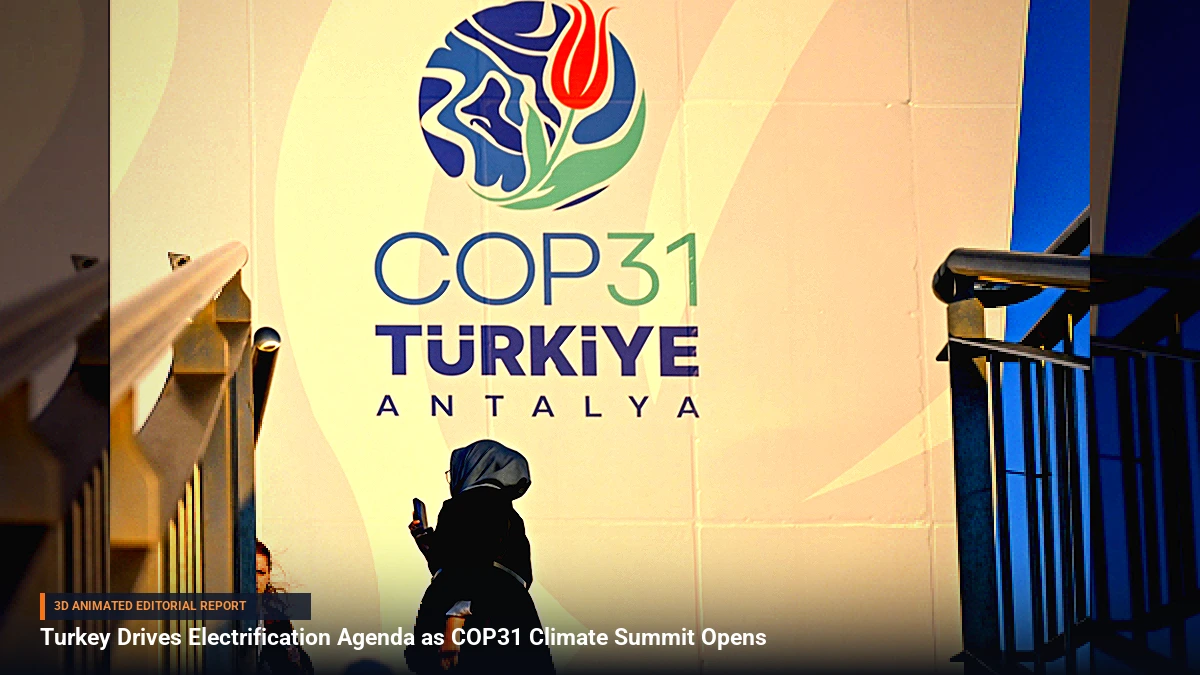
The global climate community has turned its focus to Turkey as the COP31 climate summit officially opens its doors. Negotiations this year are taking place against a backdrop of escalating environmental urgency and complex geopolitical tensions. At the center of the opening discourse is Ankara's strategic initiative to elevate the transition toward clean power grids to the absolute top of the global climate agenda.
As the host nation, Turkey has tabled an ambitious blueprint aiming to radically overhaul global energy paradigms. The core of this proposal centers on accelerating green infrastructure so that electricity accounts for 35 percent of total global energy demand by the year 2035. Delegates, environmental ministers, and industry leaders are gathering to debate the feasibility of these targets, balancing aggressive emissions-reduction goals with the practical realities of industrial transformation.
Background & Key Context
For years, international climate talks have grappled with the pacing of fossil fuel phase-outs and the financing of green transitions in developing economies. Turkey’s emergence as a pivotal diplomatic and logistical hub for COP31 brings unique regional dynamics into focus. The host country itself faces severe localized climate pressures, including mounting agricultural droughts that threaten local farming communities and force critical conversations regarding immediate adaptation strategies.
Historically, energy transitions have faced friction between industrialized nations and emerging economies over who shoulders the financial and economic burdens. By steering the dialogue toward a quantifiable electrification target, Turkey hopes to provide a concrete benchmark that transcends traditional diplomatic stalemates. This focus aligns with broader global efforts to pivot away from direct fossil fuel combustion toward end-use electrification powered by renewable sources such as wind, solar, and hydroelectric power.
Key Takeaways
- Ambitious Target: Turkey is pushing for electricity to comprise 35 percent of global energy demand by 2035.
- Core Themes: The COP31 agenda heavily prioritizes aggressive emissions cuts, rapid renewable energy expansion, and climate adaptation frameworks.
- Local Vulnerabilities: Host nation Turkey faces pressing domestic agricultural challenges, including severe drought conditions impacting regional food security.
- Geopolitical Pressures: The summit is unfolding amid strained international relations and competing economic priorities among major global powers.
- Strategic Focus: The discussions emphasize grid modernization and electrification as the fastest route to decarbonizing heavy industries and transport.
Impact, Analysis & Global/National Reactions
The unveiling of Turkey's 35 percent electrification goal has elicited a mixed chorus of cautious optimism and intense scrutiny from international observers. Renewable energy advocates have praised the clarity of the 2035 timeline, arguing that concrete metrics are essential to mobilizing private sector capital and guiding national policy frameworks.
However, industrial lobbies and representatives from energy-reliant economies have raised concerns over the speed of infrastructure upgrades required to meet such high electrification levels. Analysts note that while the ambition is commendable, achieving a 35 percent share globally will necessitate unprecedented international cooperation, massive grid investments, and robust technology-sharing agreements to ensure developing nations are not left behind in the green transition.
What's Next: Looking Ahead
Over the coming two weeks of COP31, delegates will navigate grueling committee sessions to translate high-level pledges into actionable international treaties. Key areas to watch include the finalization of climate finance mechanisms, commitments to support vulnerable farming regions facing extreme weather, and the formal inclusion of electrification benchmarks in updated Nationally Determined Contributions (NDCs). The success of the Turkey summit will ultimately be measured by whether major global emitters can align behind these accelerated clean energy targets.






Be the first to comment
Start a useful conversation around this story.