
What Happened: The Core Developments
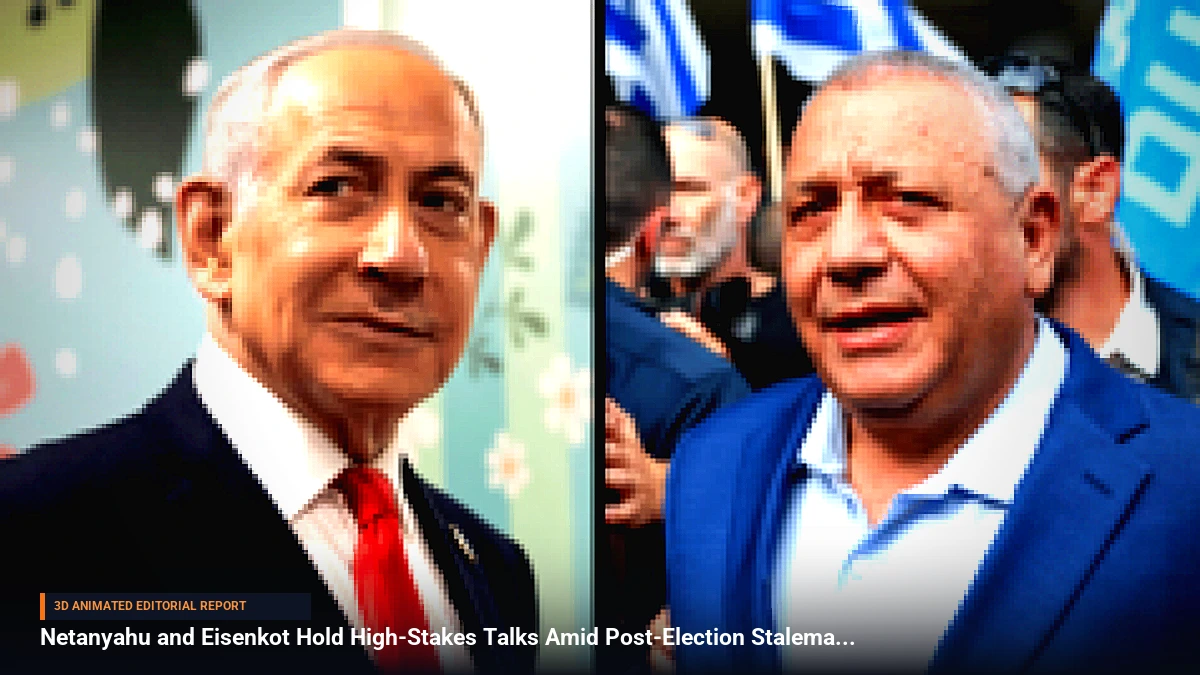
Israeli Prime Minister Benjamin Netanyahu and his primary political rival, Gadi Eisenkot, engaged in critical, high-level discussions regarding the formation of a prospective unity government. The negotiations center on a proposed rotation agreement for the premiership, which could see power shared between the incumbent Likud leader and the former military general.
However, the path forward remains highly unstable. Following their face-to-face meeting, Eisenkot publicly distanced himself from the proposed power-sharing arrangement, downplaying the likelihood of joining a unity administration under the current terms. While Netanyahu has pushed to salvage his political standing through a broad coalition, Eisenkot's initial resistance underscores the deep mistrust and strategic divergence dividing Israel's fractured political landscape.
Background & Key Context
The current political paralysis stems from the national elections held in late October, which resulted in a definitive stalemate. Neither Netanyahu’s right-wing bloc nor the opposition secured the mandatory majority required to independently form a stable government.
In response to the deadlock, Israeli President Isaac Herzog formally tasked Gadi Eisenkot with the mandate to build a governing coalition. With the clock ticking on his mandate and the country facing intense domestic and regional pressures, Eisenkot invited Netanyahu for accelerated negotiations. In an effort to break the impasse, proposals were floated involving a job-sharing or rotational leadership model, where Eisenkot might potentially take the helm first, or Netanyahu would step into an alternate executive capacity.
Key Takeaways
- Post-Election Stalemate: October's inconclusive vote left Israel without a clear parliamentary majority for either major political faction.
- Mandate Assigned: President Isaac Herzog previously tasked Gadi Eisenkot with forming a government following the gridlocked ballot.
- Unity Talks Initiated: Netanyahu and Eisenkot met directly to explore a unity government and a potential prime ministerial rotation deal.
- Immediate Skepticism: Despite the outreach, Eisenkot quickly distanced himself from the proposal, signaling reluctance to finalize a deal with Netanyahu.
- Political Survival: Analysts view Netanyahu's power-sharing overtures as a strategic maneuver to maintain influence amid mounting political vulnerability.
Impact, Analysis & Global/National Reactions
The unfolding negotiations are viewed by political analysts as a high-stakes chess match. For Netanyahu, offering a rotation deal represents a calculated play for political survival, attempting to bridge an unworkable parliamentary divide. For Eisenkot, entering a coalition with an embattled prime minister carries immense political risk, potentially alienating his core support base who demand fundamental changes in governance.
Institutional observers note that Israel's persistent government instability hampers long-term policy formulation at a time of severe security and economic challenges. While international allies monitor the crisis closely, domestic civil society organizations have expressed growing fatigue over the ongoing cycle of elections and fragile coalition talks.
What's Next: Looking Ahead
As Eisenkot's mandated timeline to build a government progresses, all eyes remain on whether the two leaders can bridge their vast ideological and personal divides. If current unity talks completely collapse, Israel could face the unprecedented prospect of further legislative gridlock or alternative constitutional maneuvers under President Herzog's supervision. Stakeholders across the political spectrum are bracing for decisive announcements regarding the viability of the coalition talks in the coming days.



Be the first to comment
Start a useful conversation around this story.