
What Happened: The Core Developments
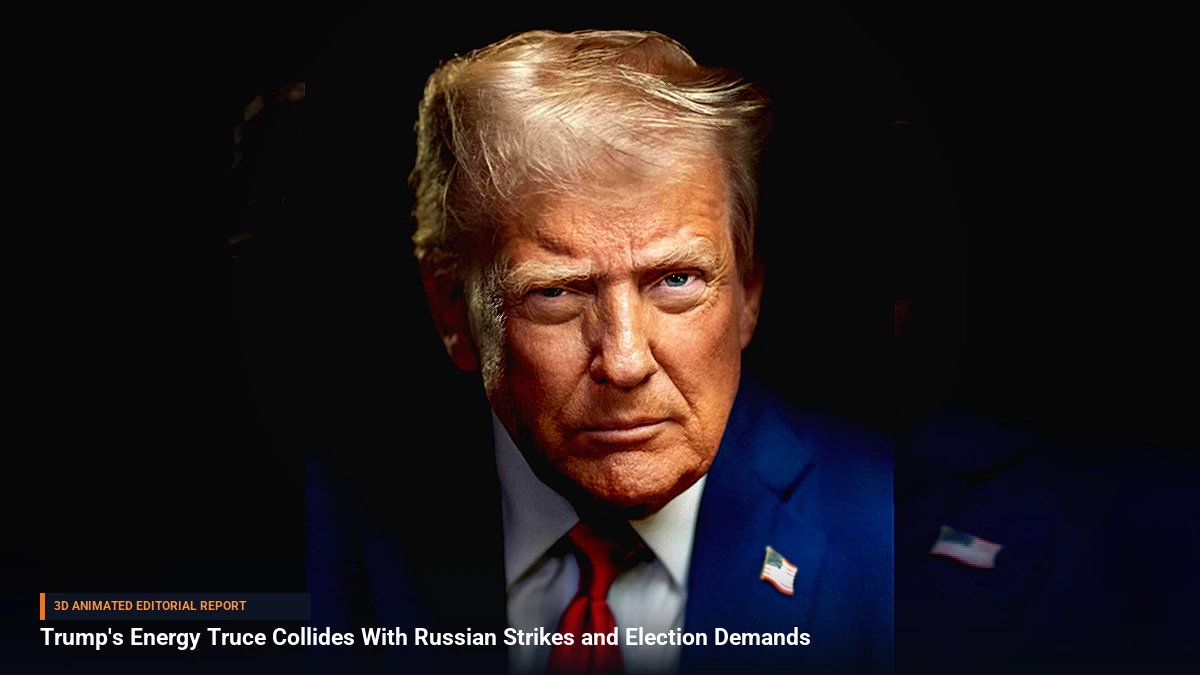
The annual high-level gathering of the United Nations General Assembly in New York quickly escalated from routine diplomatic pageantry into a theater of sharp recriminations and bold self-assessments. US President Donald Trump took to the global podium to assert his role as a master peacemaker, claiming credit for settling major international flashpoints and declaring that his interventions had saved an estimated 30 million lives globally. Among his expansive remarks, Trump highlighted his administration's role in mitigating conflict between India and Pakistan, explicitly singling out Pakistani leadership for praise.
However, the focal point of diplomatic friction rapidly shifted toward the escalating tensions between Washington and Tehran. Iranian President Masoud Pezeshkian used his rare wartime address to deliver a blistering counter-narrative directly challenging Trump’s rhetoric. Branding the American characterization of Iran as a state sponsor of terror entirely false, Pezeshkian asserted that Iran has historically been the victim rather than the perpetrator of terrorism. The defiance in Tehran's address prompted an immediate reaction from the American delegation, which staged a dramatic walkout from the General Assembly hall.
Background & Key Context
The fiery exchanges at the UNGA underscore the precarious state of international relations, particularly concerning the Middle East and South Asia. Trump’s recurring narrative of self-proclaimed conflict resolution has long been a hallmark of his foreign policy messaging, frequently drawing mixed responses from foreign ministries worldwide. His claims regarding the India-Pakistan dynamic revisit historic tensions in the subcontinent, though external verification of his mediation claims remains a subject of intense debate among geopolitical analysts.
Concurrently, the US-Iran relationship has deteriorated amid an active wartime backdrop, characterized by proxy conflicts, regional instability, and stalled diplomatic channels over Tehran's nuclear program. Pezeshkian’s appearance at the UN represented a critical platform for the Iranian administration to project legitimacy and counter Western economic and diplomatic isolation. The stark divergence in narratives highlights the deep chasm separating Washington and Tehran, complicating multilateral efforts to de-escalate ongoing regional hostilities.
Key Takeaways
- Trump's Peacemaker Claims: Donald Trump declared at the UNGA that his administration's diplomatic interventions successfully prevented catastrophic warfare and saved 30 million lives.
- South Asian Mediation: Trump specifically pointed to his handling of regional tensions between India and Pakistan, offering notable praise for Pakistani Prime Minister Shehbaz Sharif.
- Pezeshkian's Retaliation: Iranian President Masoud Pezeshkian forcefully rejected Washington's labels, stating that Iran has consistently suffered from terrorism rather than propagated it.
- US Delegation Walkout: In response to Pezeshkian's defiant remarks, members of the US diplomatic delegation walked out of the UN General Assembly hall.
- Broader Geopolitical Tensions: The speeches reflected compounding global fractures, touching upon ongoing conflicts in Eastern Europe and the Middle East.
Impact, Analysis & Global/National Reactions
International relations experts note that the 2026 UNGA session has effectively abandoned traditional diplomatic niceties in favor of overt political signaling. Trump’s sweeping declarations are designed heavily for domestic political consumption while reinforcing his transactional approach to foreign diplomacy. By emphasizing massive casualty prevention figures, the administration aims to solidify its brand as a decisive global disruptor.
Conversely, Iran's aggressive pushback at the UN signals that Tehran's leadership is unwilling to absorb Western diplomatic pressure passively. By framing Iran as a victim, Pezeshkian aims to rally regional sympathizers and challenge the moral authority of US-led sanctions and military postures. The theatrical walkout by the American delegation illustrates the profound reluctance of Washington to engage with official Iranian rhetoric on a multilateral platform without pre-conditions, signaling that backchannel negotiations remain fragile or entirely frozen.
What's Next: Looking Ahead
As the UN General Assembly proceedings continue, global observers will monitor whether backchannel maneuvers—such as potential high-level signals floated by figures like US officials regarding conditional bilateral meetings—can salvage any semblance of diplomatic engagement between Washington and Tehran. Meanwhile, regional stakeholders in South Asia and the Middle East will evaluate how the public rhetoric delivered in New York translates into ground-level security postures, economic policy shifts, and upcoming multilateral security council resolutions.
Be the first to comment
Start a useful conversation around this story.