
What Happened: The Core Developments
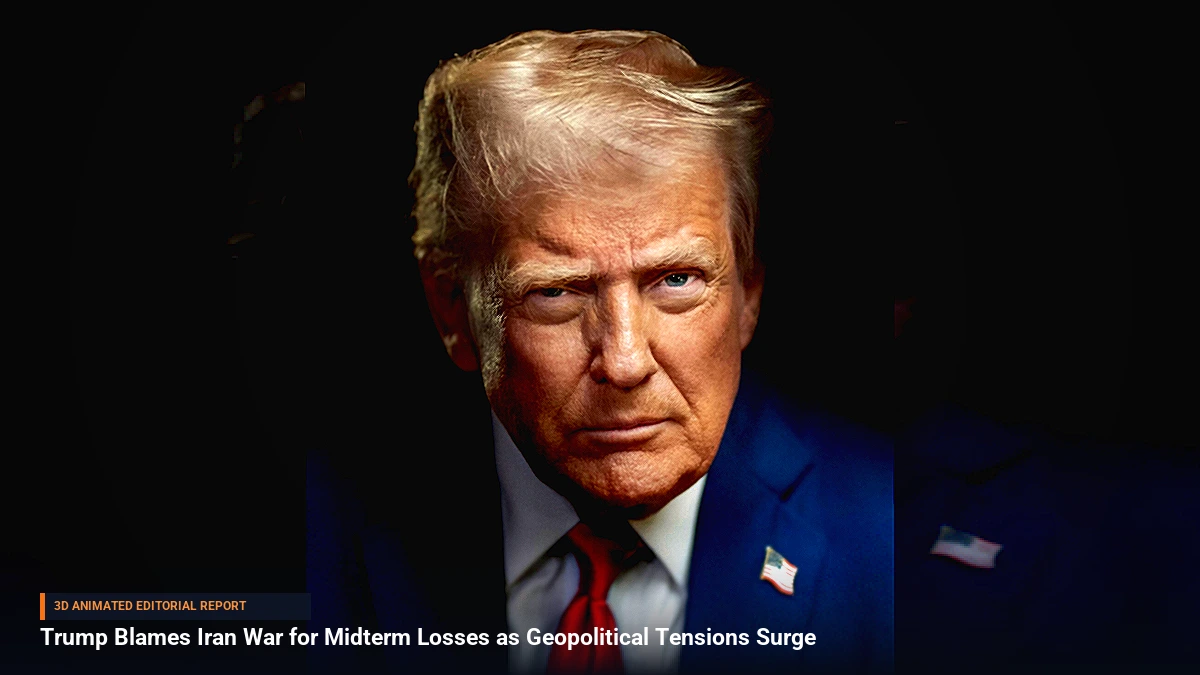
The political fallout from the United States' military engagement with Iran has reached a critical juncture following the midterm elections. President Donald Trump publicly acknowledged that the armed conflict likely played a decisive role in Republican legislative setbacks at the ballot box. The electoral blow has shifted the balance of power in Washington, leaving the administration facing a newly empowered opposition in Congress.
Simultaneously, the confrontation has triggered aggressive posturing overseas. In Tehran, authorities unveiled a provocative banner bearing the message "We will kill Trump," reflecting the raw animosity driving the bilateral crisis. This move coincided with statements from Iran's Supreme Leader, Ayatollah Ali Khamenei, who explicitly warned that a political setback for the US president at the polls would not alter Washington's foundational hostility toward the Islamic Republic.
Background & Key Context
The convergence of domestic electoral politics and foreign military intervention represents a high-stakes gamble for the White House. Entering the midterms, the administration defended its military strategy against Iran as a necessary measure to curb regional aggression and protect American strategic interests. However, prolonged engagements historically carry heavy domestic political costs, particularly when voters prioritize economic concerns over foreign entanglements.
For Tehran, the posture remains defiant. Leadership in Iran has consistently maintained that changes in American leadership cycles do not fundamentally alter what they perceive as imperialistic policies. The emergence of threatening imagery and hardline rhetoric demonstrates that foreign adversaries are closely monitoring American democratic processes to exploit perceived political vulnerabilities.
Key Takeaways
- Presidential Admission: President Trump directly attributed Republican midterm losses to the ongoing military campaign in Iran.
- Shifting Congressional Power: The electoral setback has empowered opposition lawmakers, fundamentally altering the legislative landscape for war powers and foreign policy oversight.
- Tehran's Defiance: Iran unveiled a hostile banner targeting the US president, signaling that state-level animosity remains unabated.
- Supreme Leader's Warning: Ayatollah Ali Khamenei asserted that domestic political shifts in Washington will not end longstanding hostilities between the two nations.
- Strategic Dilemma: The administration faces narrowing options in the Middle East, caught between the impulses of military escalation and the constraints of domestic political fallout.
Impact, Analysis & Global/National Reactions
The intersection of the midterm results and foreign intervention has sparked intense debate among analysts regarding executive overreach and accountability. Political strategists note that foreign wars rarely yield domestic political dividends when public sentiment turns inward. With a fractured or opposition-led Congress taking shape, executive branch autonomy regarding military deployments in the Middle East is expected to face rigorous legislative challenges.
International relations experts observe that Tehran's aggressive public messaging is designed to project strength internally while testing the resolve of a weakened US administration. "When domestic political pain intersects with foreign entanglements, adversaries often seek to exploit the perceived vulnerability," noted one foreign policy analyst. The escalating rhetoric complicates diplomatic off-ramps, raising the risk of miscalculation in an already volatile region.
What's Next: Looking Ahead
As the new congressional term approaches, lawmakers are expected to introduce measures aimed at reining in executive war-making powers and demanding comprehensive briefings on the strategic objectives in Iran. The administration faces a difficult balancing act: scaling back military commitments risks projecting weakness, while sustaining operations threatens further domestic political erosion.
Internationally, intelligence and defense agencies will remain on high alert for asymmetric responses or retaliatory actions from Iranian proxies. Observers will closely watch whether the administration shifts toward a more restrained diplomatic stance or doubles down on military deterrence in the wake of its electoral defeat.



Be the first to comment
Start a useful conversation around this story.