
What Happened: The Core Developments
Tensions in the strategically vital Persian Gulf reached a dangerous new crescendo as Bahraini air defense systems successfully intercepted and neutralized a wave of incoming Iranian aerial attacks and explosive drones. The aggressive maneuvers shatter what had been a fragile two-month lull in direct military exchanges between Iran and United States-aligned regional actors.
Shortly after the aerial assault over Bahraini airspace, the Islamic Revolutionary Guard Corps (IRGC) came forward to claim responsibility. Tehran asserted that the operation specifically targeted a critical United States military radar system operating within Bahrain. However, local and allied assessments highlighted the broader, indiscriminate nature of the drone incursions, which threatened civilian populations and critical infrastructure alike.
In swift response to the provocations, the United States military executed precision retaliatory self-defense strikes. These counter-operations targeted active Iranian military infrastructure, notably striking an Iranian missile launch site and operations on Qeshm Island situated near the crucial Strait of Hormuz.
Background & Key Context
This sudden flare-up marks a troubling escalation in a series of direct and proxy confrontations that have kept the Middle East on edge. Prior to this assault, diplomatic channels and backchannel mediators had managed to secure a tentative two-month period of diminished kinetic activity. However, underlying strategic rivalries, ongoing disputes over regional proxy networks, and the constant friction surrounding American force posture in the Gulf have continually threatened to spark a wider conflagration.
Bahrain serves as a vital anchor for Western security architecture in the region, hosting key military installations, including the headquarters of the U.S. Navy's Fifth Fleet. Consequently, any direct targeting of Bahraini territory or allied assets stationed there represents a significant red line for Washington and its regional partners, transforming a localized skirmish into a major international security crisis.
Key Takeaways
- End of a Lull: The recent strikes shatter a fragile two-month period of relative quiet in Persian Gulf security dynamics.
- Direct Attribution: Bahraini authorities confirmed the interception of Iranian aerial attacks, while the IRGC publicly claimed it targeted a U.S. radar facility.
- American Response: The United States military acted swiftly, conducting kinetic self-defense strikes against an Iranian missile launch site and Qeshm Island.
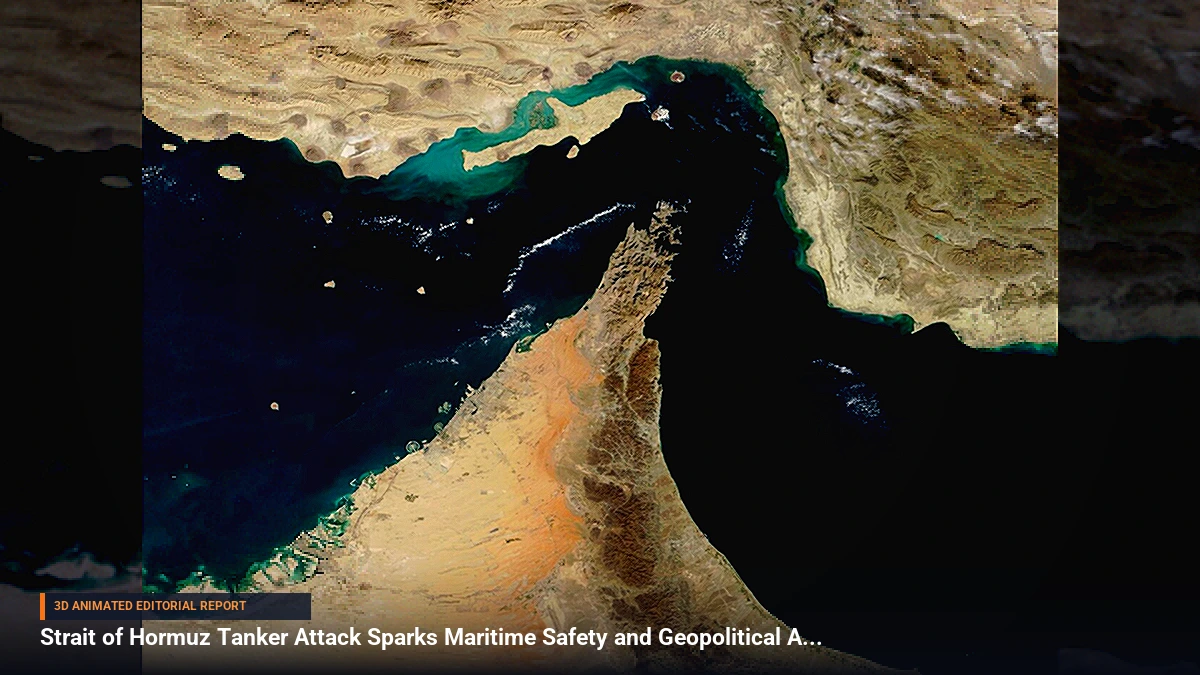
- Strategic Chokepoint: The proximity of the retaliatory strikes to the Strait of Hormuz underscores the ongoing vulnerability of global energy shipping lanes.
- Diplomatic Fallout: The attacks occurred despite ongoing backchannel diplomatic efforts by regional mediators to de-escalate tensions.
Impact, Analysis & Global/National Reactions
The resumption of direct hostilities has sent shockwaves through international diplomatic circles, threatening to derail nascent talks aimed at stabilizing the region. Washington has issued strong, unequivocal condemnations of the Iranian strikes, emphasizing its unwavering commitment to the defense of regional partners. High-level diplomatic exchanges immediately commenced, including critical security calls between U.S. officials and their Bahraini counterparts to coordinate defensive measures and intelligence sharing.
Defense analysts note that the IRGC's deliberate targeting of American assets—even if intercepted—signals an elevated appetite for risk from Tehran. By shifting from proxy-based friction to direct aerial engagements against host nations supporting U.S. forces, Iran is testing the boundaries of allied deterrence. Conversely, the rapid and forceful American response on Qeshm Island demonstrates Washington's refusal to let such provocations go unanswered, establishing a rigid threshold for proportional defense.
What's Next: Looking Ahead
As the dust settles from the immediate exchanges, international observers and market participants are bracing for potential fallout. The primary concern centers on the security of maritime traffic through the Strait of Hormuz, through which a significant portion of the world's petroleum passes. Energy markets remain on high alert for any secondary disruptions.
Diplomats are frantically working behind the scenes to prevent a tit-for-tat escalation cycle from spiraling out of control. However, upcoming security briefings, potential further adjustments to U.S. force posture in the region, and Tehran's next strategic move will dictate whether this incident remains an isolated escalation or serves as the spark for a broader regional conflict.



Be the first to comment
Start a useful conversation around this story.