
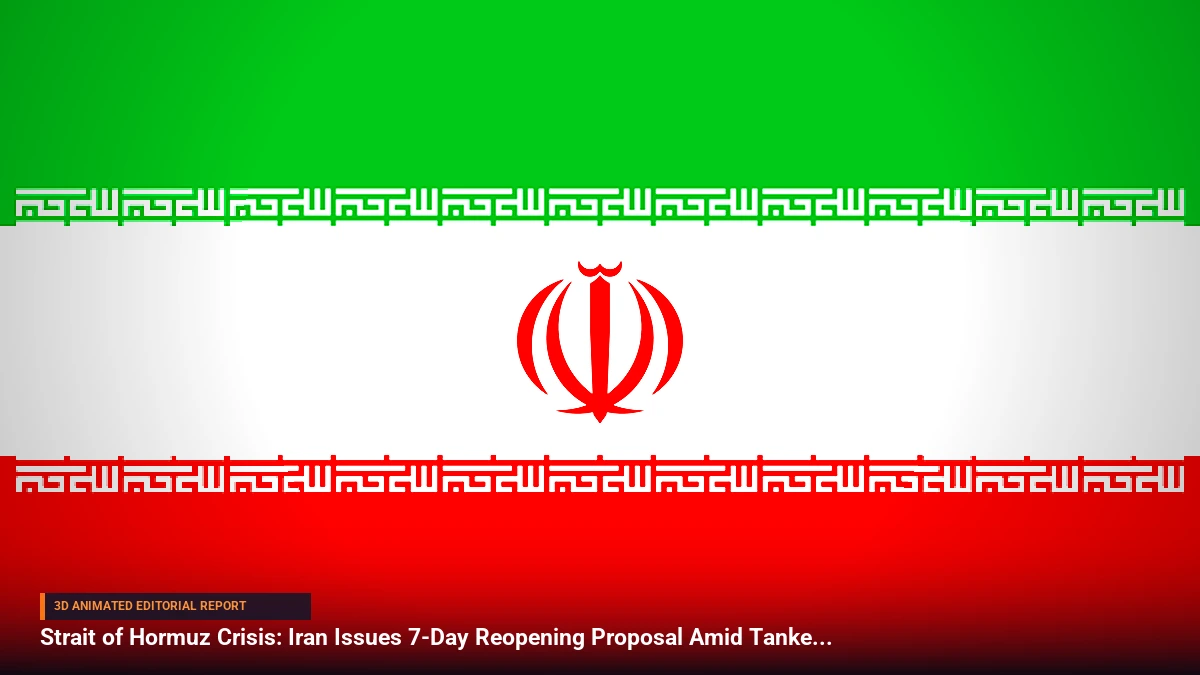
What Happened: The Core Developments
The geopolitical security landscape in the Middle East has suffered a severe jolt following a series of maritime incidents in the Strait of Hormuz. Two commercial vessels carrying heavy loads of crude oil caught fire after being struck by naval mines deployed along critical commercial navigation channels. The explosions immediately triggered a high-stakes standoff, with the Islamic Revolutionary Guard Corps (IRGC) declaring the crucial energy corridor officially closed to commercial traffic.
Amid the escalating chaos, both the United States and Iran have asserted rival claims of control over the waterway. Rather than backing down, Tehran has formally urged the United States to consider a conditional proposal that would allow the strategic passage to reopen within a seven-day window, provided specific geopolitical and regional terms are satisfied.
Background & Key Context
The Strait of Hormuz represents the world's most critical oil transit chokepoint, through which a massive percentage of globally traded petroleum flows daily. Historically, the narrow corridor has served as a primary geopolitical leverage point during periods of strained relations between Western powers and Iran. Previous crises in the region have regularly involved threats of closure, naval escort operations, and asymmetrical skirmishes, but the deployment of live naval mines against commercial supertankers marks a dramatic escalation in maritime warfare tactics.
Over the past several months, military posturing has intensified across the Gulf of Oman and the Persian Gulf. The latest developments underscore the vulnerability of global energy supply chains to localized military flashpoints, transforming routine commercial shipping routes into zones of direct strategic confrontation.
Key Takeaways
- Naval Mine Attacks: Two crude oil supertankers sustained heavy damage and caught fire following explosions caused by naval mines in the Strait of Hormuz.
- Closure Declarations: The IRGC formally declared the crucial maritime lane closed, citing safety risks and unauthorized vessel routing.
- Rival Control Claims: Both the United States and Iran are actively claiming operational and strategic control over the contested waterway.
- Conditional 7-Day Proposal: Iran has kept an offer on the table, urging the US to accept specific terms to facilitate the reopening of the strait within seven days.
- Global Energy Vulnerability: Markets face immediate volatility as the security of a vital artery for international crude transport hangs in the balance.
Impact, Analysis & Global/National Reactions
The sudden closure of the Strait of Hormuz and the exchange of competing control claims have sent shockwaves through international energy markets and defense circles. Analysts note that the use of naval mines against commercial tankers represents a direct challenge to freedom of navigation principles enshrined in international maritime law.
Regional military spokespersons have maintained a hardline stance, asserting that the path to reopening the strait depends entirely on foreign powers respecting regional sovereignty and adjusting their military posture. Meanwhile, shipping conglomerates and insurance providers are scrambling to reassess risk profiles, leading to surging freight rates and potential supply rerouting that could inflate global fuel costs.
What's Next: Looking Ahead
As the diplomatic clock ticks on Iran's conditional seven-day proposal, international mediators are working behind the scenes to prevent a full-scale military miscalculation. Stakeholders will closely monitor whether Washington and its allies engage with Tehran's terms or opt for enhanced naval escort missions to challenge the IRGC's blockade.
Failure to reach a diplomatic accommodation risks locking down one of the planet's busiest maritime arteries for an extended period, carrying severe ramifications for global economic stability and energy security.


Be the first to comment
Start a useful conversation around this story.