
What Happened: The Core Developments
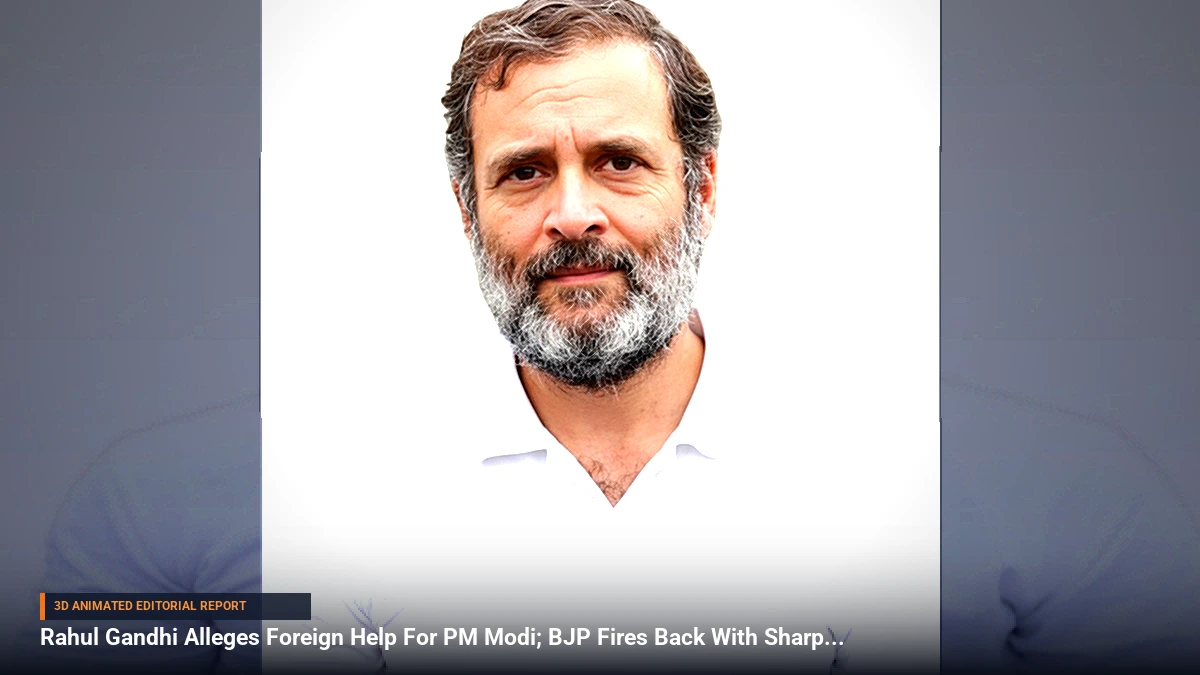
The political landscape in India has witnessed a sharp escalation following fresh remarks by senior Indian National Congress leader Rahul Gandhi. During a public political discourse, Gandhi alleged that Prime Minister Narendra Modi received external or "foreign help" to sustain his political standing. Building upon this controversial assertion, Gandhi threw down an open challenge to the prime minister, inviting him to a public debate to clear the air regarding the nature of external influences in domestic politics.
The ruling Bharatiya Janata Party (BJP) lost little time in mounting a multi-pronged counter-offensive. Prominent BJP leaders and spokespersons strongly condemned Gandhi's assertions, labeling them as baseless fabrications designed to mislead the electorate. In addition to issuing verbal condemnations, the ruling party dug into its archives, unearthing and circulating an older video of Gandhi from the United Kingdom to highlight perceived contradictions in his political stance.
Background & Key Context
Allegations of external interference, foreign funding, and cross-border political toolkits have increasingly characterized modern Indian electoral battles. Both major national parties have frequently traded barbs over international optics, diaspora engagements, and overseas narratives.
Rahul Gandhi's frequent overseas tours, academic interactions, and public addresses in countries like the UK and the United States have historically served as focal points for BJP criticisms. The ruling party has often accused the Congress leader of undermining India's national interests on foreign soil. Conversely, the opposition has sought to question the transparency of the current administration's diplomatic engagements and domestic governance strategies, setting the stage for recurring ideological friction.
Key Takeaways
- The Core Allegation: Rahul Gandhi publicly claimed that Prime Minister Narendra Modi received "foreign help," though specific transactional details of this assertion remain contested and largely unspecified.
- The Debate Challenge: Gandhi issued a direct dare to PM Modi for an open, public debate on the matter, creating polls and public engagement loops around the proposition.
- BJP's Aggressive Retaliation: The ruling party fiercely rejected the claims, with senior figures like BJP national spokesperson CR Kesavan dismissing Gandhi's statements as third-rate political theatrics.
- Archival Weaponization: The BJP countered the opposition attack by bringing up and circulating an old video of Rahul Gandhi from the United Kingdom.
- Senior Leadership Interventions: Union Home Minister Amit Shah entered the fray, dismissing the debate challenge by remarking that even a regional youth wing leader, such as a Telangana Yuva Morcha chief, could defeat Gandhi in a debate.
Impact, Analysis & Global/National Reactions
The war of words underscores the intense ideological polarization dominating the Indian political arena. Analysts note that while the opposition aims to question the ruling establishment's narrative of uncompromising nationalism, the BJP routinely converts such allegations into nationalist counter-narratives.
BJP national spokesperson CR Kesavan did not mince words when criticizing the opposition leader. "Rahul Gandhi is such a lousy con artist that his third-rate lies always backfire and end up humiliating him," Kesavan remarked, reflecting the aggressive posture adopted by the party's communication machinery. Meanwhile, Union Home Minister Amit Shah deflected the debate challenge entirely, suggesting that the opposition leadership was not a substantive enough political match for the prime minister, asserting mockingly that "even my Telangana Yuva Morcha chief will defeat you" in a debate.
What's Next: Looking Ahead
As political formations gear up for upcoming regional electoral battles and legislative sessions, the rhetoric surrounding foreign influence and domestic governance is expected to intensify. While it remains highly unlikely that an open debate between top-tier national leaders will materialize given the deep mutual distrust, both parties will continue leveraging these friction points to galvanize their respective voter bases and shape media narratives across digital and traditional platforms.

Be the first to comment
Start a useful conversation around this story.