
What Happened: The Core Developments
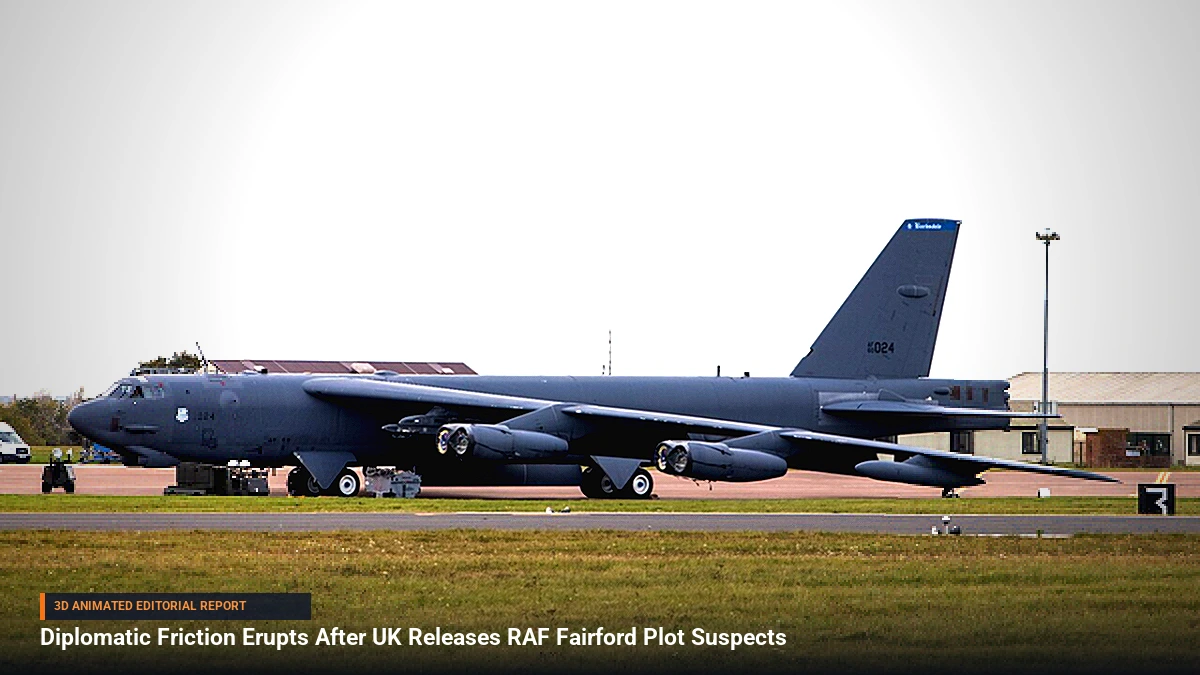
Five men recently arrested in connection with an alleged attack or bomb plot targeting RAF Fairford—a critical United Kingdom airbase utilized by United States military forces—have been released on police bail. The decision by British authorities to release the suspects while investigations remain ongoing has quickly sparked diplomatic friction and intense public debate across both sides of the Atlantic. While local police procedures dictate the terms of custody and bail based on gathered evidence and statutory limits, the move has drawn immediate reactions from prominent international political figures who view the nature of the targeted facility as a matter of high-stakes global security.
Background & Key Context
RAF Fairford in Gloucestershire holds immense strategic significance for transatlantic defense cooperation, frequently hosting US strategic bombers and support infrastructure. Any security breach or planned offensive against the installation immediately elevates threat levels concerning foreign-state-sponsored terrorism or sabotage. Following the arrests, high-profile figures in Washington weighed in heavily. US Senator Marco Rubio publicly asserted that a foreign actor was clearly behind the suspected bomb plot, emphasizing the geopolitical gravity of the threat. Meanwhile, Tehran has formally denied any role or involvement in the alleged plot targeting the airbase, pushing back against insinuations of state-backed orchestration.
Key Takeaways
- Suspects Released: Five men detained over the alleged RAF Fairford plot are currently free on police bail.
- US Political Concern: Donald Trump and other American leaders openly questioned the UK's decision to release the suspects.
- Foreign State Accusations: US Senator Marco Rubio stated that a foreign actor was clearly behind the suspected attack scheme.
- Tehran's Denial: Iranian officials have categorically denied any responsibility or connection to the alleged terror plot.
- Strategic Significance: The incident underscores ongoing security vulnerabilities surrounding shared military installations utilized by US and UK forces.
Impact, Analysis & Global/National Reactions
The divergence in response between British law enforcement protocols and American political expectations highlights a classic tension between judicial independence and national security priorities. In the UK, police bail decisions are governed by strict evidentiary thresholds and statutory review processes, which often operate independently of immediate geopolitical pressures. However, from a Washington standpoint, the release of individuals allegedly plotting against a vital allied asset has caused considerable unease. Analysts note that such divergent viewpoints test the resilience of intelligence-sharing partnerships and cross-border security coordination.
What's Next: Looking Ahead
As the investigation continues, all eyes remain on British counter-terrorism police to determine whether sufficient evidence can be compiled to formally charge the suspects or if additional arrests will follow. Lawmakers in Washington and London are expected to hold closed-door security briefings to review intelligence sharing protocols regarding shared military installations. Furthermore, ongoing diplomatic channels will likely address how allied nations communicate threat assessments and manage public disclosures when high-profile counter-terrorism operations intersect with international politics.


Be the first to comment
Start a useful conversation around this story.