
What Happened: The Core Developments
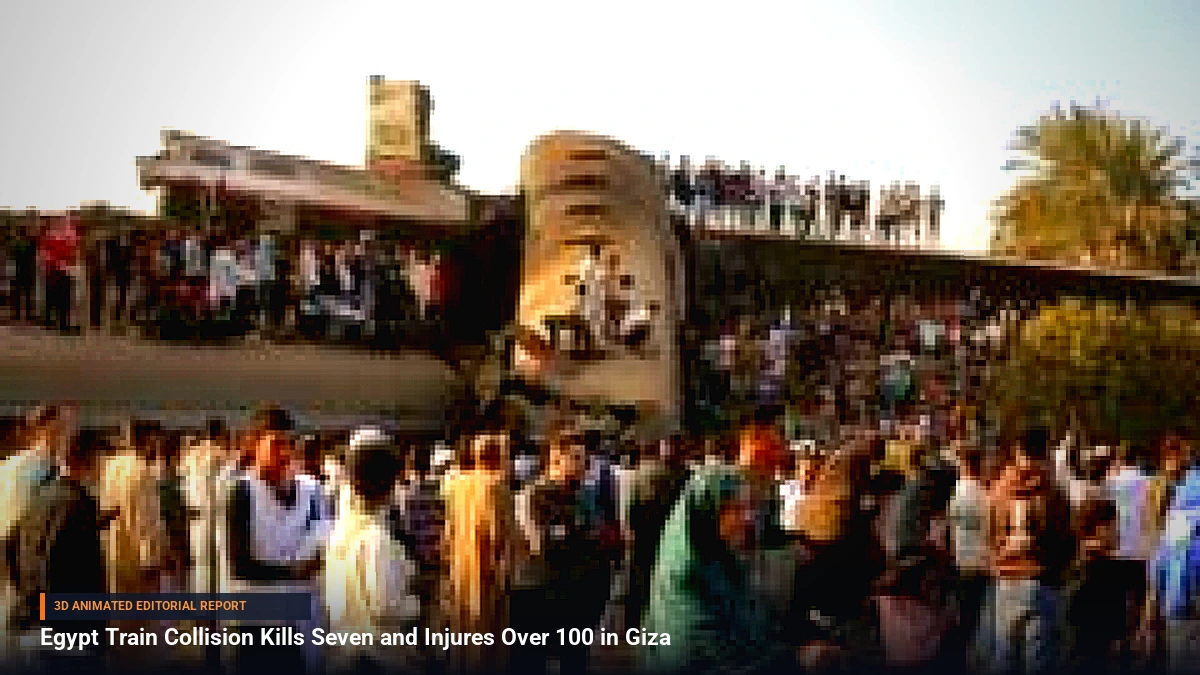
A devastating rail accident occurred on Sunday in the al-Ayyat district of Egypt's Giza province, situated roughly 30 miles south of the capital, Cairo. According to reports from the Egyptian transport ministry, a passenger train traveling toward Fayoum province collided with the rear of another train heading south toward Aswan.
The severe impact caused several carriages to violently derail, trapping passengers and prompting an immediate, large-scale emergency response. Emergency medical services rushed dozens of ambulances to the scene to triage the victims. While initial local estimates reported a lower death toll, subsequent updates from health and transport officials confirmed that at least seven people lost their lives and more than 100 individuals sustained injuries of varying degrees.
Background & Key Context
Egypt's national railway network has long grappled with safety challenges stemming from aging infrastructure, outdated signaling systems, and mechanical wear. Despite successive government administrations pledging billions of dollars toward modernization projects, upgrading thousands of miles of track and thousands of railcars remains a monumental and prolonged undertaking.
The al-Ayyat district, where this latest tragedy unfolded, has a grim history regarding rail incidents. Over the past two decades, various stretches of the rail line running through Giza province have witnessed major accidents, underscoring the severe difficulties in managing heavy passenger traffic on aging corridors without fully automated signaling and collision-avoidance technology.
Key Takeaways
- Casualties: At least seven individuals were killed and over 100 others injured in the Sunday crash.
- Location: The collision took place in the al-Ayyat district of Giza province, approximately 30 miles south of Cairo.
- Mechanics of the Crash: A train bound for Fayoum province struck the rear of a moving train heading toward Aswan, causing multiple carriages to derail.
- Official Response: Egyptian President Abdel Fattah al-Sisi ordered an immediate, comprehensive investigation into the root causes of the collision.
- Infrastructure Strain: The incident brings renewed scrutiny to Egypt's ongoing, multi-billion-dollar railway modernization efforts.
Impact, Analysis & Global/National Reactions
The accident has sent shockwaves through the public and reignited fierce debates concerning commuter safety and regulatory enforcement within Egypt's public transport sector. Civil society groups and commuters have repeatedly voiced frustrations over the pace of technological upgrades, arguing that systemic human error continues to exploit vulnerabilities in legacy infrastructure.
In response to the public outcry, the Egyptian presidency swiftly intervened. Officials confirmed that the president has ordered a prompt and thorough investigation to determine whether the disaster was caused by mechanical failure, human error, or signaling system malfunctions. Accountability remains a central demand from victims' families and advocacy groups who seek structural guarantees rather than temporary fixes.
What's Next: Looking Ahead
As emergency rescue and clearance operations conclude, attention shifts directly to the findings of the presidential inquiry. Investigators are expected to analyze black box data, signaling logs, and communication transcripts between train operators and control towers.
The findings of this investigation will likely exert intense pressure on the Ministry of Transport to accelerate the deployment of advanced electronic signaling systems across all regional lines. Furthermore, stakeholders will be monitoring how the government handles compensation for the victims and whether upcoming budgetary allocations will prioritize localized safety over large-scale, prestige rail expansion projects.





Be the first to comment
Start a useful conversation around this story.