
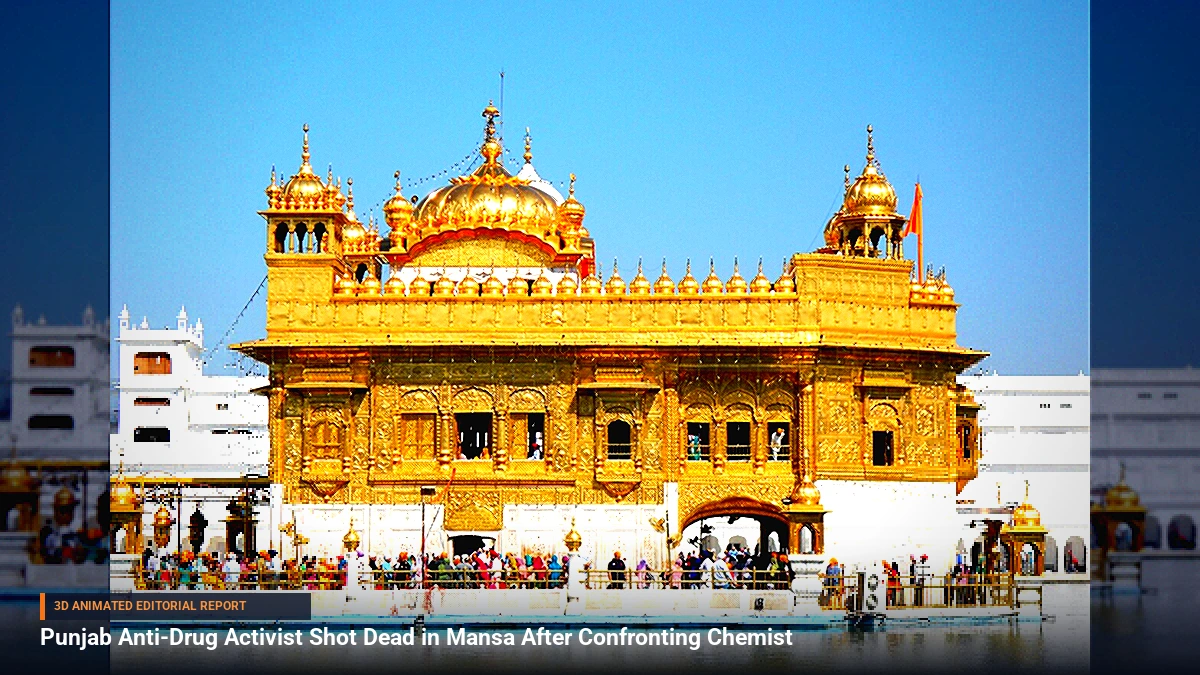
What Happened: The Core Developments
In a shocking violent episode that has reverberated across northern India, anti-drug activist Parvinder Jhota was shot dead in the Mansa district of Punjab. Jhota, who had dedicated himself to campaigning against the illegal distribution of prescription drugs and contraband by local pharmacies, was killed following a direct confrontation with a medical store owner.
According to initial reports and dramatic video footage that has since circulated widely, the fatal altercation erupted when Jhota confronted the chemist over accusations of peddling banned substances. The confrontation quickly escalated into violence, culminating in the activist being shot dead in broad daylight. The entire sequence of events was captured on camera, providing crucial evidence for investigators while intensifying public outrage over the brazen nature of the crime.
Background & Key Context
Punjab has long wrestled with an entrenched and deeply destructive narcotics crisis, affecting generations of youth and fracturing rural communities. While official law enforcement agencies have repeatedly pledged crackdowns on major trafficking rings, grassroots oversight has frequently fallen to local civil society members and independent activists like Jhota.
These independent campaigners often take immense personal risks, attempting to police illicit pharmaceutical sales—specifically the misuse of prescription medications and synthetic opioids sold illicitly through rogue medical stores—when official enforcement is perceived as sluggish or inadequate. The murder underscores the perilous reality faced by citizens who step into the vacuum left by traditional regulatory enforcement.
Key Takeaways
- Targeted Killing: Anti-drug activist Parvinder Jhota was shot dead in Mansa district following a direct confrontation with a local chemist.
- Illicit Sales Allegations: The dispute centered on accusations that the medical store owner was illegally selling banned drugs and contraband.
- Captured on Video: The fatal shooting was entirely recorded on camera, providing vital evidentiary material for law enforcement.
- Political Fallout: Opposition parties have seized upon the tragedy to launch sharp criticisms against the ruling Aam Aadmi Party (AAP) administration.
- Law and Order Concerns: The incident has reignited intense public debate regarding the state's capacity to protect civic reformers and control drug distribution.
Impact, Analysis & Global/National Reactions
The murder has transcended a localized crime to become a major flashpoint in state politics. Opposition political parties swiftly targeted the ruling AAP government, arguing that the tragedy demonstrates a systemic collapse of law and order and an inability to rein in the state's relentless drug epidemic. Critics contend that if high-profile activists who put their lives on the line can be gunned down so publicly, vulnerable communities have little reason to trust institutional safety measures.
Independent observers note that the incident exposes the dangerous limits of citizen-led policing. When civil society actors feel compelled to confront criminal elements directly due to perceived gaps in state enforcement, tragic outcomes frequently follow. Stakeholders across political and social spectrums are now demanding enhanced accountability and rigorous oversight of licensed medical vendors to prevent pharmacies from operating as fronts for narcotics distribution.
What's Next: Looking Ahead
As local law enforcement agencies face mounting pressure to deliver swift justice, all eyes remain on the ongoing police investigation and the formal apprehension of all implicated parties. The incident is expected to dominate upcoming legislative discussions and political campaigns, forcing the state administration to outline robust strategies for safeguarding anti-drug volunteers and dismantling the underground networks of illicit pharmaceutical peddlers.

Be the first to comment
Start a useful conversation around this story.