
What Happened: The Core Developments
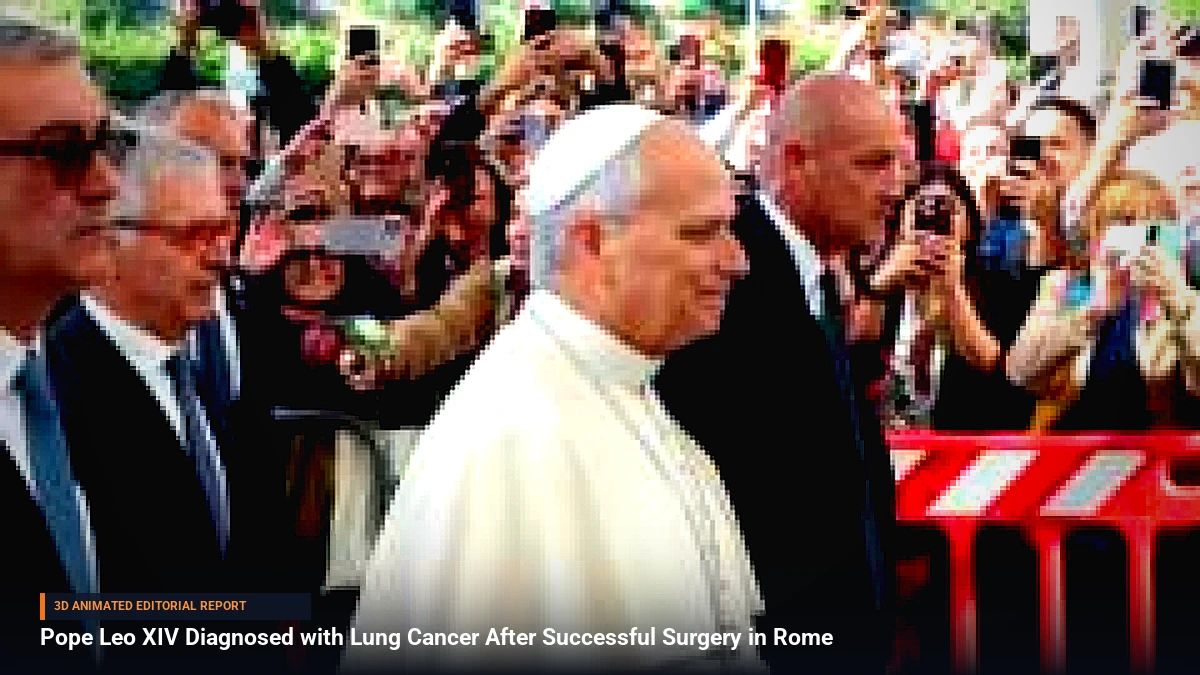
Pope Leo XIV has been diagnosed with lung cancer following a planned surgical procedure at a hospital in Rome. According to official medical bulletins released by the Vatican, the 71-year-old pontiff underwent an operation where surgeons successfully removed the lower lobe of his right lung.
Subsequent pathological testing of the excised tissue confirmed a diagnosis of lung adenocarcinoma. Despite the gravity of the diagnosis, the Vatican emphasized that the medical intervention went strictly according to schedule, concluding successfully with the nodule identified at an early, highly contained stage.
Background & Key Context
The medical issue first came to light in a remarkably transparent manner when Pope Leo addressed the public during his Sunday Angelus prayer. He personally informed the faithful that routine checkups had uncovered a small pulmonary nodule, assuring observers that it was well-contained and caught early.
Historically, announcements regarding papal health have often been shrouded in discretion or delayed until after procedures concluded. This recent instance marks a notable shift toward openness from the Holy See, providing clear updates regarding the timeline, hospital recovery expectations at Rome’s Gemelli Hospital, and the precise nature of the oncological findings.
Key Takeaways
- Diagnosis & Procedure: Pope Leo XIV, aged 71, was diagnosed with lung adenocarcinoma after undergoing surgery to remove the lower lobe of his right lung in Rome.
- Early Detection: Medical teams and Vatican officials confirmed that the cancerous nodule was discovered at an early, well-contained stage.
- Successful Operation: The Vatican reported that the surgical intervention proceeded precisely on schedule and without complications.
- Unprecedented Transparency: The pontiff personally broke the news to the public during a Sunday Angelus prayer ahead of his hospital admission.
- Recovery Timeline: Healthcare professionals anticipated a standard post-operative hospital recovery period lasting approximately one week.
Impact, Analysis & Global/National Reactions
The news of the pope's diagnosis prompted an immediate wave of international well-wishes and solidarity from political and religious leaders across the globe. Heads of state, interfaith partners, and millions of Catholic faithful expressed relief at the successful outcome of the surgery while offering prayers for his full recovery.
Oncological experts note that detecting lung adenocarcinoma at an early, localized stage significantly improves long-term clinical prognosis, making the prompt surgical resection a vital therapeutic milestone. The transparency displayed by the Vatican has likewise been lauded by media analysts and public health advocates as a modern approach to managing high-profile institutional health crises.
What's Next: Looking Ahead
Medical teams are closely monitoring the pontiff's post-operative recovery at the hospital, where he is expected to remain for approximately one week before transitioning back to convalescence.
Stakeholders and Vatican officials will subsequently evaluate his readiness to resume a demanding international travel schedule, which includes a heavily anticipated upcoming Latin America tour. Further updates regarding his schedule adjustments and rehabilitation milestones are expected to be released by the Holy See press office as his recovery progresses.






Be the first to comment
Start a useful conversation around this story.