
What Happened: The Core Developments
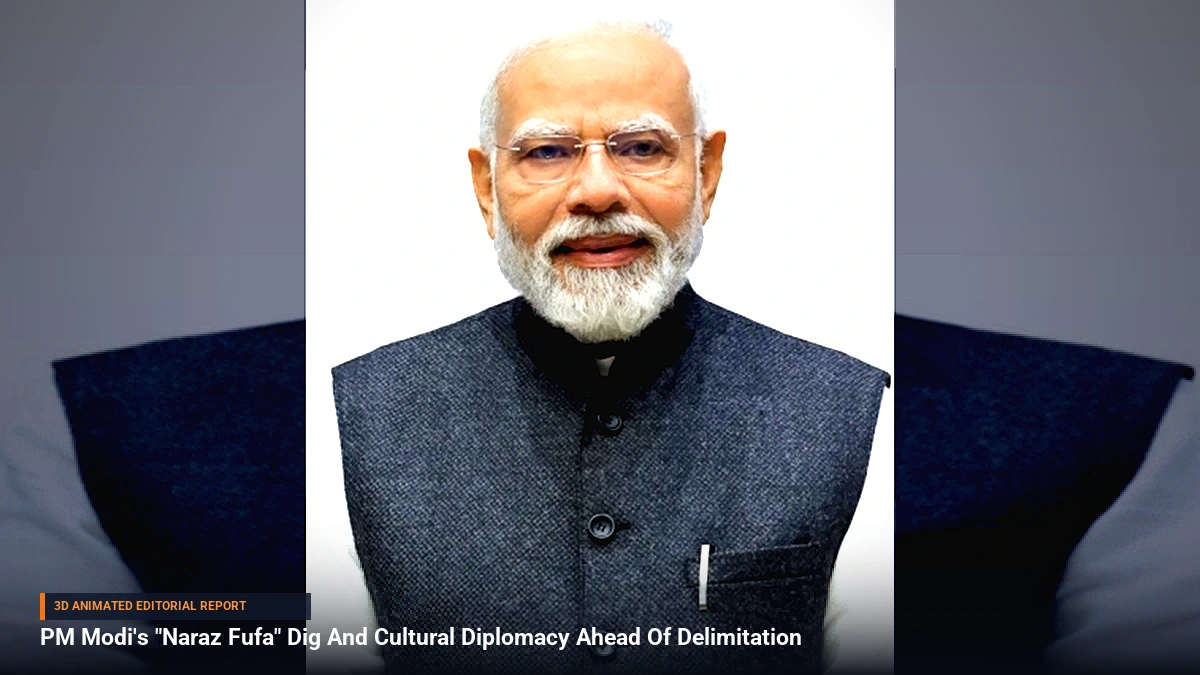
Prime Minister Narendra Modi delivered a pointed political critique utilizing the popular cultural idiom "Naraz Fufa" (the perpetually disgruntled uncle) to describe his political rivals. The remarks came precisely on the eve of a highly anticipated delimitation vote, injecting a dose of colloquial wit into an otherwise intense legislative atmosphere.
Rather than restricting his address to traditional partisan sparring, the Prime Minister framed his remarks around the broader national ambition of achieving a Viksit Bharat (Developed India) by 2047. Speaking at an event in New Delhi, he emphasized that collective national progress requires unity of purpose rather than constant obstructionism.
Simultaneously, the political messaging was anchored in a profound cultural moment: the closing ceremony of the birth centenary celebrations of the legendary singer, composer, and poet Dr. Bhupen Hazarika. By juxtaposing political friction with the cultural harmony championed by Hazarika, the leadership sought to redirect public discourse toward nation-building and social cohesion.
Background & Key Context
Delimitation processes—the redrawing of constituencies for legislative bodies—have historically been among the most sensitive and fiercely debated procedures in Indian politics. They touch upon deeply embedded regional, demographic, and federal sensitivities. As political parties ready themselves for legislative votes regarding constituency boundaries, tensions between the ruling administration and opposition blocs invariably run high.
In tandem with these legislative pressures, the Modi administration has consistently leveraged cultural icons to bridge regional divides and project a unified national narrative. Dr. Bhupen Hazarika, affectionately known as Sudhakantha, was a cultural titan from Assam whose timeless ballads championed humanism, brotherhood, and the struggles of the marginalized. Invoking Hazarika's legacy serves as a strategic counterweight to polarizing political rhetoric, reminding citizens of a shared cultural heritage that transcends electoral disputes.
Key Takeaways
- Colloquial Rhetoric: Prime Minister Modi utilized the humorous yet cutting "Naraz Fufa" reference to characterize persistent opposition complaints and obstructionist behavior.
- Strategic Timing: The remarks were strategically timed on the eve of a crucial delimitation vote, setting a combative yet confident tone for the legislative battle.
- Cultural Commemoration: The speech formed a central part of the closing ceremony for Bharat Ratna Dr. Bhupen Hazarika's birth centenary celebrations in New Delhi.
- Vision for Growth: The Prime Minister reiterated the overarching national goal of Viksit Bharat, arguing that constant political discord stands in sharp contrast to the aspirations of a developing nation.
- Artistic Harmony: Political opponents were urged to reflect on Hazarika’s musical philosophy, which promoted unity and social harmony over power struggles driven by discord.
Impact, Analysis & Global/National Reactions
The deployment of idiomatic political humor serves a dual purpose in modern Indian political communication: it humanizes the high-stakes nature of governance while effectively neutralizing opposition narratives through accessible language. Political analysts note that framing rivals as perpetually unsatisfied relatives cleverly trivializes their protests, transforming complex policy disagreements into relatable domestic dynamics.
However, critics and opposition figures argue that such metaphors deflect from substantive debates surrounding the mechanics and regional implications of the delimitation process. As federal structures face delicate calibration, regional stakeholders remain watchful of how constituency restructuring will alter political representation across states.
Institutional and cultural observers have nevertheless praised the continued national recognition of figures like Dr. Bhupen Hazarika. By anchoring contemporary political discourse in the timeless values of Assam's greatest cultural ambassador, the administration successfully broadens its appeal beyond strict electoral politics.
What's Next: Looking Ahead
As the dust settles on the centenary celebrations, all eyes now turn to the legislative floors where the delimitation vote is set to unfold. The outcome of this vote will dictate the immediate trajectory of parliamentary dynamics and federal negotiations.
Moving forward, political observers will closely monitor how opposition parties respond to both the administration's legislative agenda and its cultural framing. With national elections and state-level realignments constantly on the horizon, the balance between sharp political barbs and inclusive cultural diplomacy will undoubtedly remain a defining hallmark of current political strategy.


Be the first to comment
Start a useful conversation around this story.