
What Happened: The Core Developments
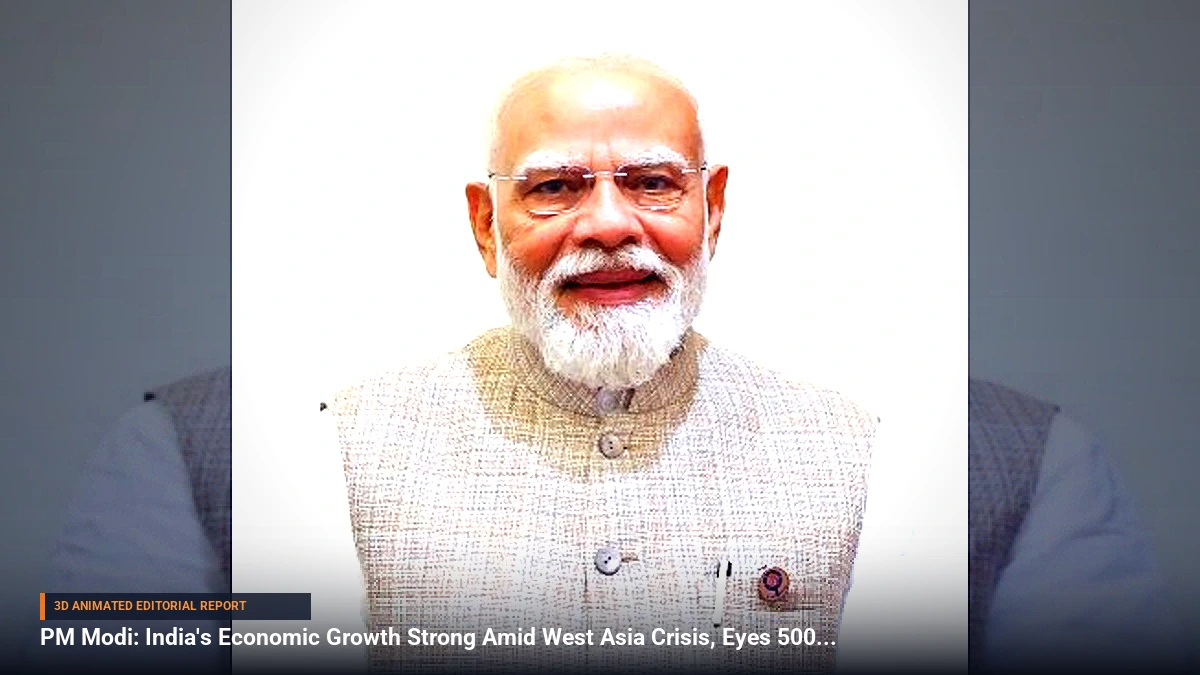
Prime Minister Narendra Modi delivered a definitive address on national economic resilience and sustainability at the inauguration of the Bharat Renewable Energy Summit & Expo (BRE) 2026. Amid intensifying geopolitical tensions and supply chain disruptions stemming from the ongoing West Asia crisis, the Prime Minister asserted that India’s domestic economic growth trajectory remains robust and largely insulated from external shocks.
A cornerstone of this resilience, according to the administration, is the rapid pivot toward green energy autonomy. During the high-profile summit, the government formally reinforced its landmark objective to add 500 GW of renewable energy capacity over the upcoming decade. This monumental shift is designed not only to meet domestic power demands sustainably but also to function as an economic buffer against volatile global fossil fuel markets.
Complementing the national agenda, state leadership moved swiftly to attract capital. Chief Minister Bhajan Lal Sharma used the BRE 2026 platform to issue a direct invitation to global and domestic investors, urging them to partner in Rajasthan's burgeoning renewable energy sector, which stands as a critical geographic hub for India’s solar and wind ambitions.
Background & Key Context
India has steadily emerged as a global frontrunner in the clean energy transition, balancing the dual mandates of accelerating industrialization and curbing carbon emissions. Historically reliant on imported hydrocarbons for a significant portion of its primary energy needs, the nation has faced persistent vulnerability to Middle Eastern geopolitical instabilities, oil price shocks, and supply bottlenecks.
Recognizing these systemic risks, policymakers over recent years have systematically fast-tracked green energy frameworks, scaling up solar parks, wind corridors, and grid modernization projects. The announcement at BRE 2026 builds directly upon previous international commitments made under India's net-zero transition blueprints. By decentralizing energy generation through renewables, New Delhi aims to decouple its long-term economic expansion from the unpredictable price vectors of traditional fossil fuels.
Furthermore, states like Rajasthan have leveraged vast geographic advantages—such as abundant solar irradiation and expansive arid land—to position themselves as epicenters for clean energy deployment, attracting billions in foreign and domestic green investments.
Key Takeaways
- Economic Resilience: Prime Minister Modi emphasized that India's domestic growth remains high and stable despite external macroeconomic headwinds caused by the West Asia crisis.
- Ambitious Green Target: The nation has reaffirmed its strategic goal to integrate 500 GW of renewable energy capacity into its power grid over the next ten years.
- BRE 2026 Launch: The inauguration of the Bharat Renewable Energy Summit & Expo served as the primary stage for announcing these synchronized economic and environmental policies.
- State-Level Investment Push: Rajasthan Chief Minister Bhajan Lal Sharma actively courted investors at the summit, highlighting the state's prime infrastructure and potential for clean energy partnerships.
- Energy Security Shield: Accelerating the green transition is increasingly viewed by policymakers as a vital national security measure to neutralize the impact of global oil and gas volatility.
Impact, Analysis & Global/National Reactions
Financial analysts and geopolitical observers have closely monitored India’s handling of external macroeconomic pressures. The ability to maintain high growth rates amidst the West Asia crisis underscores the maturation of India's internal market and its robust consumption-driven economy.
Market experts note that the 500 GW renewable energy target provides a clear, long-term signal to global institutional investors, infrastructure funds, and clean-tech manufacturers. By anchoring national growth to green infrastructure, India is effectively creating a massive domestic market for solar panels, wind turbines, battery storage systems, and green hydrogen technologies.
Industry bodies and energy experts have welcomed the alignment between macroeconomic stability and clean energy expansion. Institutional stakeholders point out that proactive state-level participation—exemplified by Rajasthan's targeted investor outreach—is crucial for translating national targets into ground-level execution, job creation, and decentralized economic development.
What's Next: Looking Ahead
As the Bharat Renewable Energy Summit & Expo 2026 progresses, attention will shift toward the execution of financing mechanisms, land acquisition policies, and grid-integration reforms necessary to support the 500 GW rollout.
Stakeholders will be looking for specific regulatory updates regarding green transmission corridors, battery storage incentives, and domestic manufacturing mandates under the Production Linked Incentive (PLI) schemes. With state governments like Rajasthan actively seeking private partnerships, upcoming quarters are expected to witness a surge in memorandum of understandings (MoUs) and foreign direct investment (FDI) inflows targeting India's clean energy infrastructure.


Be the first to comment
Start a useful conversation around this story.