
What Happened: The Core Developments
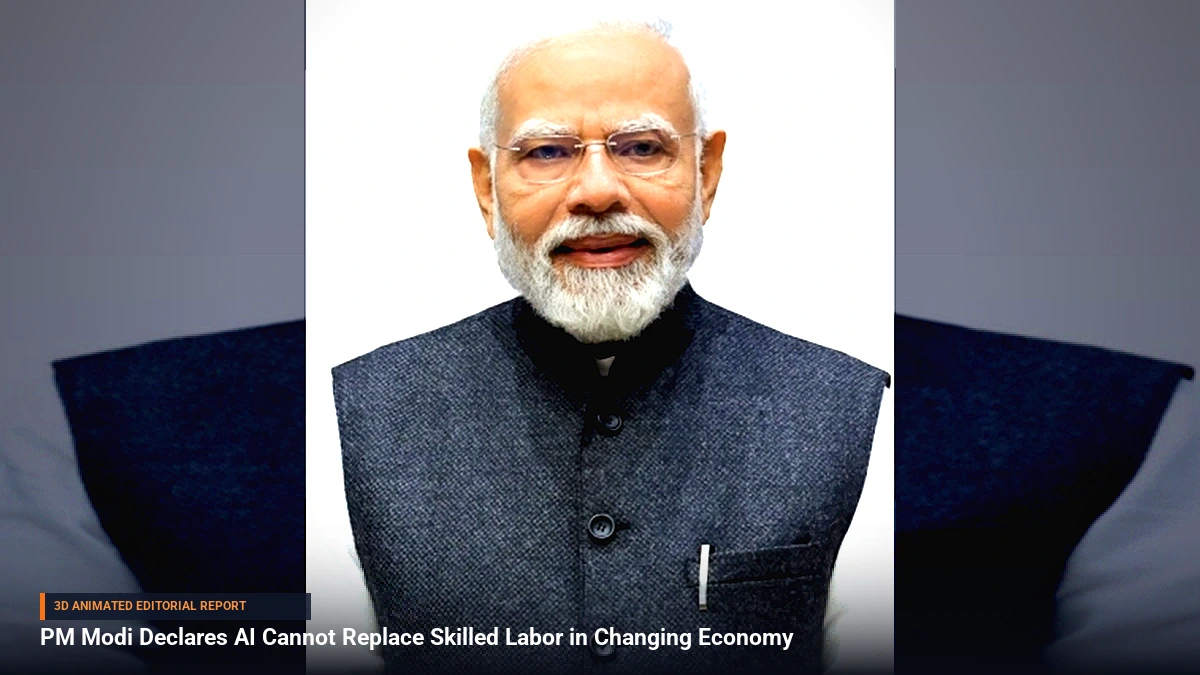
Speaking at the 5th Kaushal Deekshant Samaroh in Lucknow, Uttar Pradesh, Prime Minister Narendra Modi delivered a definitive message regarding the future of employment in an increasingly automated world. Addressing fears that rapid technological advancements and artificial intelligence (AI) would decimate traditional career paths, Modi reassured the public that AI cannot usurp the livelihoods of skilled workers.
The Prime Minister emphasized a shifting economic paradigm where hands-on competency, vocational training, and specialized craftsmanship will command higher value than traditional, purely theoretical degree-holding positions. Highlighting the evolving nature of global industries, he noted that the contemporary world actively demands skilled youth who can navigate real-world challenges rather than individuals possessing only academic credentials.
Background & Key Context
The debate over artificial intelligence and automation has dominated global economic forums, with white-collar jobs, coding roles, and administrative tasks increasingly targeted by generative AI models. However, hands-on trades—such as electrical work, plumbing, specialized manufacturing, and advanced technical operations—have proven far more resilient to algorithmic displacement.
In India, this discourse intersects directly with national development goals like Viksit Bharat (Developed India). Policymakers have increasingly turned their focus toward Industrial Training Institutes (ITIs) and vocational education programs, arguing that elite technical institutions like the Indian Institutes of Technology (IITs) alone cannot shoulder the entire burden of national economic transformation. Bridging the gap between formal higher education and ground-level technical mastery remains a core priority for national workforce development.
Key Takeaways
- AI Resilience: Prime Minister Modi stated definitively that artificial intelligence cannot take away the livelihoods of genuinely skilled workers.
- Vocational Focus: The comments were made during the 5th Kaushal Deekshant Samaroh event held in Lucknow, Uttar Pradesh.
- Degrees vs. Skills: Modi emphasized that the global labor market increasingly values practical expertise over mere academic degrees.
- Industrial Balance: Observers note a concerted policy push toward empowering India's ITI workforce alongside traditional premier technical hubs like IITs.
- Future Preparedness: The messaging highlights the critical need for continuous adaptation and hands-on vocational training to safeguard employment against technological disruption.
Impact, Analysis & Global/National Reactions
The Prime Minister's remarks strike at the heart of global anxieties surrounding the Fourth Industrial Revolution. While technology analysts frequently debate the exact timeline of workforce automation, political and economic leaders are increasingly forced to address public fears of mass unemployment.
By highlighting the irreplaceable nature of physical dexterity, problem-solving, and specialized vocational training, the administration is attempting to reposition vocational education not as a secondary option, but as a premier career choice. Stakeholders in India's education sector view this as a vital psychological and policy shift, encouraging young people to embrace technical trades that form the backbone of infrastructure, manufacturing, and localized service economies.
What's Next: Looking Ahead
As artificial intelligence continues to integrate into mainstream business operations, educational institutions and policymakers must refine their curricula to meet these emerging realities. Future labor policies in India are expected to place an even greater emphasis on apprenticeship models, ITI infrastructure upgrades, and continuous skill-upgrading programs.
Industry experts suggest that tracking the economic returns of vocational graduates versus traditional degree-holders will provide crucial data for shaping future educational investments. Ultimately, the emphasis on a resilient, skilled workforce signals a broader nationwide strategy to future-proof employment against unforeseen technological shocks.



Be the first to comment
Start a useful conversation around this story.