
What Happened: The Core Developments
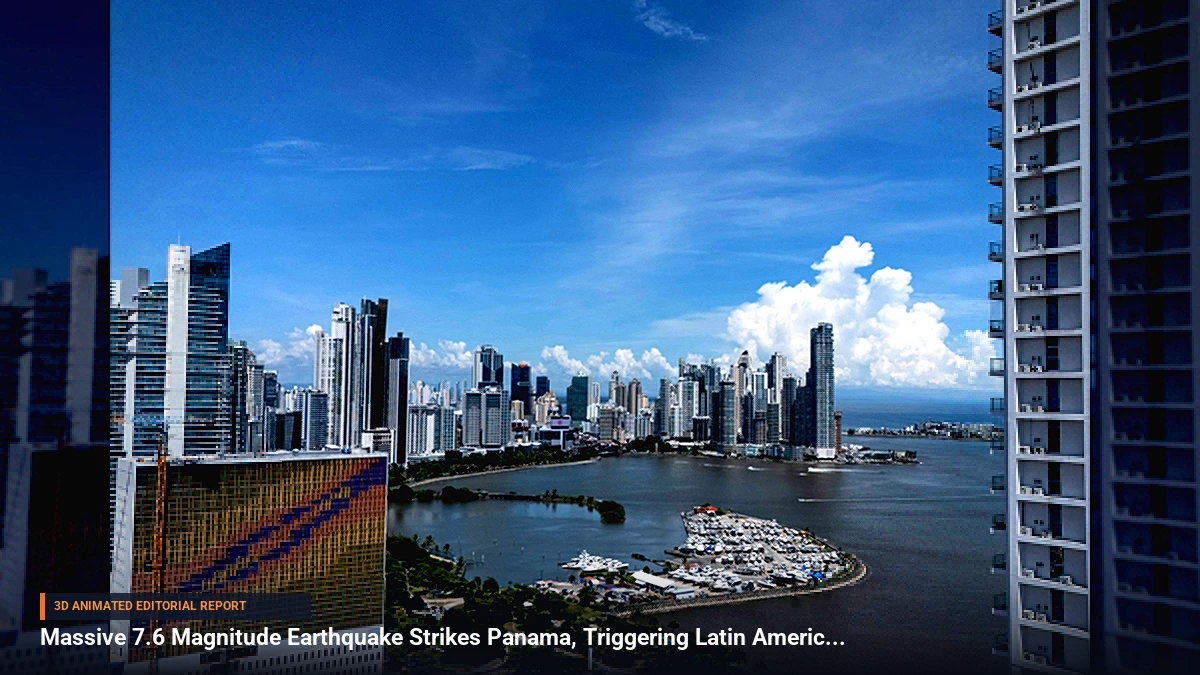
On October 9, 2026, a high-intensity earthquake struck near Panama, registering between 7.6 and 7.7 on the Richter scale. The forceful tremor violently shook the region, causing structural damage to residential dwellings and sparking immediate emergency responses. The seismic event triggered widespread panic and led authorities to issue urgent tsunami warnings and coastal threats across several Latin American countries, including Colombia, Ecuador, Nicaragua, Guatemala, and Chile.
Emergency management agencies throughout the Pacific basin mobilized rapidly as seismic waves propagated outward from the epicenter. Coastal communities were placed on high alert, with residents directed toward higher ground as wave monitoring stations tracked potential sea-level anomalies.
Background & Key Context
Central America and the broader Pacific Rim sit along the geologically volatile 'Ring of Fire,' a major basin in the basin of the Pacific Ocean where a large number of earthquakes and volcanic eruptions occur. The region has a long history of subduction zone interactions, making high-magnitude seismic events a persistent structural risk.
Given Panama's vital geopolitical and economic positioning—anchored by the Panama Canal—national infrastructure has historically been subjected to rigorous engineering standards designed to withstand major seismic disturbances. Previous modernization projects and strict building codes have aimed to safeguard both civilian populations and international maritime trade routes against catastrophic failure during tectonic events.
Key Takeaways
- High Magnitude Event: A powerful earthquake ranging from 7.6 to 7.7 in magnitude struck near Panama on October 9, 2026.
- Regional Tsunami Alerts: Multiple Latin American nations, including Colombia, Ecuador, Nicaragua, Guatemala, and Chile, issued immediate tsunami warnings and threats.
- Infrastructure Resilience: Despite localized structural damage to residential homes, vital commercial arteries such as the Panama Canal maintained normal operations.
- Emergency Response: Regional civil protection agencies and international monitoring networks activated emergency protocols to track wave patterns and safeguard coastal populations.
Impact, Analysis & Global/National Reactions
The immediate aftermath of the quake placed emergency services across the western coast of South and Central America on maximum alert. Governments mobilized civil defense units to assess infrastructure integrity and monitor coastal tide gauges.
Economic analysts closely watched the status of the Panama Canal, a critical artery for global commerce. Early reports confirming that canal operations remained normal provided significant relief to global supply chain stakeholders. While localized structural damage to homes required immediate humanitarian attention, the absence of widespread catastrophic infrastructure failure highlighted the efficacy of modern regional disaster preparedness and seismic engineering standards.
What's Next: Looking Ahead
As the immediate tsunami threat subsides, geological and civil engineering teams will continue comprehensive damage assessments across affected areas in Panama and neighboring regions. Authorities are expected to review emergency response efficiencies and inspect structural foundations of critical public works. Continuous seismic monitoring will remain in place along the fault lines to guard against potential aftershocks that could pose secondary risks to vulnerable coastal communities.





Be the first to comment
Start a useful conversation around this story.