
What Happened: The Core Developments
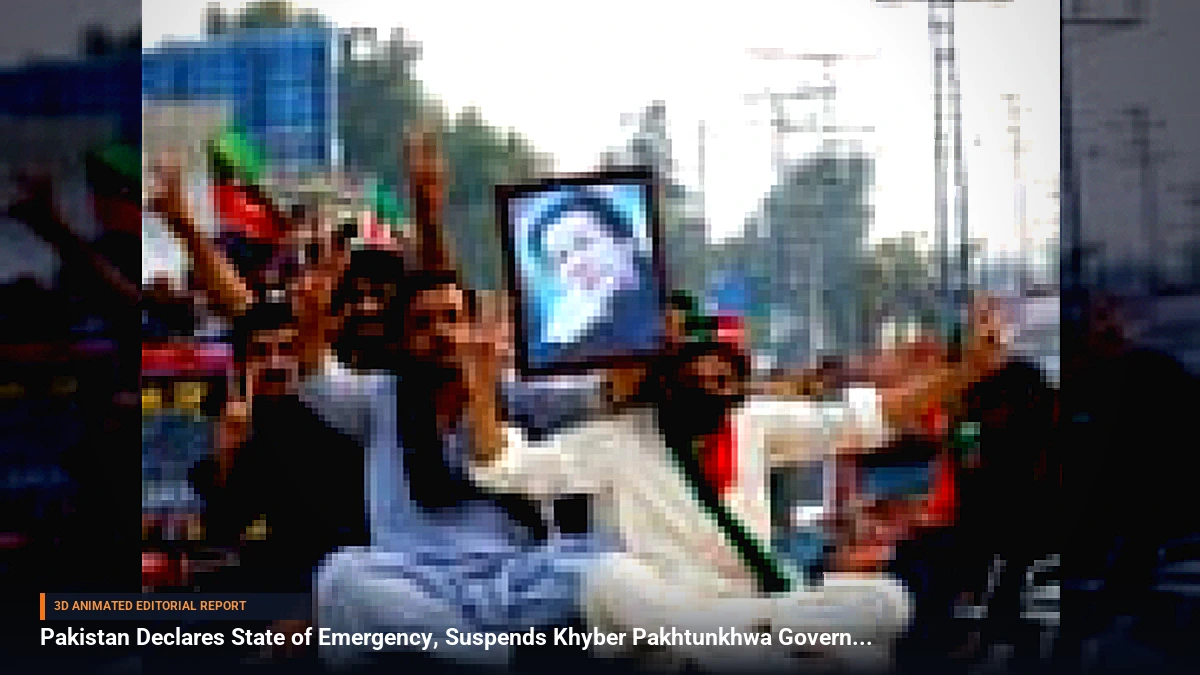
Pakistan plunged deeper into political turmoil following a dramatic escalation between the federal administration and supporters of imprisoned former Prime Minister Imran Khan. The federal government, operating under Prime Minister Shehbaz Sharif and backed by presidential authority, officially declared a state of emergency in the north-western Khyber Pakhtunkhwa province. Simultaneously, the provincial administration—led by Chief Minister Sohail Afridi, a prominent ally of Khan's Pakistan Tehreek-e-Insaf (PTI) party—was formally suspended.
In the wake of the emergency declaration, security forces launched widespread crackdowns across the region. Hundreds of politicians, local leaders, and active PTI supporters have been detained in an effort to thwart ongoing anti-government demonstrations and marches directed toward Islamabad. PTI leadership has fiercely condemned the sweeping measures, characterizing the federal intervention as an unconstitutional coup designed to dismantle the last major political bastion held by Khan’s loyalists.
Background & Key Context
Khyber Pakhtunkhwa has long served as the political heartland and primary stronghold for Imran Khan and the PTI. Ever since Khan was ousted from power through a parliamentary vote of no-confidence and subsequently embroiled in a cascade of legal battles, tensions between his political movement and Pakistan's powerful establishment have remained at a boiling point.
The friction reached a critical threshold as PTI organizers coordinated massive mobilization efforts, urging supporters to march directly toward the federal capital of Islamabad to demand electoral reforms, the release of political prisoners, and the restoration of democratic norms. The federal government cited mounting security threats, public disruption, and a breakdown of administrative order as justification for stepping in, utilizing emergency presidential powers to sideline the elected provincial leadership under Sohail Afridi.
Key Takeaways
- State of Emergency: Pakistan's federal administration suspended the provincial government in Khyber Pakhtunkhwa province under presidential decree.
- Leadership Targeted: The suspended provincial government was headed by Sohail Afridi, a key political ally of former Prime Minister Imran Khan.
- Mass Detentions: Security forces have arrested hundreds of politicians and core supporters from Imran Khan’s PTI party amidst ongoing protests.
- Coup Accusations: PTI leaders and regional critics have vehemently denounced the federal takeover, labelling it an authoritarian coup against democratic mandates.
- Escalating Standoff: The intervention comes as PTI supporters attempt coordinated marches toward Islamabad, heightening national security concerns.
Impact, Analysis & Global/National Reactions
The suspension of a democratically elected provincial government has ignited a fierce national debate regarding the erosion of constitutional federalism in Pakistan. Civil society organizations, legal experts, and opposition lawmakers have expressed deep alarm over the mass detentions, warning that the systematic suppression of the PTI risks pushing the nuclear-armed nation into a prolonged period of civic instability.
"The elected PTI government in Khyber Pakhtunkhwa has been dismantled, and critics argue that civilian democracy has been buried yet again," notes regional policy analysts observing the rapid deterioration of institutional checks and balances. Markets have reacted nervously to the unfolding political crisis, as foreign investors weigh the risks of prolonged civil unrest against the federal government's ability to maintain macroeconomic reforms under the watchful eye of international financial institutions.
What's Next: Looking Ahead
As the dust settles on the emergency decree, all eyes turn to the legal challenges expected to be filed in Pakistan's superior courts by PTI lawyers aiming to overturn the provincial suspension. Constitutional experts anticipate a fierce legal battle over the legitimacy of invoking emergency powers to dissolve a regional administration.
Simultaneously, the federal government faces the daunting task of stabilizing Khyber Pakhtunkhwa under direct administrative oversight while managing the fallout from the detained political figures. Whether the crackdown successfully diffuses the PTI's momentum or merely drives opposition sentiment further underground remains the defining question for Pakistan's immediate political trajectory.

Be the first to comment
Start a useful conversation around this story.