
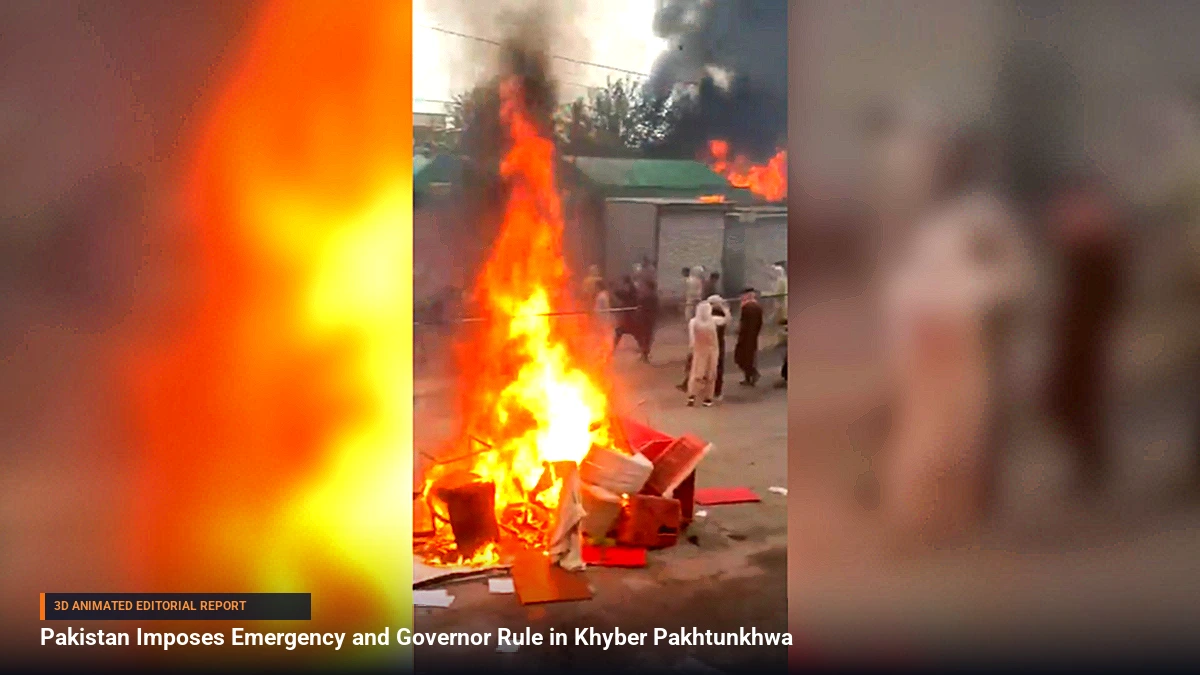
What Happened: The Core Developments
Tensions have escalated sharply in Pakistan following the declaration of emergency and governor rule in the strategically vital Khyber Pakhtunkhwa province. The sweeping administrative takeover swiftly ignited widespread public outrage, culminating in violent street confrontations between civilian demonstrators and law enforcement agencies. Protesters mobilized across major urban centers within the province to voice fierce opposition to the suspension of normal governance, leading to chaotic clashes, tear gas deployment, and numerous arrests.
The extraordinary measures were enacted amidst a volatile political climate, transforming the region into an epicenter of national friction. Local authorities and federal entities moved aggressively to contain the unrest, but these heavy-handed tactics only amplified public anger. The imposition of governor rule effectively sidelines the provincial political leadership, handing direct executive control over to federally appointed administrators.
Background & Key Context
Khyber Pakhtunkhwa has long served as a crucial political stronghold for jailed former Prime Minister Imran Khan and his Pakistan Tehreek-e-Insaf (PTI) party. The province's unique geopolitical position bordering Afghanistan, combined with its distinct ethnic makeup and strong opposition to the central government, makes any federal intervention a high-stakes gamble.
For months, political friction between the federal coalition and PTI loyalists has threatened to boil over. The latest executive override follows a pattern of escalating state pressure against Khan's political apparatus, which has continuously sought to mobilize its base through large-scale public demonstrations and political marches aimed at pressuring Islamabad.
Key Takeaways
- Administrative Takeover: Emergency and governor rule were formally invoked in Khyber Pakhtunkhwa province.
- Civil Unrest: Protesters engaged in fierce street clashes with police forces following the announcement.
- Political Accusations: Imran Khan's party contends that the emergency was fabricated specifically to block an impending political march.
- Human Rights Concerns: Amnesty International and other advocacy groups have raised serious alarms regarding arbitrary detentions and the erosion of civic freedoms.
- Strategic Fallout: Analysts warn the move risks deepening ethnic and political polarization in Pakistan's northwest.
Impact, Analysis & Global/National Reactions
The implementation of emergency rule has sent shockwaves through Pakistan’s legal and political establishments. Representatives of Imran Khan’s PTI did not mince words, alleging that the federal government abused constitutional mechanisms solely to neutralize political opposition and thwart scheduled demonstrations.
International organizations have also stepped into the fray. Amnesty International issued an urgent statement expressing deep concern over the sweeping emergency powers and the mounting wave of arbitrary detentions targeting political figures and activists. Human rights monitors warn that curtailing fundamental freedoms under the guise of security threatens to destabilize an already fragile democratic framework.
What's Next: Looking Ahead
As the dust settles in Khyber Pakhtunkhwa, all eyes turn to the courts and the streets. Legal experts anticipate immediate constitutional challenges mounted by PTI leadership to test the legality of the governor rule imposition. Meanwhile, international observers and domestic stakeholders will closely monitor whether the federal government intends to lift the emergency measures or extend them indefinitely, a decision that could dictate the trajectory of Pakistan’s national stability for months to come.

Be the first to comment
Start a useful conversation around this story.