
What Happened: The Core Developments
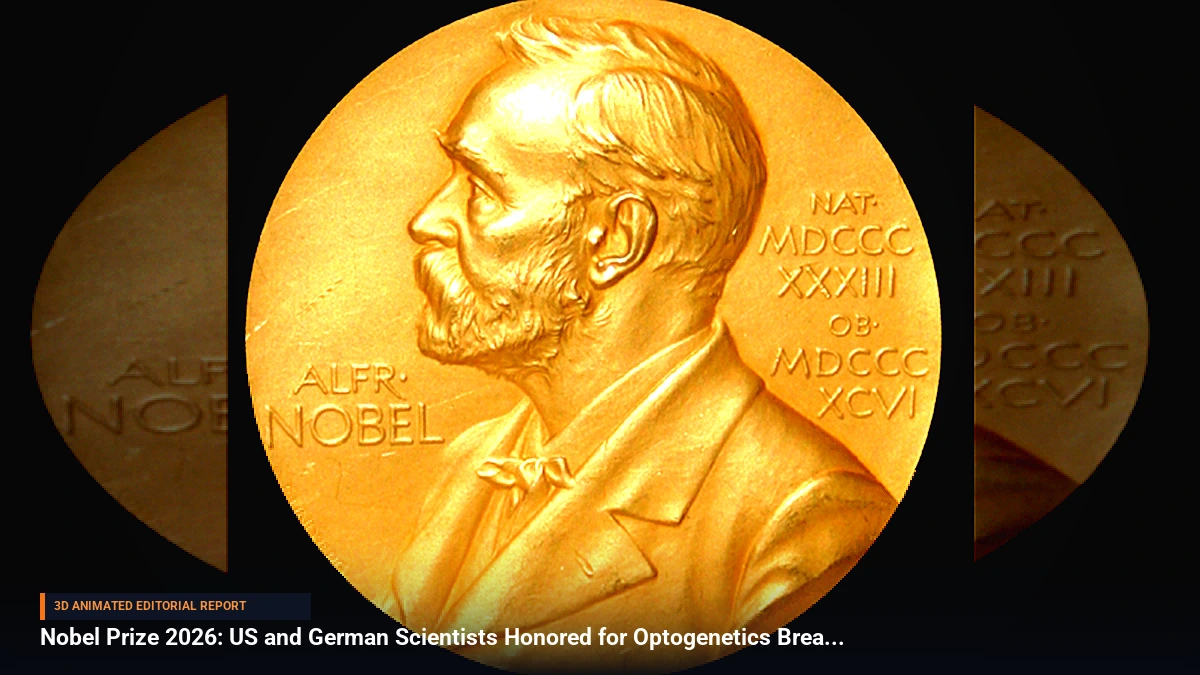
The global scientific community has turned its attention to Stockholm as the 2026 Nobel Prize season unfolds. Kicking off the highly anticipated announcement cycle, the Nobel Assembly announced that the 2026 Nobel Prize in Physiology or Medicine has been awarded jointly to pioneering researchers from the United States and Germany. Their revolutionary work centers on optogenetics—a transformative biological technique that uses light to control cells in living tissue, typically neurons that have been genetically modified to express light-sensitive ion channels.
This year's prize highlights a monumental leap forward in neurobiology, turning theoretical biophysics into an active tool capable of mapping neural circuits and observing brain function in real time with unprecedented precision.
Background & Key Context
Optogenetics did not emerge overnight; its foundations stretch back decades through fundamental research involving microbial opsins found in pond algae and other organisms. Scientists discovered that certain proteins could act as light-gated ion channels, opening the door to controlling electrical impulses within cells using flashes of light.
Over the past twenty years, this foundational biology evolved into a premier neuroscience methodology. Before optogenetics, researchers relied heavily on electrical stimulation or pharmacological agents, which lacked cellular specificity and temporal precision. By integrating optics and genetics, scientists gained the ability to activate or silence specific neuronal populations milliseconds at a time, fundamentally altering how researchers study neurological disorders, memory formation, and behavioral pathways.
Key Takeaways
- The 2026 Medicine Laureates: The prize recognizes collaborative and parallel breakthroughs by leading US and German scientists in the field of optogenetics.
- The Core Mechanism: Optogenetics combines genetic engineering and optical technology to control targeted brain cells using light.
- Origins in Nature: Essential components for this technology were discovered by studying natural light-sensitive proteins found in organisms like pond algae.
- Transformative Impact: The technique allows neuroscientists to map complex neural networks with millisecond precision, solving decades-old mysteries of brain circuitry.
Impact, Analysis & Global/National Reactions
International research institutions and medical bodies have hailed the 2026 medicine prize as a watershed moment for clinical neuroscience. Experts note that while optogenetics began as a basic science tool, its long-term implications stretch far into clinical neurology. Researchers are already exploring how light-based neural modulation could eventually assist in treating conditions such as Parkinson's disease, blindness, epilepsy, and severe psychiatric disorders.
"This year's prize celebrates a true paradigm shift in how we interrogate the brain," noted a prominent neurobiologist following the announcement. "By lighting up specific neural pathways, these laureates have given the global scientific community a key to deciphering the most complex organ in the known universe."
What's Next: Looking Ahead
Following the medicine prize announcement, the rolling schedule of 2026 Nobel Prize revelations continues through the week. Academic circles, financial markets, and science enthusiasts eagerly await the upcoming announcements for Physics, Chemistry, Literature, Peace, and the Sveriges Riksbank Prize in Economic Sciences in Memory of Alfred Nobel. As award ceremonies approach later in the year, the spotlight will remain firmly on how optogenetics continues to shape modern medicine and therapeutic engineering.




Be the first to comment
Start a useful conversation around this story.