
What Happened: The Core Developments
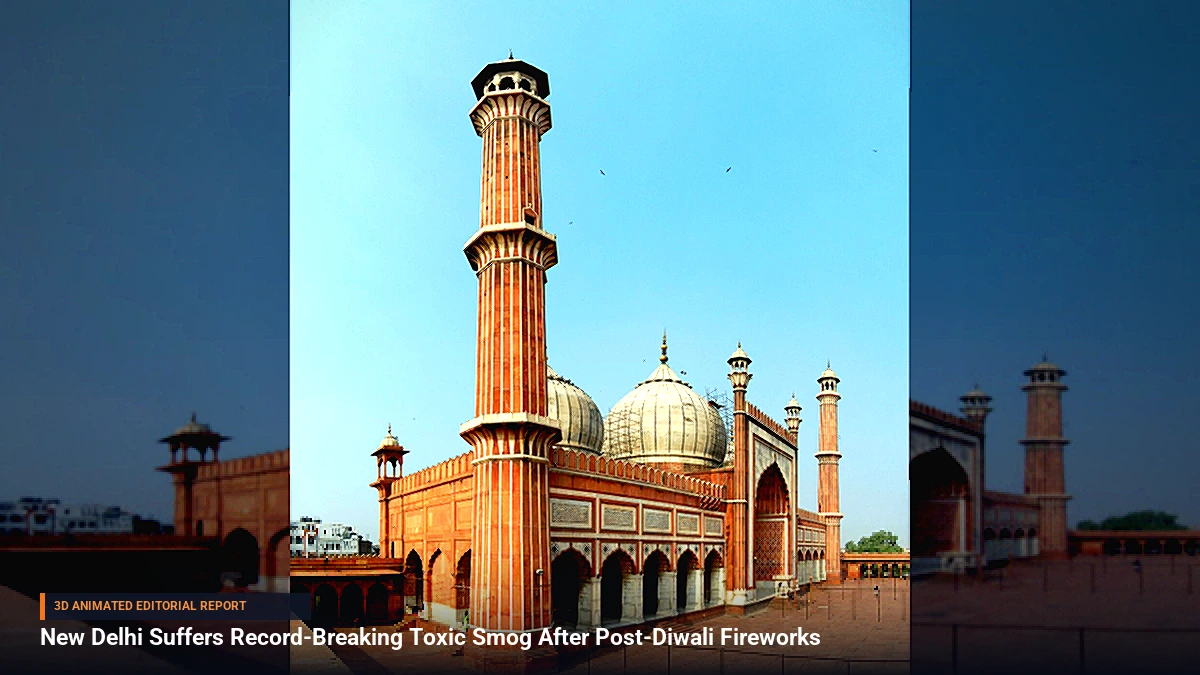
New Delhi woke up to a harrowing reality following the annual festival of lights, as the Indian capital was suffocated by a dense, toxic blanket of smog. Despite longstanding seasonal bans on firecrackers, massive celebrations involving illegal fireworks propelled air pollution indices to severe levels. The accumulation of particulate matter, combined with early morning winter fog, severely curtailed visibility across the sprawling metropolis and trapped hazardous pollutants close to the ground.
The hazardous conditions have placed immense strain on the capital's healthcare infrastructure, posing immediate and long-term health risks to more than 30 million residents. Hospitals reported an uptick in patients presenting with acute respiratory distress, stinging eyes, and cardiovascular complications. While local authorities scrambled to implement emergency dust-suppression measures, the sheer volume of pollutants released overnight overwhelmed standard containment protocols.
Background & Key Context
For years, New Delhi has consistently ranked as one of the world's most polluted capital cities, particularly during the winter months. The annual air quality crisis is a complex, multi-factorial problem driven by a combination of stubble burning in neighboring agricultural states, vehicular emissions, industrial pollution, and unfavorable meteorological conditions.
Diwali celebrations consistently act as an acute catalyst, sharply compounding an already fragile baseline atmosphere. Despite repeated judicial interventions, enforcement bans on the sale and bursting of firecrackers have proven difficult to police consistently. Consequently, the annual ritual frequently transforms into a political and environmental flashpoint, pitting seasonal festive traditions against severe public health imperatives.
Key Takeaways
- Record-Breaking Pollution: New Delhi's post-Diwali air quality index broke a five-year high, intensifying environmental concerns.
- Widespread Smog: Thick, toxic fog mixed with particulate matter severely reduced visibility and trapped pollutants near the surface.
- Health Emergency: Over 30 million residents face acute health risks, particularly vulnerable demographics such as children and the elderly.
- Political Friction: The crisis has intensified mutual blame between major political factions, including the BJP and AAP.
- Data Integrity Disputes: Opposition parties have leveled serious allegations against authorities regarding the alleged manipulation and fraud of air quality metrics.
Impact, Analysis & Global/National Reactions
The environmental crisis quickly transcended public health, morphing into a high-stakes political battleground. Major political entities, including the Bharatiya Janata Party (BJP) and the Aam Aadmi Party (AAP), engaged in fierce public recriminations. Opposition figures slammed the ruling administration for governance failures and prolonged inaction, citing systemic shortcomings in curbing seasonal emissions.
Concurrently, controversies erupted over transparency. Political factions raised allegations of air quality data manipulation, claiming that official metrics downplayed the true severity of the toxic environment to deflect political accountability. Public health advocates and environmental experts have expressed deep frustration, arguing that institutional finger-pointing consistently sidelines cohesive, long-term policy formulation.
What's Next: Looking Ahead
As the winter season progresses, meteorological conditions are expected to keep pollution levels elevated, maintaining pressure on local and federal authorities. Stakeholders are demanding stricter enforcement mechanisms, cross-state agricultural coordination to mitigate stubble burning, and transparent public reporting systems.
Upcoming judicial hearings and legislative reviews are anticipated to focus heavily on the accountability of pollution-monitoring agencies and the efficacy of current firecracker bans. Without structural reforms and depoliticized environmental management, New Delhi's millions remain bracing for months of hazardous air quality.

Be the first to comment
Start a useful conversation around this story.