
What Happened: The Core Developments
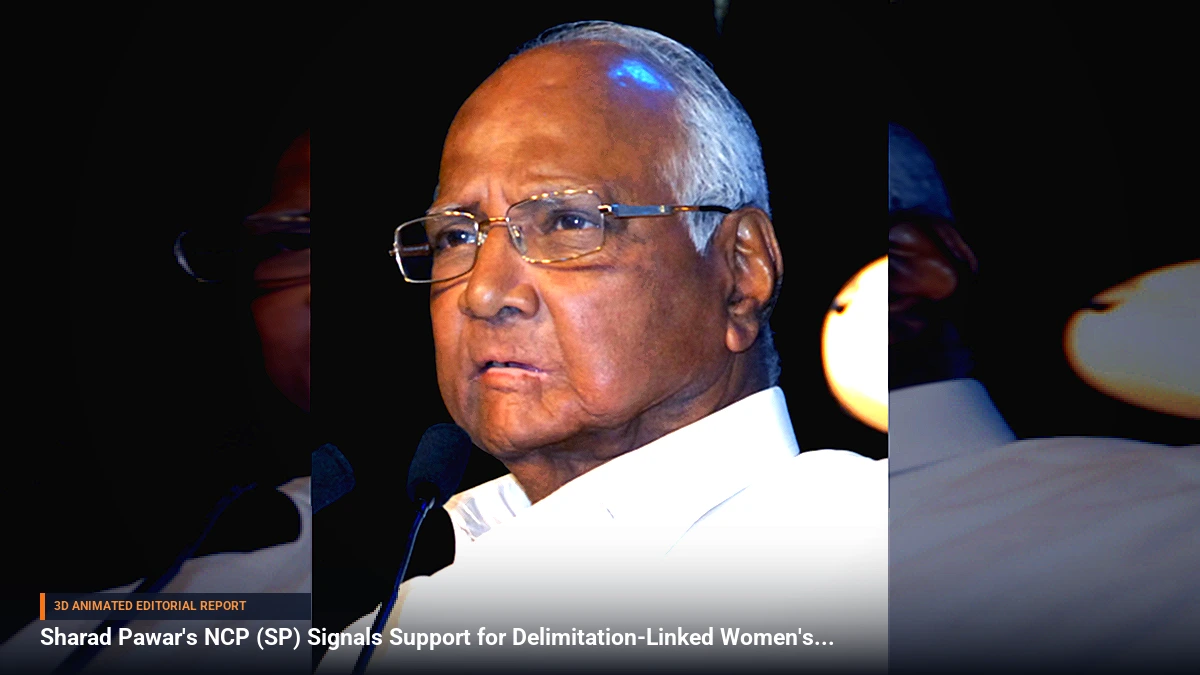
The political landscape surrounding legislative reform shifted significantly following the Union Cabinet's decision to clear a fresh delimitation-linked women's reservation bill. This critical piece of legislation is scheduled to be introduced during the upcoming special sitting of Parliament. Amid these developments, the Nationalist Congress Party (Sharad Pawar faction), or NCP (SP), has signaled its intent to back the proposed measures.
The push comes after an earlier iteration of the delimitation package—bundled with three separate proposed laws—failing to secure parliamentary approval in August due to the requisite two-thirds majority falling short. With renewed momentum, regional political entities like the DMK and NCP (SP) have emerged as key players behind the renewed legislative push, aiming to bridge previous political divides.
Background & Key Context
Delimitation and women's reservation have historically been two of India's most sensitive and complex policy debates. The linkage between redrawing constituency boundaries based on population and reserving one-third of legislative seats for women has created deep fissures, particularly between northern and southern states over potential shifts in political representation.
In August, a comprehensive legislative package failed to muster the necessary two-thirds majority required for constitutional amendments of this magnitude. Political analysts note that securing broader consensus from regional parties is vital for any future electoral reforms to succeed. The recent Cabinet clearance marks a tactical pivot to reintroduce the initiative with refined packaging, testing the waters for renewed parliamentary negotiations.
Key Takeaways
- Union Cabinet Clearance: The government has cleared a fresh delimitation-linked women's reservation bill for the upcoming special session.
- NCP (SP) Stance: Sharad Pawar's party has indicated willingness to support the legislation, altering the numbers game in Parliament.
- Prior Legislative Hurdle: An earlier delimitation package collapsed in August after failing to achieve the mandatory two-thirds majority.
- Internal Party Nuances: Observers have noted varying perspectives within the NCP (SP), ranging from explicit endorsements to cautious, conditional backing.
- Regional Alignment: Opposition and regional formations, including parties like the DMK and NCP (SP), are actively shaping the renewed legislative momentum.
Impact, Analysis & Global/National Reactions
The strategic alignment of parties like the NCP (SP) fundamentally alters the arithmetic required to pass constitutional amendments in Parliament. However, the internal dynamics of the party have also become a talking point among political commentators. While leaders like Jitendra Awhad have voiced clear and explicit support for the measure, figures such as Supriya Sule have introduced nuanced caveats or 'good' riders to soften their stance. Simultaneously, other party voices, including Rohit Pawar, have reportedly expressed reservations.
Political analysts view these varied internal signals as a reflection of the delicate balancing act opposition parties must perform. They must weigh the progressive imperative of women's reservation against regional anxieties regarding potential shifts in parliamentary representation caused by population-based delimitation.
What's Next: Looking Ahead
All eyes are now on the upcoming special session of Parliament, where the newly cleared legislation will be formally introduced. Lawmakers and constitutional experts will closely scrutinize the draft text for any modifications addressing previous concerns. Whether the government can successfully marshal the required two-thirds majority this time around will depend heavily on disciplined floor management and the final terms of alignment among regional stakeholders.




Be the first to comment
Start a useful conversation around this story.