
What Happened: The Core Developments
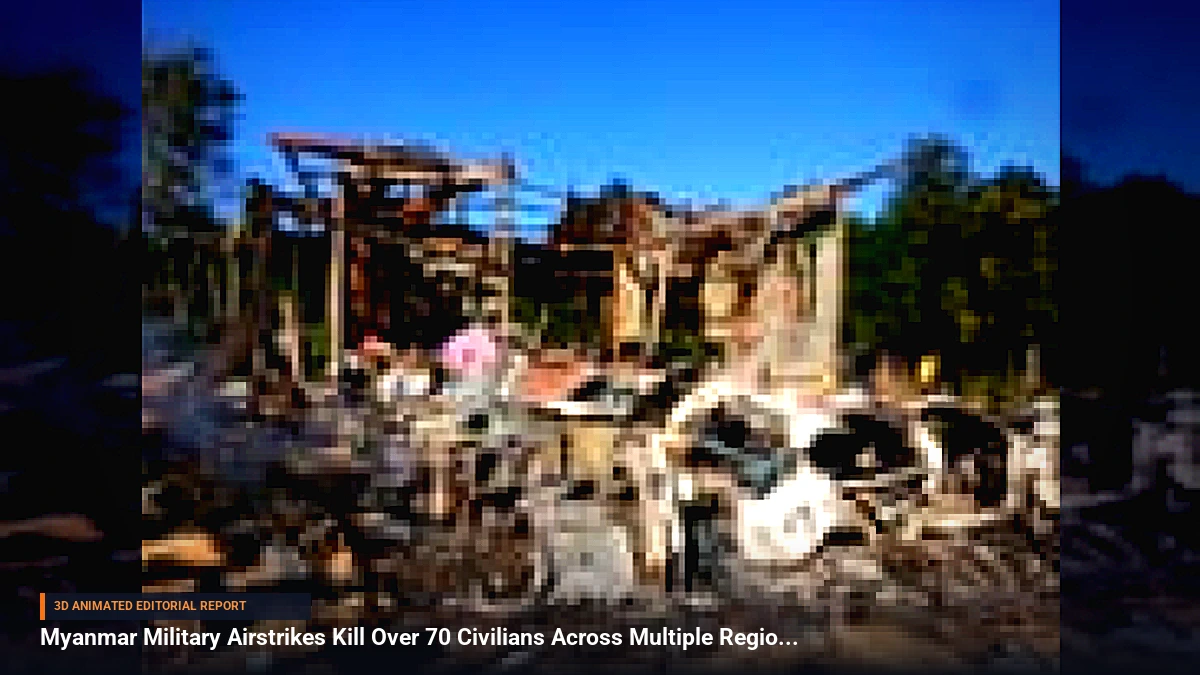
A brutal escalation in Myanmar's ongoing civil conflict has resulted in the deaths of at least 70 civilians over a multi-day span in late November 2026. The Myanmar military unleashed a series of devastating air raids that directly struck populated civilian zones across the country. Among the targeted locations was a wedding venue in the Moe Bye district located in the nation's north-east, where an estimated 20 people lost their lives.
Additional strikes hit a bustling market in Mrauk-U in the west, alongside residential neighborhoods and a school hosting religious ceremonies. Witness accounts and preliminary footage shared from the ground depict scenes of utter devastation, with rescue workers rushing bloodied victims to makeshift medical facilities. While initial reports cited a lower casualty count, updated figures from multiple human rights monitors and regional news agencies confirm that the death toll has climbed past 70 individuals, encompassing vulnerable children and families.
Background & Key Context
The latest aerial bombardments come at a deeply volatile time, occurring just days after a landmark international court ruling found the Myanmar state guilty of committing genocide. Since the military junta seized power in a 2021 coup, the regime has faced widespread armed resistance from ethnic armed organizations (EAOs) and People's Defence Forces (PDFs).
As the junta steadily loses territorial control on the ground, military strategists have increasingly relied on air power and indiscriminate shelling to suppress opposition and punish civilian populations suspected of sympathizing with resistance forces. Schools, hospitals, markets, and places of worship have repeatedly borne the brunt of these aerial campaigns throughout the prolonged civil war.
Key Takeaways
- Massive Civilian Casualties: Over 70 civilians, including children, were killed in a coordinated multi-day bombing campaign across Myanmar.
- Targeting of Non-Combatants: Airstrikes specifically hit soft targets, including a wedding ceremony in Moe Bye and a crowded market in Mrauk-U.
- Timing of Attacks: The aggressive air raids followed closely on the heels of an international court ruling condemning the state for genocide.
- Tactical Shift: Facing heavy ground losses against resistance fighters, the military junta continues to leverage its air superiority against civilian populations.
- Humanitarian Crisis: Access to emergency medical care remains severely constrained in conflict zones, compounding the suffering of survivors.
Impact, Analysis & Global/National Reactions
The deliberate targeting of civilian gathering spaces highlights the junta's disregard for international humanitarian law. Human rights organizations and local observers have roundly condemned the strikes, characterizing them as apparent war crimes designed to terrorize local communities into submission.
Analysts note that the heavy reliance on air power demonstrates both the regime's military weakness on the ground and its absolute willingness to utilize scorched-earth tactics. Despite mounting international condemnation and legal accountability measures, the military leadership remains defiant, prioritizing total territorial subjugation over diplomatic engagement or humanitarian restraint.
What's Next: Looking Ahead
As local rescue teams continue to clear rubble and treat the injured, international bodies are facing renewed pressure to impose stricter aviation fuel sanctions and weapons embargoes on the Myanmar military. Observers will closely monitor whether the international community moves beyond verbal condemnation to enforce more tangible punitive measures in response to the escalating atrocities. Meanwhile, local resistance networks vow to maintain their defensive postures, setting the stage for even fiercer confrontations as the humanitarian crisis deepens.





Be the first to comment
Start a useful conversation around this story.