
What Happened: The Core Developments
Tensions along the Jordanian-Syrian border have reached a boiling point after the Jordanian air force executed a series of retaliatory airstrikes across the Deraa and Suweyda provinces in southern Syria. According to military statements, the kinetic operations were engineered to dismantle militant infrastructure tied to a brutal domestic terror incident that shook the kingdom.
The military action follows a brazen assault on a Greek Orthodox church located in the southern Jordanian region—variously reported in the areas of Karak and the village of Hmoud. The initial shooting rampage claimed the lives of eight to nine innocent civilians, plunging the local community into profound mourning and triggering nationwide security alerts.
Simultaneously, domestic counterterrorism sweeps culminated in a high-stakes dawn raid. Jordanian security forces tracked down and apprehended three primary suspects linked to the church massacre. The suspects reportedly refused to surrender, initiating a firefight before being wounded, subdued, and taken into custody by authorities.
Background & Key Context
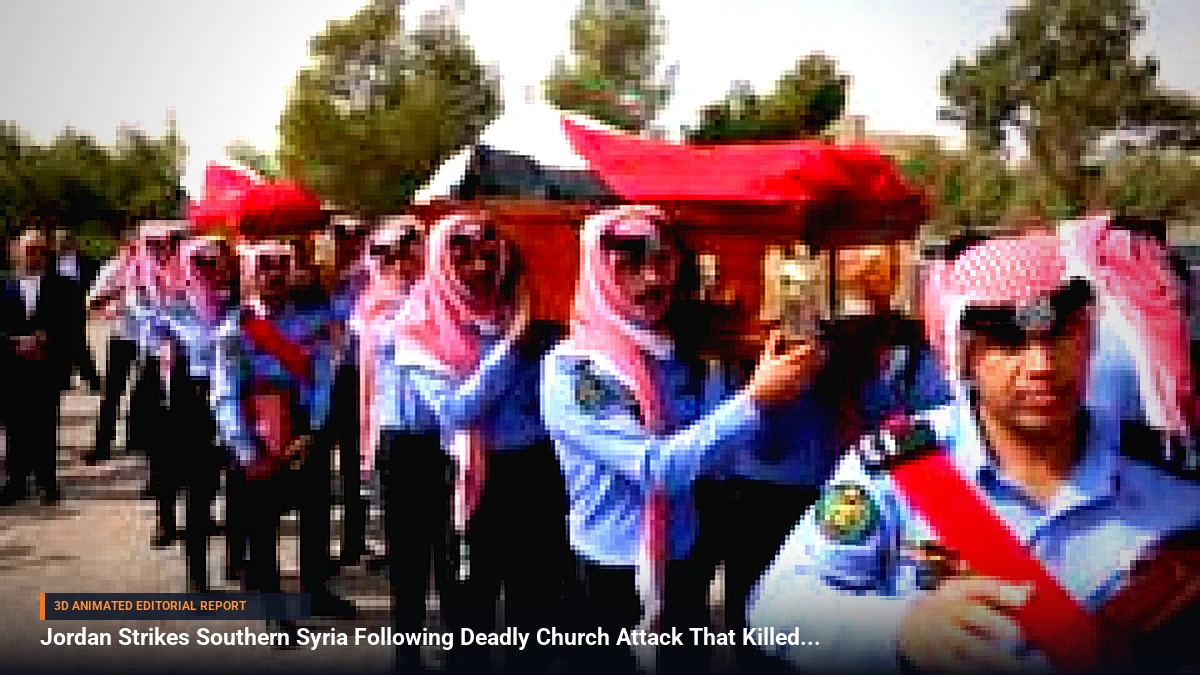
Attacks targeting places of worship are exceptionally rare in Jordan, a nation that has historically maintained relative internal stability compared to its volatile neighbors. The assault on the Greek Orthodox church stunned the populace, prompting thousands of citizens and high-ranking government officials—including the prime minister, who represented the king—to gather for solemn national funerals.
While Jordanian intelligence moved swiftly to neutralize the immediate domestic cell, investigations pointed toward external militant cross-currents operating from safe havens across the porous northern border. Southern Syria, specifically the Deraa and Suweyda governorates, has long served as a complex theatre for fragmented armed groups, smuggling syndicates, and remnant extremist cells, creating persistent security challenges for Amman.
Key Takeaways
- Retaliatory Airstrikes: The Jordanian air force targeted suspected militant hideouts and vehicles across southern Syria's Deraa and Suweyda provinces.
- Casualty Reports: Syrian and regional reports indicate that the airstrikes resulted in at least seven to eight deaths, including civilian casualties and children.
- Domestic Arrests: Security forces arrested three suspects following an armed standoff during a targeted dawn raid inside Jordan.
- Initial Massacre: The catalyst for the military response was a fatal shooting at a church in the Karak/Hmoud area that left eight to nine people dead.
- Bilateral Strain: The Syrian government formally denied any prior coordination regarding the military incursions and swiftly moved to close border crossings.
Impact, Analysis & Global/National Reactions
The unilateral nature of the Jordanian airstrikes has introduced immediate diplomatic friction. Damascus strongly condemned the unauthorized cross-border operation, asserting that Amman failed to coordinate the strikes and announcing the immediate closure of vital border checkpoints between the two countries.
International bodies have also weighed in on the spiraling crisis. Pope Francis and other global faith leaders issued urgent appeals for restraint, offering prayers for the victims of the church attack while calling for an immediate de-escalation of hostilities across the wider region. Analysts note that Amman's decision to project military power beyond its borders underscores the immense domestic political pressure facing the monarchy to ensure absolute accountability for attacks on religious minorities.
What's Next: Looking Ahead
As the investigation into the arrested suspects unfolds, intelligence agencies will be working aggressively to determine whether the cell operated independently or under the direction of an organized regional terrorist network. For now, the closure of the Syrian border crossings signals a temporary freezing of diplomatic channels, leaving regional diplomats scrambling to prevent further kinetic friction between Amman and Damascus.





Be the first to comment
Start a useful conversation around this story.