
What Happened: The Core Developments
Indian political discourse is currently navigating two distinct yet parallel tracks, balancing significant macro-level structural achievements with high-octane partisan friction. Prime Minister Narendra Modi formally inaugurated the Bharat Renewable Energy Summit & Expo 2026 in New Delhi, using the global platform to announce that India's sustained push toward green power acted as a vital economic buffer during recent volatilities stemming from the West Asian crisis involving Iran.
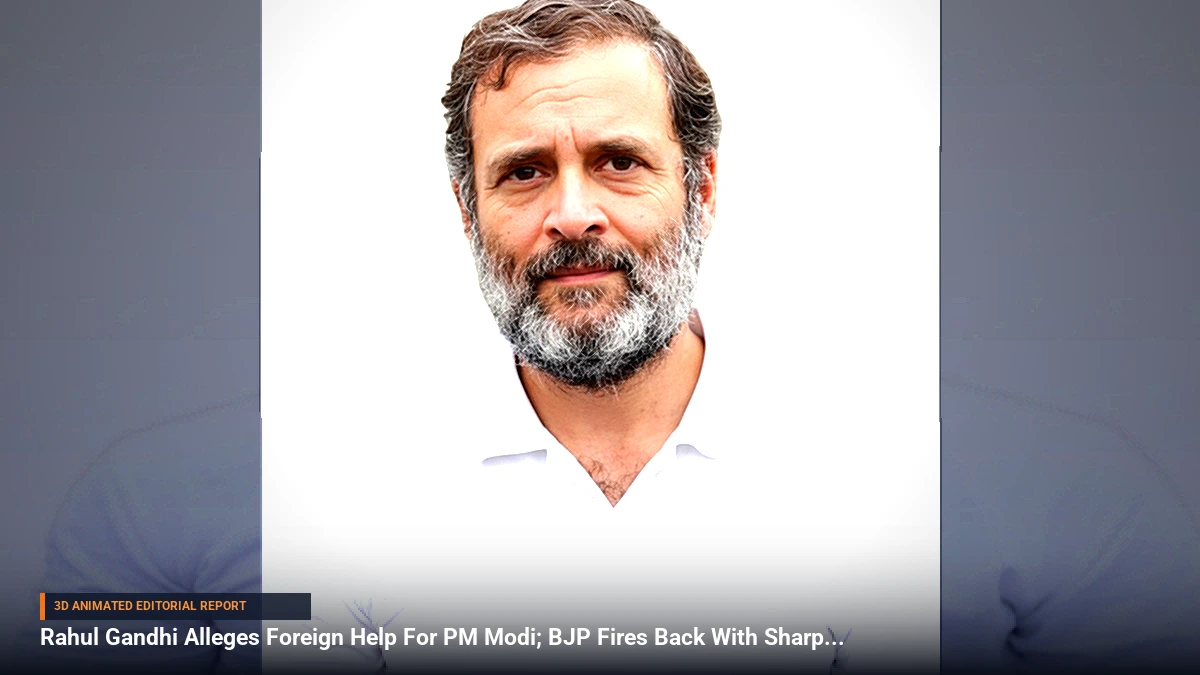
Concurrently, domestic politics reached a boiling point over a renewed challenge for an open, public debate between the Prime Minister and senior opposition figure Rahul Gandhi. The debate challenge, initially thrown down by Gandhi, expanded into digital and public spaces as a Congress leader initiated a widespread public poll asking citizens if they favored such a direct confrontation. The initiative immediately drew counter-strategies and sharp rebukes from prominent ruling party figures, including Union Ministers Kiren Rijiju and Amit Shah, turning a policy-oriented governance cycle into a fierce ideological contest.
Background & Key Context
India's strategic pivot toward clean power is not merely an environmental obligation but a core pillar of its national security and economic sovereignty. Historically reliant on imported fossil fuels from West Asia, the South Asian powerhouse has faced recurring economic vulnerabilities whenever regional conflicts threaten global crude supply chains. By aggressively scaling up solar, wind, and alternative energy infrastructure toward ambitious multi-gigawatt targets, New Delhi has systematically attempted to de-risk its macroeconomy.
On the political front, the face-off between the ruling Bharatiya Janata Party (BJP) and the Indian National Congress reflects a deeply polarized electoral environment. Demands for public debates between top leaders are rare in modern Indian electoral traditions, making the back-and-forth exchanges—ranging from social media polls to public rejoinders by cabinet ministers—an intense spectacle that commands prime-time news attention and hyper-engaged voter dialogue.
Key Takeaways
- Renewable Insulation: PM Modi stated that heavy investments in green and alternative energy successfully cushioned India's domestic economy from the adverse shocks of the West Asian (Iran) conflict.
- Summit Launch: The high-profile inauguration of the Bharat Renewable Energy Summit & Expo 2026 in New Delhi highlighted the nation's ongoing transition toward sustainable energy independence.
- Debate Showdown: Opposition leader Rahul Gandhi's challenge for an open debate with the Prime Minister triggered a cascading series of responses across political lines.
- Public Engagement: A Congress-backed public poll asking citizens if they support a Modi-Gandhi debate has added a grass-roots pressure element to the ongoing political feud.
- Ruling Party Pushback: Senior BJP leaders, including Kiren Rijiju and Amit Shah, have actively countered the opposition's narrative, questioning the motives behind the debate challenges.
Impact, Analysis & Global/National Reactions
The dual narrative playing out across the subcontinent illustrates how contemporary governance requires managing simultaneous fronts of structural economic resilience and fierce political accountability. Economists and energy analysts have noted that New Delhi's emphasis on clean energy provides a credible narrative regarding macro-financial stability in an increasingly volatile global landscape.
However, the dominance of political jousting threatens to overshadow substantive policy discourse. While the opposition seeks to leverage public forums and direct engagement to challenge the ruling establishment's executive dominance, the BJP leadership has maintained that governance outcomes and structural reforms speak louder than theatrical political debates. Institutional observers point out that this friction is a defining feature of a robust democracy, though it frequently amplifies partisan polarization.
What's Next: Looking Ahead
As India prepares for upcoming legislative cycles and major policy benchmarks, the momentum behind the renewable energy sector will face continuous scrutiny to ensure infrastructural targets translate into sustained consumer relief. Simultaneously, the ongoing war of words over public debates is expected to shape campaign strategies, driving digital engagement and setting the tone for future parliamentary sessions as both sides vie for narrative dominance.

Be the first to comment
Start a useful conversation around this story.