
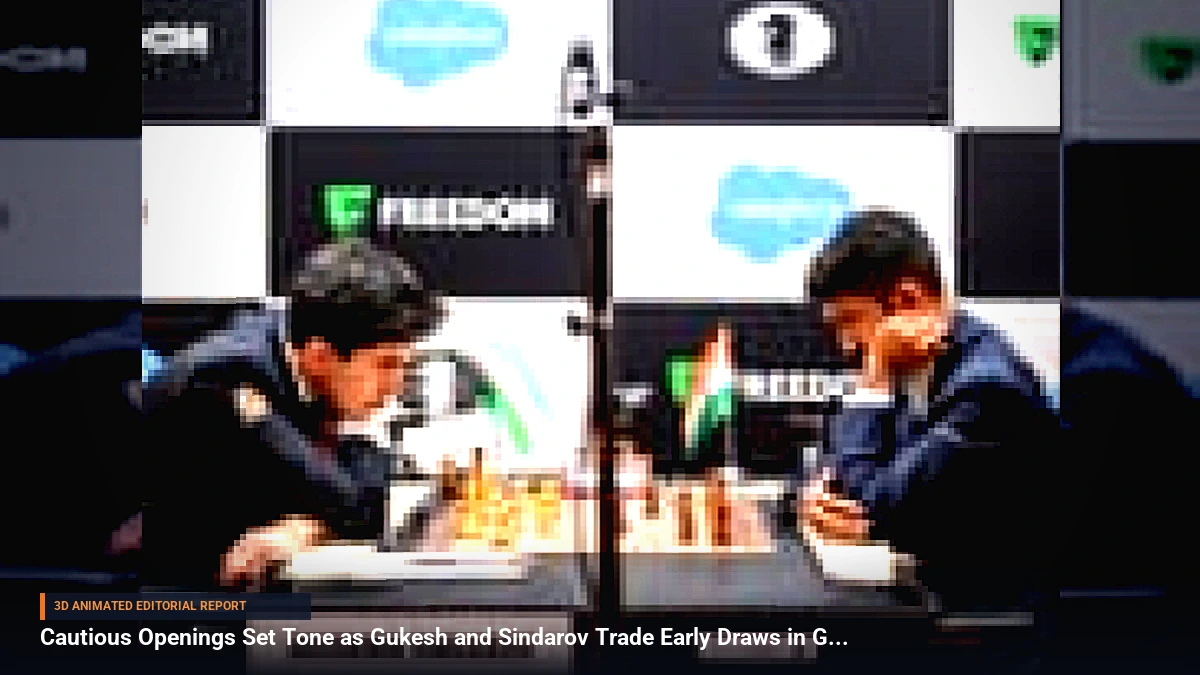
What Happened: The Core Developments
The 2026 FIDE World Chess Championship in Geneva has commenced with a measured, highly defensive approach from both contenders. In Game 1 of the match, defending champion Gukesh Dommaraju and challenger Javokhir Sindarov tested each other's mettle in a complex 38-move draw utilizing the renowned Berlin Defense of the Ruy Lopez opening. Gukesh successfully navigated intense time pressure and early strategic pressure from the challenger to hold his ground.
Building upon the cautious tone of the opener, Game 2 saw Gukesh deploy the London System with the white pieces. However, Sindarov demonstrated deep and resilient preparation, neutralizing white's minor initiative cleanly. The encounter concluded rapidly in a 20-move draw by repetition, leaving both competitors level and eager to probe for weaknesses in the upcoming rounds.
Background & Key Context
Hosted in the vibrant intellectual hub of Geneva, this year's world title showdown features some of the youngest elite talent in modern chess history. The opening game's choice—the Berlin Defense (1. e4 e5 2. Nf3 Nc6 3. Bb5 Nf6)—carries immense historical weight. Famously utilized by Vladimir Kramnik to dethrone Garry Kasparov in their legendary 2000 world championship match, the Berlin remains one of black's most formidable and heavily analyzed defensive bulwarks against 1. e4.
Meanwhile, Gukesh’s pivot to the London System in Game 2 represents a shift toward a solid, structured setup designed to avoid early tactical landmines while maintaining deep theoretical safety. Sindarov's matching response underscores a meticulous opening preparation strategy aimed at nullifying white's initial advantage.
Key Takeaways
- Level Playing Field: Both opening games have ended in peaceful draws, leaving the score deadlocked as the championship progresses.
- Berlin Resilience: Game 1 featured a deeply analyzed 38-move Berlin Defense where Gukesh successfully weathered considerable time trouble.
- Swift Repetition: Game 2 concluded after just 20 moves via a draw by repetition following Gukesh's deployment of the London System.
- Impeccable Preparation: Both grandmasters have showcased airtight opening home preparation, giving little room for early tactical surprises.
- Geneva Stage: The high-profile match is currently unfolding in Geneva, drawing intense global media coverage and grandmaster analysis.
Impact, Analysis & Global/National Reactions
Chess analysts and former world champions have noted that the cautious start reflects the immense psychological weight of a world championship match. Gukesh remarked post-game that he felt "always under control" during the tense exchanges, displaying the poise expected of a reigning titleholder.
Commentators have praised Sindarov's ability to pressure Gukesh early in the first game while commending the champion's defensive resilience under the clock. Grandmaster analysts streaming live coverage emphasized that both players are currently feeling out each other's styles, prioritizing safety and stability over high-risk gambits in the initial phase.
What's Next: Looking Ahead
As the championship moves past its preliminary sparring phase, attention turns immediately to Game 3. Spectators and analysts will look to see whether either player breaks away from heavily booked opening theory to introduce sharper, more combative lines. With the score even, the psychological battle lines are drawn, and the pressure will mount as the tournament schedule deepens in Geneva.






Be the first to comment
Start a useful conversation around this story.