
What Happened: The Core Developments
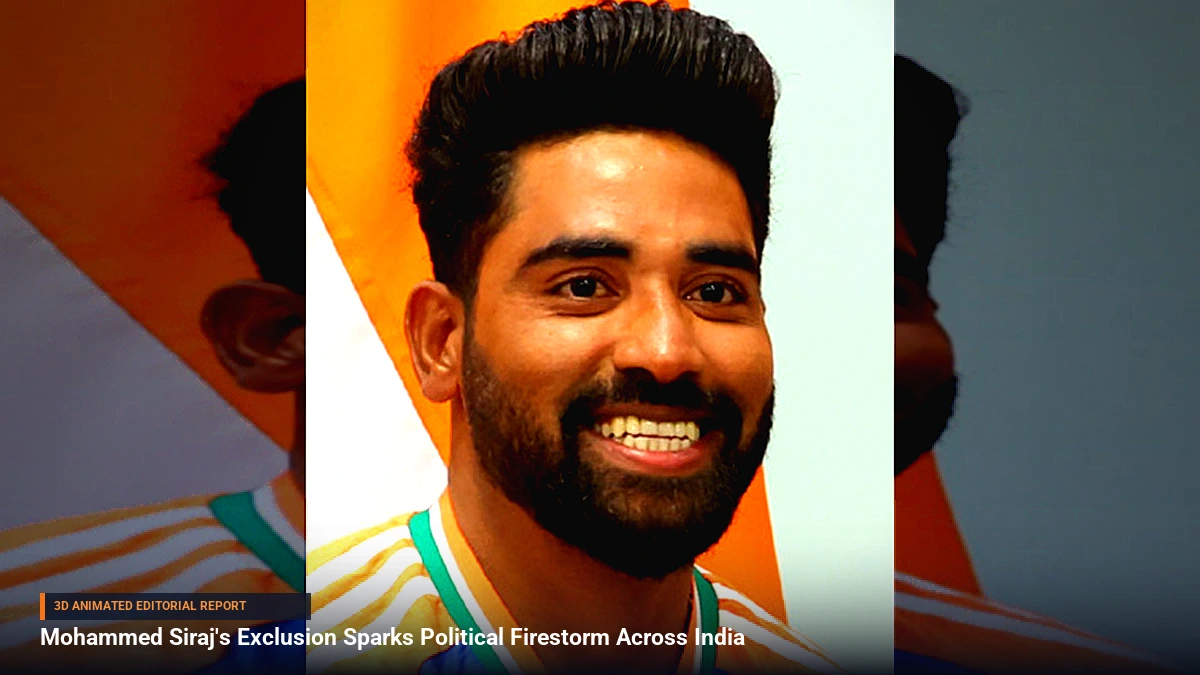
The exclusion of fast bowler Mohammed Siraj from India's playing XI for the match against New Zealand has triggered an intense national debate, quickly spilling over from sports analysis into the realm of political controversy. The decision by team management to leave Siraj out of the lineup prompted immediate reactions from sporting figures and politicians alike.
Congress Member of Parliament Imran Masood publicly alleged that the omission was driven by religious bias, igniting a broader political clash. Mr. Masood's remarks drew swift condemnation and counter-arguments from within his own political camp, highlighting sharp internal disagreements over how public figures should address sporting decisions. Telangana Minister Mohd Azharuddin also voiced his disappointment over Siraj's exclusion, noting the bowler's track record and significance to the national setup.
Background & Key Context
Sports selection in India has historically been subject to intense public scrutiny, given cricket's status as a unifying cultural phenomenon. However, the direct injection of identity politics into squad choices remains a sensitive issue. Over decades, Indian cricket teams have prided themselves on selecting players strictly based on performance, fitness, and tactical requirements.
The latest controversy underscores how easily cultural fault lines can be invoked when high-profile athletes are left sidelined. While former players and analysts routinely debate pitch conditions, tactical combinations, and current form, the framing of a tactical omission through a communal lens has drawn sharp pushback from institutional veterans and political leaders who seek to insulate sports from divisive narratives.
Key Takeaways
- The Omission: Mohammed Siraj's exclusion from the playing XI against New Zealand sparked immediate public and political uproar.
- Allegations of Bias: Congress MP Imran Masood claimed religious bias played a role in the decision, drawing criticism.
- Internal Party Friction: Congress leader Mumtaz Patel openly countered Masood, rejecting identity politics in sports.
- Ministerial Disappointment: Telangana Minister Mohd Azharuddin also expressed dismay over the team selection.
- Call for Accountability: Legendary former India captain Kapil Dev emphasized that selectors remain fully accountable for squad choices.
Impact, Analysis & Global/National Reactions
The fallout from the selection controversy has laid bare ideological fractures regarding the intersection of sports and public identity. Mumtaz Patel forcefully countered her party colleague's assertions, stating that cricketing merit has historically superseded identity in national selections and criticized efforts to introduce hate politics into the arena.
Meanwhile, cricketing legends have sought to ground the discourse back in athletic realities. Legendary former India captain Kapil Dev weighed in on the controversy, asserting that selection panels and team management are solely accountable for squad choices. "Selectors are accountable for squad choices," Kapil Dev noted, shifting the focus back to professional sporting governance rather than speculative narratives.
Political analysts view the internal Congress clash as a microcosm of a broader national challenge: resisting the temptation to communalize everyday institutional and professional decisions. Observers note that while constructive criticism of team selection is a normal facet of sports fandom, attributing professional outcomes to identity markers threatens the traditional neutrality of Indian sports.
What's Next: Looking Ahead
As the Indian cricket team continues its international campaign, attention will undoubtedly shift back to on-field performances and tactical adaptations. The selection committee faces mounting pressure to maintain absolute transparency in team compositions to quash speculative narratives.
Domestically, the episode serves as a cautionary tale for political figures wading into athletic domains. With internal party dissent brought to the forefront, leadership may look to establish clearer boundaries regarding public commentary on non-political matters, ensuring that the country's sporting pride remains shielded from partisan political maneuvering.


Be the first to comment
Start a useful conversation around this story.