
What Happened: The Core Developments
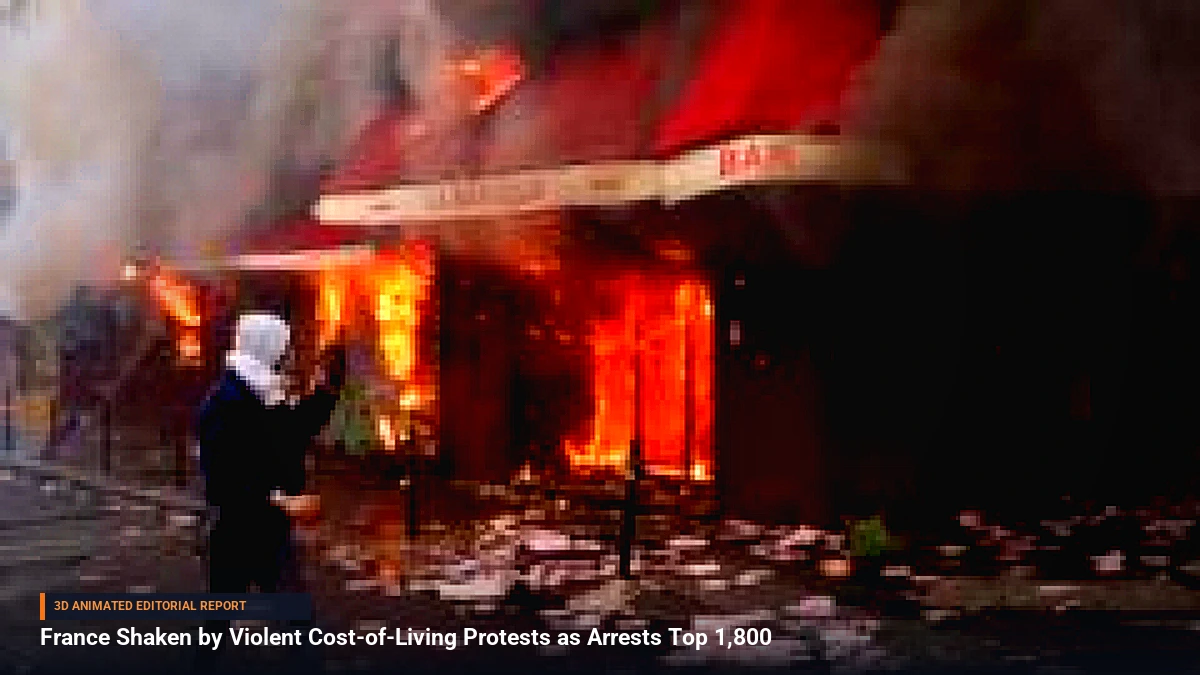
France has been left reeling following a massive wave of cost-of-living demonstrations that quickly spiraled into severe civil unrest. What began as widespread public mobilization involving over half a million citizens quickly deteriorated into chaotic urban violence across multiple cities. Iconic thoroughfares were marked by burning cars, thick plumes of smoke, and extensively looted storefronts.
As security forces moved to contain the chaos, clashes between rioters and law enforcement intensified. Officials confirmed that between 1,200 and 1,800 individuals were arrested in connection with the widespread vandalism, arson, and direct attacks on public infrastructure. The sheer velocity and intensity of the escalation caught security apparatuses off guard, transforming peaceful economic grievances into dramatic scenes of urban conflict.
Background & Key Context
Economic pressure has been mounting across Europe, with inflationary cycles and surging energy and food prices severely squeezing household budgets. France, with its robust history of vocal labor and public resistance, has frequently witnessed economic discontent manifest in large-scale street demonstrations. However, the latest wave highlights a dangerous tipping point where general frustration over inflation and purchasing power fuses with broader institutional grievances.
Key Takeaways
- Mass Mobilization: More than 500,000 people participated in demonstrations across the nation.
- Rapid Escalation: Protests quickly turned violent, featuring widespread looting, burning vehicles, and damaged buildings.
- Massive Security Crackdown: Law enforcement responses resulted in between 1,200 and 1,800 arrests nationwide.
- Widespread Destruction: Urban centers, most notably Paris, suffered significant property damage with shattered glass and torched infrastructure.
Impact, Analysis & Global/National Reactions
The sudden eruption of violence has triggered urgent calls for calm from government leadership, with officials warning that the escalation of rioting threatens public safety and social cohesion. Analysts suggest that the scale of the unrest reflects a profound disconnect between the populace's financial struggles and the perceived efficacy of current national policy measures.
Observers note that the violent turn threatens to overshadow legitimate grievances regarding economic hardship. Civil rights advocates and trade union representatives have urged restraint on both sides, emphasizing that destructive elements within the crowds are hijacking genuine public anxiety over the cost of living.
What's Next: Looking Ahead
As cleanup operations begin in major French cities, policymakers face intense pressure to address the underlying economic drivers that fueled the unrest. Authorities are expected to review security protocols following the extensive property damage and high volume of arrests, while political leaders weigh potential dialogue or targeted economic relief to defuse mounting social tensions.



Be the first to comment
Start a useful conversation around this story.