
What Happened: The Core Developments
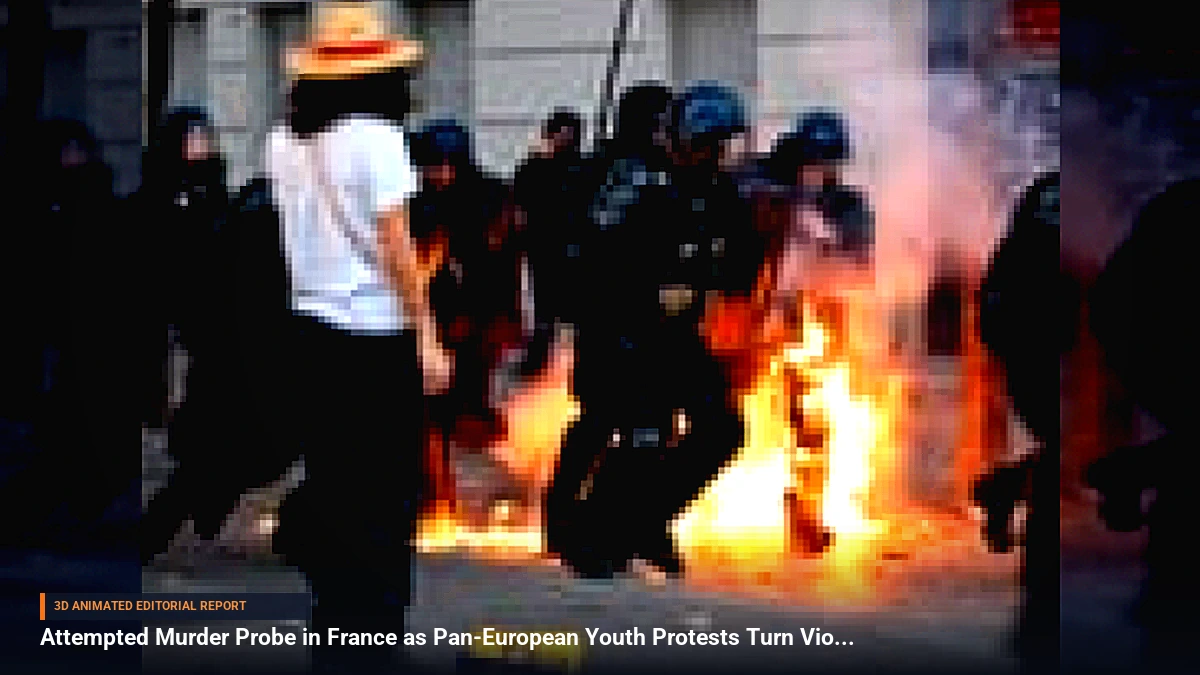
French law enforcement officials have officially opened an attempted murder investigation following a violent escalation during the third consecutive weekend of nationwide demonstrations. The probe comes after a Molotov cocktail was directly thrown at riot police officers in Paris, injuring members of the security detail.
What began as organized, youth-led rallies demanding urgent relief from mounting living costs quickly deteriorated into urban chaos. Throughout major French cities, demonstrators engaged in clashes with security personnel, prompting authorities to deploy tear gas and make hundreds of arrests. Similar scenes of intense civil unrest materialized across borders, with protesters and police engaging in direct skirmishes in Germany, Switzerland, Portugal, and Albania.
Background & Key Context
The current wave of demonstrations is predominantly driven by Generation Z and young adults across Europe who are facing severe economic pressures, inflation, and housing crises. Initially manifesting as peaceful marches and localized gatherings, the movement has steadily grown in magnitude over three consecutive weekends.
As economic discontent deepened, opportunistic elements and radical factions within the crowds transformed peaceful assemblies into arenas of confrontation. In nations like Germany and Switzerland, demonstrators utilized fireworks, paving stones, and incendiary devices against security forces, while sporadic looting was reported in commercial districts. In Portugal, police forces—supported by canine units—cleared entrenched protest camps utilizing baton charges to restore public order.
Key Takeaways
- Attempted Murder Probe: French prosecutors initiated a formal criminal investigation after a petrol bomb struck riot police during Paris clashes.
- Pan-European Unrest: Protests over living costs have spread beyond France, impacting Germany, Switzerland, Portugal, and Albania.
- Youth-Led Momentum: The demonstrations are driven largely by younger demographics demanding systemic economic relief.
- Widespread Arrests: Law enforcement agencies across multiple European capitals have made hundreds of arrests following property damage and physical assaults on officers.
- Escalating Tactics: Rallies that began as peaceful marches have increasingly seen the use of fireworks, Molotov cocktails, and urban looting.
Impact, Analysis & Global/National Reactions
The rapid acceleration of urban violence has alarmed political leaders across Western and Southern Europe. Government officials are facing a delicate balancing act: protecting the constitutional right to peaceful assembly while clamping down on escalating criminality and attacks on state infrastructure.
In Germany, the interior minister issued a strong public statement calling for immediate and harsh legal penalties against rioters who targeted storefronts and police officers. Meanwhile, civil liberties groups have expressed concern over the heavy-handed tactics employed by security forces, including baton charges and widespread tear gas deployment, warning that aggressive policing risks further alienating the younger generation.
What's Next: Looking Ahead
With consecutive weekends of unrest straining municipal resources, European governments are scrambling to address both the root economic grievances and the immediate threat of public disorder. Law enforcement agencies are expected to maintain heightened security postures ahead of upcoming weekends, utilizing digital surveillance and intelligence networks to identify instigators.
At the same time, policymakers face mounting pressure to introduce targeted cost-of-living measures to appease the demographic driving the protests. However, finding fiscal room in national budgets remains a formidable challenge, setting the stage for continued political friction and potential further demonstrations across the continent.

Be the first to comment
Start a useful conversation around this story.