
What Happened: The Core Developments
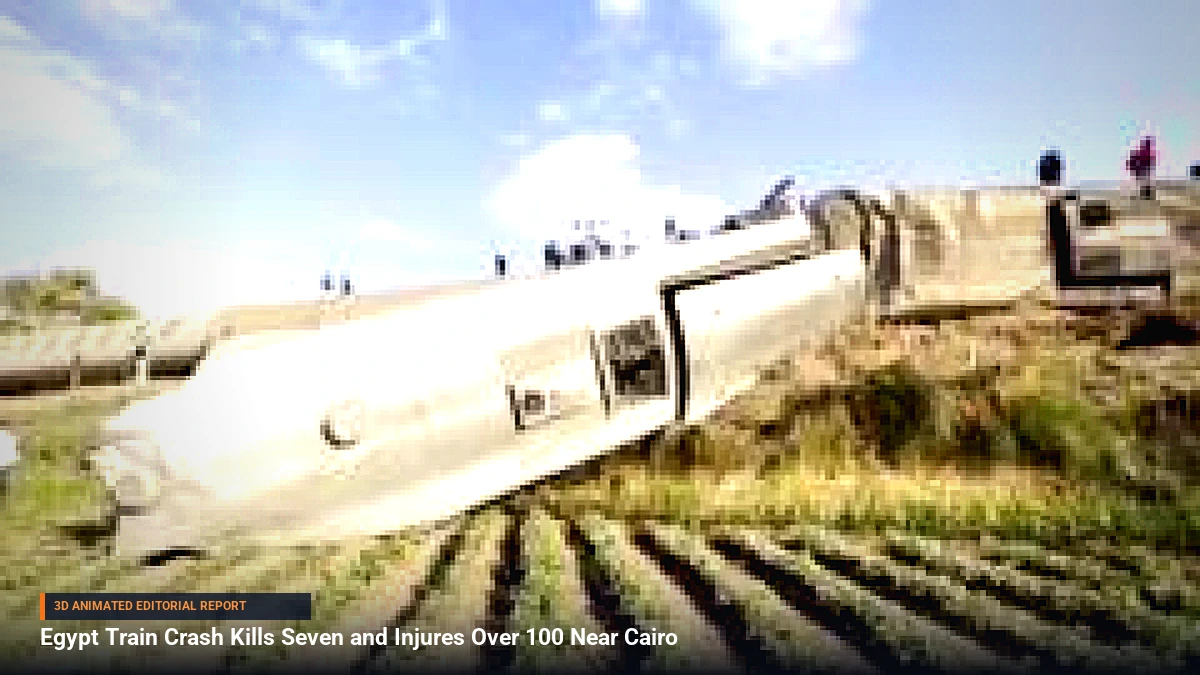
A catastrophic rail incident unfolded near Egypt's capital region when a passenger train traveling from Cairo toward Aswan collided with a stationary train. The impact caused severe structural damage, resulting in the derailment and overturning of multiple carriages.
Initial reports from emergency services fluctuated as rescue operations progressed, eventually confirming that at least seven people lost their lives and more than 100 individuals sustained injuries. Emergency medical personnel, ambulances, and civil protection teams rushed to the site to extract trapped passengers and transfer the wounded to nearby hospitals.
Background & Key Context
Egypt boasts one of the oldest railway networks in Africa and the Middle East, yet the system has long struggled with chronic maintenance issues, outdated signaling equipment, and human error. Despite substantial financial investments by the government in recent years to modernize tracks, automated control systems, and rolling stock, safety failures continue to plague daily operations.
Historically, major rail disasters have triggered public outrage, leading to recurring government promises of sweeping overhauls. However, the sheer volume of passenger traffic combined with vast network coverage leaves significant room for vulnerability, making systemic reform a protracted and complex challenge.
Key Takeaways
- Casualty Figures: At least 7 people were killed and over 100 others injured in the collision.
- Route Details: The passenger train was actively operating on the heavily trafficked line connecting Cairo to Aswan in southern Egypt.
- Nature of the Crash: The moving passenger train struck a stationary rail vehicle, causing immediate carriage derailments.
- Official Response: President Abdel Fattah al-Sisi announced a formal state investigation to pinpoint responsibility.
- Ongoing Safety Debate: The tragedy reignites public concern over infrastructural modernization and accountability within Egypt's national transit network.
Impact, Analysis & Global/National Reactions
The incident has sent shockwaves through the public sphere, amplifying scrutiny over the pace of railway modernization. Transport safety advocates point out that despite repeated tragedies over past decades, systemic upgrades have failed to completely eradicate preventable collisions.
Responding directly to the public outcry, Egyptian President Abdel Fattah al-Sisi issued a definitive public statement emphasizing that an exhaustive investigation is already underway. He vowed that the state will "hold accountable anyone who proves their negligence," seeking to reassure citizens that systemic lapses will face strict judicial and administrative consequences.
What's Next: Looking Ahead
As emergency rescue operations conclude and site clearings progress, investigators from the transport ministry and judicial committees will focus on retrieving black boxes, reviewing signal logs, and interviewing surviving crew members to determine whether mechanical failure or human error triggered the crash.
For the broader transport sector, the disaster places renewed pressure on authorities to expedite advanced automated signaling rollouts and enforce tighter operational protocols across all main trunk lines to prevent future calamities.






Be the first to comment
Start a useful conversation around this story.