
What Happened: The Core Developments
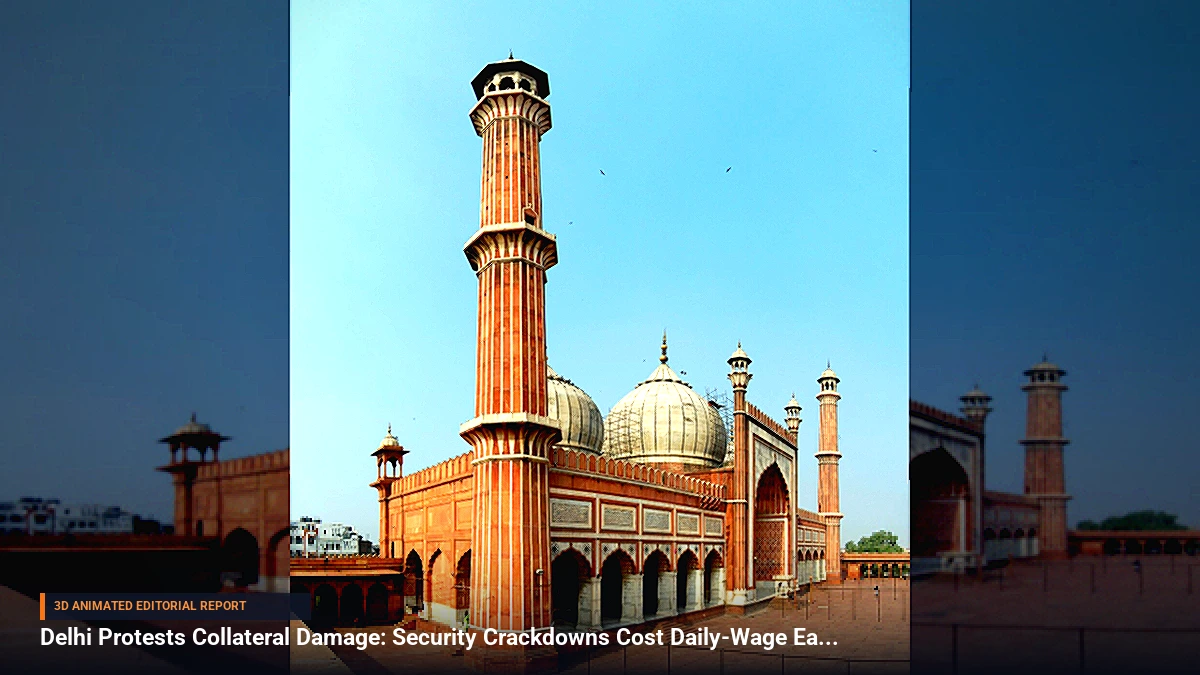
The national capital witnessed intense demonstrations that brought together high-ranking political figures, civic leaders, and thousands of citizens. As protesters attempted to march toward Jantar Mantar, law enforcement agencies deployed heavy-handed security measures, setting up extensive barricades and implementing lockdown-like restrictions across critical corridors of New Delhi.
The confrontations led to the mass detention of numerous prominent opposition figures, including Arvind Kejriwal and four former Chief Ministers representing the broader INDIA bloc coalition. While the vast majority of the thousands detained during the marches were subsequently released, a small fraction of individuals remained in custody, fueling ongoing domestic friction and political outrage.
However, beyond the high-stakes political theater and headline-grabbing detentions, the stringent security apparatus inflicted immediate collateral damage on the city's informal economy. Daily-wage workers—including street vendors, cycle-rickshaw pullers, and casual laborers—found themselves trapped behind sudden police barricades, resulting in lost hours and entirely forfeited day's earnings.
Background & Key Context
The recent wave of demonstrations underscores a persistent tension in urban governance: balancing the maintenance of public order with the constitutionally protected right to assembly. Delhi, as the political heartbeat of the nation, frequently serves as the epicenter for political expressions and mass mobilization.
Historically, major protests in the capital prompt rapid escalations in security protocols. Yet, the scale of recent barricades and transit disruptions highlights an increasingly aggressive posture by law enforcement. Civil society groups point out that while political leaders eventually secure release following high-profile detentions, the invisible economic burden borne by the city's working poor rarely receives adequate institutional remedy or compensation.
Key Takeaways
- Socioeconomic Toll: Daily-wage laborers lost essential daily earnings after being blocked by extensive police barricades deployed to curb the demonstrations.
- High-Profile Detentions: Prominent political figures, including Arvind Kejriwal and four former Chief Ministers, were detained alongside thousands of protesters marching toward Jantar Mantar.
- Mass Releases: While the vast majority of detained protesters were eventually freed, a small number of individuals remained in detention, drawing continued criticism.
- International Scrutiny: The United Nations Human Rights Spokesperson expressed formal concern over the scale of mass detentions in Delhi.
- Diplomatic Pushback: The Indian government strongly criticized the OHCHR's statements, dismissing them as misplaced and unwarranted interference.
- Civil Society Appeals: Amnesty International publicly urged the Delhi police to uphold and actively facilitate the right to peaceful assembly rather than imposing lockdown-like constraints.
Impact, Analysis & Global/National Reactions
The handling of the capital's protests has triggered a multi-layered fallout spanning local economic welfare, national politics, and international diplomacy. Economists and labor rights advocates emphasize that rigid security strategies disproportionately penalize marginalized segments of society who live on subsistence wages.
Internationally, the events attracted unwanted spotlight. The United Nations Human Rights Office raised formal concerns regarding the scope of the mass detentions, prompting a swift and robust rebuttal from New Delhi. Indian authorities characterized the UN's remarks as misplaced and unwarranted, defending the security measures as necessary actions to maintain public safety and peace.
Meanwhile, human rights organizations like Amnesty International stepped into the discourse, urging law enforcement to calibrate their responses to respect fundamental democratic freedoms. Observers note that these competing pressures illuminate the delicate balancing act facing democratic governance in managing civil dissent without eroding constitutional rights.
What's Next: Looking Ahead
As the political dust settles, attention turns to the legal status of the remaining detainees and the broader fallout for coalition politics. Opposition parties are expected to leverage the incident to galvanize public support ahead of upcoming electoral battles, framing the security crackdown as an overreach of executive power.
Concurrently, civil rights advocates are pressing for policy reforms in crowd control management. These proposals aim to minimize collateral disruptions to urban transit and protect the economic viability of informal workers during future periods of civil unrest.

Be the first to comment
Start a useful conversation around this story.