
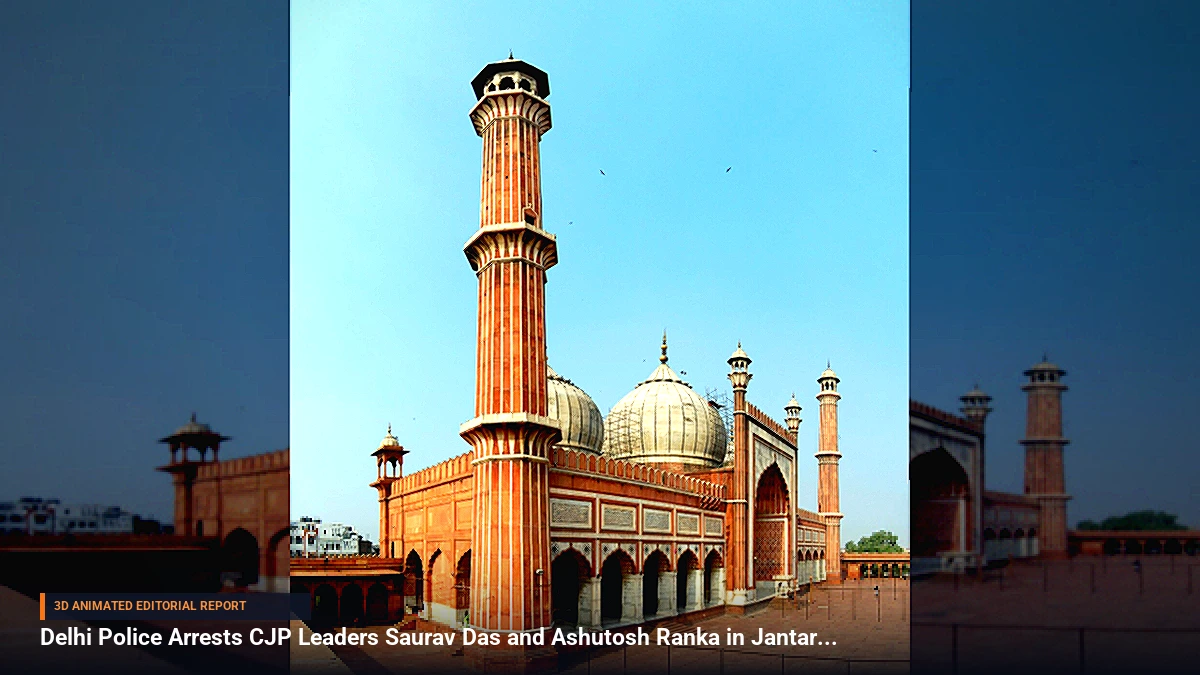
What Happened: The Core Developments
Delhi law enforcement agencies have taken prominent activists into custody amid a high-stakes demonstration in the national capital. Saurav Das and Ashutosh Ranka, key leaders associated with Citizens for Justice and Peace (CJP), along with fellow activist Ajinkya Shinde, were arrested following an unauthorized entry into the heavily barricaded Jantar Mantar protest zone.
The flashpoint occurred when the activists bypassed security cordons to stage a demonstration within the historic protest venue. According to police and eyewitness accounts, the gathering quickly intensified as participants raised vocal slogans demanding the immediate resignation of Chief Election Commissioner Gyanesh Kumar. Law enforcement officers swiftly intervened, invoking trespass charges and detaining the core group before preparing them for formal production before a local magistrate.
Background & Key Context
Jantar Mantar has long served as the epicenter for public dissent and democratic agitation in New Delhi. However, recent weeks have seen an unprecedented tightening of security protocols around key government and institutional zones across the capital. The demonstrations targeting the Election Commission leadership reflect mounting political and civil society tensions over electoral oversight mechanisms and administrative transparency.
Civil rights organizations have increasingly found themselves at loggerheads with municipal authorities over restricted access to traditional public assembly points. Analysts note that the current wave of demonstrations bears structural resemblances to historic mass mobilization movements witnessed over the past decade and a half, raising crucial constitutional questions regarding the right to peaceful assembly versus state security imperatives.
Key Takeaways
- High-Profile Arrests: CJP leaders Saurav Das and Ashutosh Ranka were taken into custody by Delhi Police following unauthorized entry at Jantar Mantar.
- Core Demands: The protests specifically centered around calls for the resignation of Chief Election Commissioner Gyanesh Kumar.
- Additional Detentions: Activist Ajinkya Shinde was also identified among those detained alongside the primary CJP leadership.
- Legal Charges: Police have registered formal cases focusing on trespassing and breaching heavily barricaded security perimeters.
- Judicial Next Steps: The detained individuals are slated to be produced before a local judicial magistrate for further proceedings.
Impact, Analysis & Global/National Reactions
The sweeping police action has drawn sharp criticism from legal experts, opposition figures, and civil liberties watchdogs who argue that preemptive detentions and heavy-handed perimeter controls undermine fundamental democratic freedoms. Conversely, administration defenders maintain that maintaining public order and protecting vital constitutional institutions necessitate strict adherence to authorized assembly protocols.
Ratna Singh, a prominent legal representative for CJP, vehemently condemned the police response, asserting that peaceful resistance and critical discourse cannot be legally de-notified or systematically erased. International observers have similarly begun tracking the unfolding events, comparing the scale of the capital's lockdown and the suppression of election-related protests to earlier eras of intense political friction.
What's Next: Looking Ahead
As the legal machinery moves forward, all eyes will be on the upcoming magistrate hearings where defense counsels are expected to challenge the validity of the trespass charges and seek unconditional bail for Das, Ranka, and Shinde. Meanwhile, civil society networks are mulling further mobilization strategies, even as security forces maintain a high-alert posture across New Delhi to forestall further unauthorized demonstrations.


Be the first to comment
Start a useful conversation around this story.