
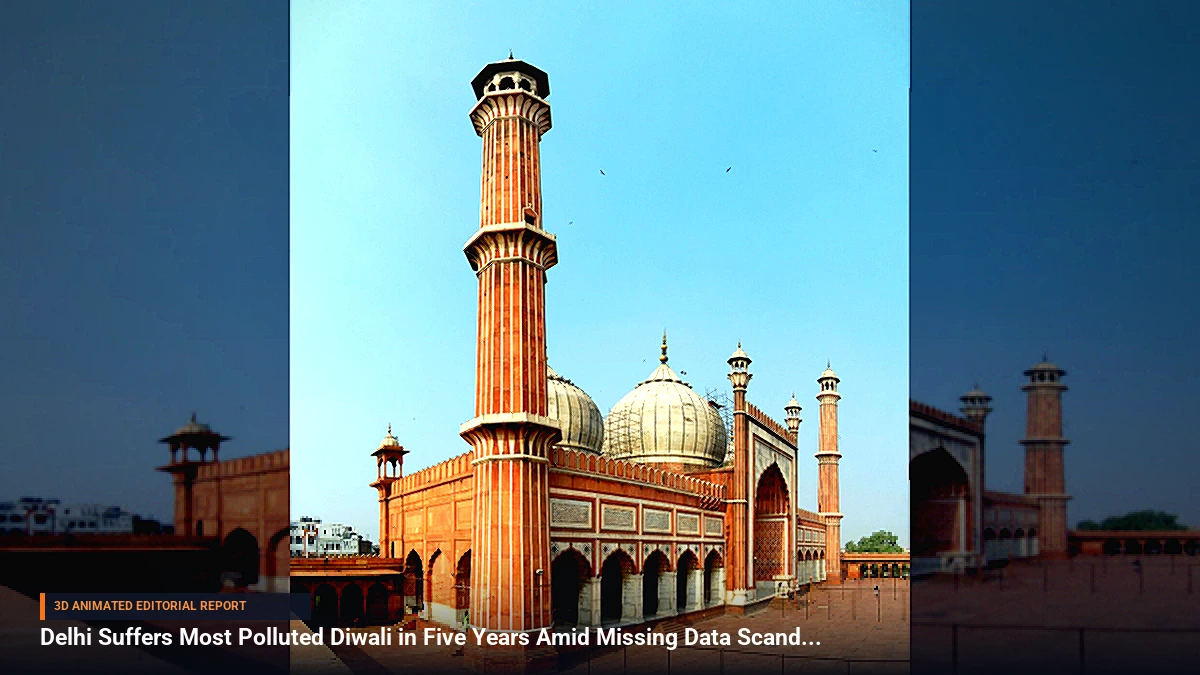
What Happened: The Core Developments
New Delhi witnessed its most polluted Diwali in five years, as a suffocating layer of thick smog choked the capital city. The immediate catalyst was a combination of widespread firecracker combustion during the festive night and entrenched seasonal emissions. Across various key areas of the metropolitan region, the Air Quality Index (AQI) surged past 400, entering the severe category and posing immediate risks to vulnerable populations.
However, the environmental crisis was compounded by an alarming governance anomaly: data mysteriously went missing at several government monitoring stations precisely at the peak of air pollution on Deepavali night. This sudden blackout of vital real-time environmental metrics has sparked intense scrutiny from watchdogs and citizens alike, raising serious questions regarding administrative transparency during critical public health emergencies.
Background & Key Context
For years, the National Capital Region has grappled with an escalating toxic loop every autumn. While public attention invariably focuses on the immediate spike caused by festive firecrackers, the deeper crisis stems from a complex amalgamation of regional agricultural stubble burning, low wind speeds, and dropping seasonal temperatures that trap pollutants close to the ground.
Environmental scientists have long maintained that while firecrackers deliver an acute, high-intensity shock to the atmosphere, the week immediately following Diwali serves as the ultimate test of systemic resilience. During this period, background factors take over, sustaining hazardous air quality levels for weeks and turning the region into a virtual gas chamber.
Key Takeaways
- Record Pollution Spike: Delhi recorded its highest pollution levels during the Diwali festive season in five years.
- Hazardous AQI Levels: The Air Quality Index crossed the 400 threshold in multiple zones, indicating severe health risks for all residents.
- Data Blackout Controversy: Critical air quality data mysteriously disappeared from several government monitoring stations at the height of Deepavali night.
- Compounding Seasonal Factors: Firecrackers act as an acute multiplier, but broader background factors dictate the prolonged duration of the winter smog.
- Public Health Emergency: Medical professionals have flagged extreme risks of respiratory and cardiovascular complications for millions living in the capital.
Impact, Analysis & Global/National Reactions
The simultaneous occurrence of record-breaking pollution and disappearing data streams has eroded public trust in official mitigation frameworks. Environmental analysts point out that accurate, uninterrupted data collection is the absolute foundation of emergency response planning. Without transparent metrics, formulating targeted interventions or issuing timely public health advisories becomes severely compromised.
Civil society groups and clean-air advocates have demanded immediate accountability from environmental authorities regarding the offline monitoring units. Public health experts warn that prolonged exposure to AQI levels above 400 matches the physiological toll of smoking multiple cigarettes a day, leaving hospitals bracing for an influx of patients suffering from acute asthma, bronchitis, and cardiovascular stress.
What's Next: Looking Ahead
The coming weeks will present Delhi's most severe environmental test as meteorological conditions favor the entrapment of pollutants. Stakeholders are closely watching for emergency administrative measures, including potential restrictions on vehicular traffic, construction bans, and enhanced enforcement against stubble burning in neighboring states. Pressure is mounting on municipal authorities to explain the monitoring station data failures and to ensure absolute transparency as the region navigates its perilous winter pollution cycle.


Be the first to comment
Start a useful conversation around this story.