
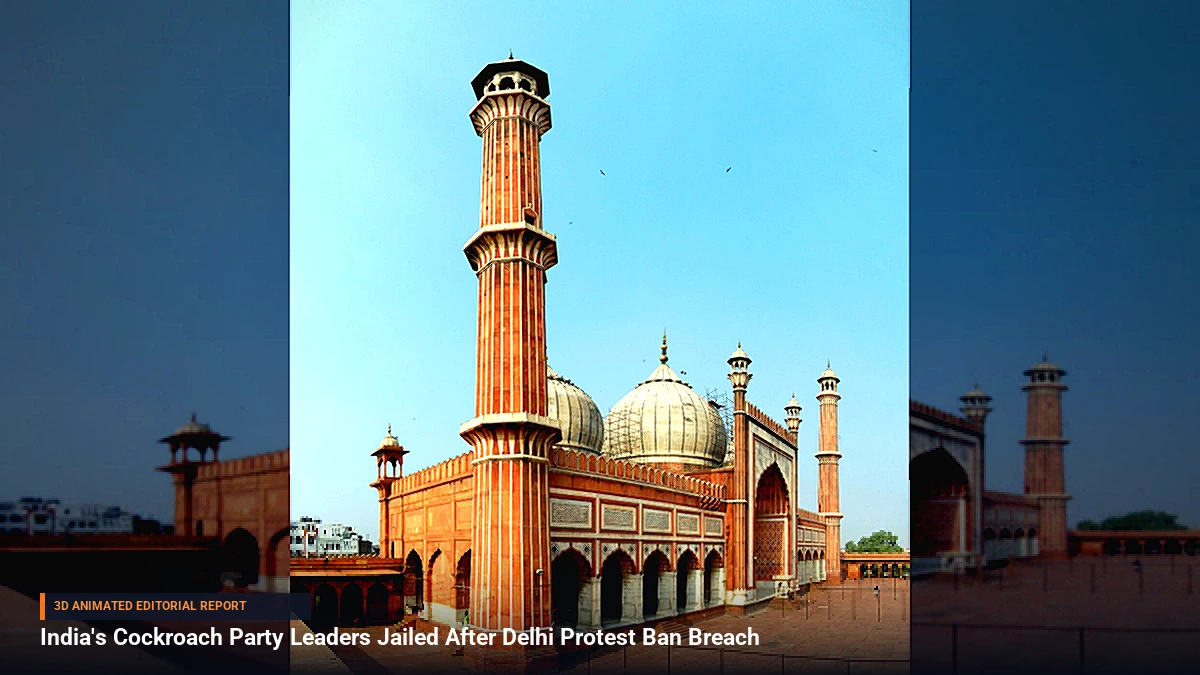
What Happened: The Core Developments
In a move that has drawn significant national and international attention, prominent figures within India's political landscape have faced strict judicial action. Saurav Das and Ashutosh Ranka, leaders representing India's unconventional political movement known as the Cockroach Party (or CJP), were formally ordered into a five-day judicial custody by a Delhi court.
The detention stems from an incident where both leaders allegedly breached official orders by entering a designated protest site that had been placed under a strict government ban. Law enforcement authorities acted swiftly, detaining the duo on trespassing charges and subsequently presenting them before the judiciary to secure remand. Legal representatives for the detained politicians have vehemently contested the police narrative, with allegations raised in court that law enforcement misconstrued facts surrounding the arrest.
Background & Key Context
The developments in Delhi are part of a broader, increasingly tense environment surrounding public demonstrations, civil disobedience, and political dissent in the world's largest democracy. Authorities in the national capital have frequently utilized strict security protocols, including area lockdowns and blanket prohibitions on public gatherings, to manage high-stakes political demonstrations and deter opposition mobilization.
The Cockroach Party—characterized by its provocative moniker and grassroots approach to challenging established political norms—has frequently positioned itself at the forefront of controversial civic issues. By attempting to breach restricted zones, the leadership sought to challenge what they describe as an erosion of democratic freedoms and the systematic stifling of public assembly rights in urban centers.
Key Takeaways
- Judicial Custody Ordered: CJP leaders Saurav Das and Ashutosh Ranka were handed a five-day remand following a court hearing in Delhi.
- Core Allegation: The primary formal charge centers on trespassing and defying an explicit ban on entering a restricted protest zone.
- Legal Contestation: Defense attorneys and supporters have pushed back against the official police version of events, claiming law enforcement misled the judiciary.
- Broader Implications: The arrests underscore the fragile state of civil liberties and the heavy-handed tactics often employed by authorities to suppress unauthorized demonstrations.
- Political Signaling: The use of fringe or alternative political parties as test cases highlights the strict boundaries enforced by the state against non-sanctioned civic action.
Impact, Analysis & Global/National Reactions
The decision to jail opposition and alternative political figures has reignited fierce debates regarding the health of democratic institutions and freedom of expression in India. Civil rights advocates argue that deploying judicial custody for peaceful—albeit prohibited—entry into protest areas sets a dangerous precedent, criminalizing political dissent and curtailing the fundamental right to assemble.
Conversely, state authorities and security agencies defend the measures as necessary maintenance of public order and safety. From the perspective of municipal administration, unapproved gatherings in sensitive zones risk severe public disruption and potential civil unrest, justifying the preemptive bans and rigorous enforcement.
Legal analysts note that cases involving trespass at banned sites often expose systemic friction between constitutional rights to protest and executive powers designed to maintain public tranquility. The disputed claims in court—with defense teams accusing police of fabricating details—further compound public skepticism regarding the transparency of such rapid detentions.
What's Next: Looking Ahead
As Das and Ranka complete their five-day judicial custody, legal teams are expected to push for formal bail hearings while challenging the validity of the underlying charges. The outcome of these upcoming legal maneuvers will likely set a crucial benchmark for how similar cases of civil disobedience are handled by Delhi courts.
Meanwhile, civil society organizations and opposition networks are monitoring the situation closely, weighing whether to launch solidarity campaigns or legal challenges aimed at expanding public space for demonstration. The broader political fallout may also influence upcoming electoral strategies as parties navigate the increasingly restricted landscape of public activism in India.
Be the first to comment
Start a useful conversation around this story.