
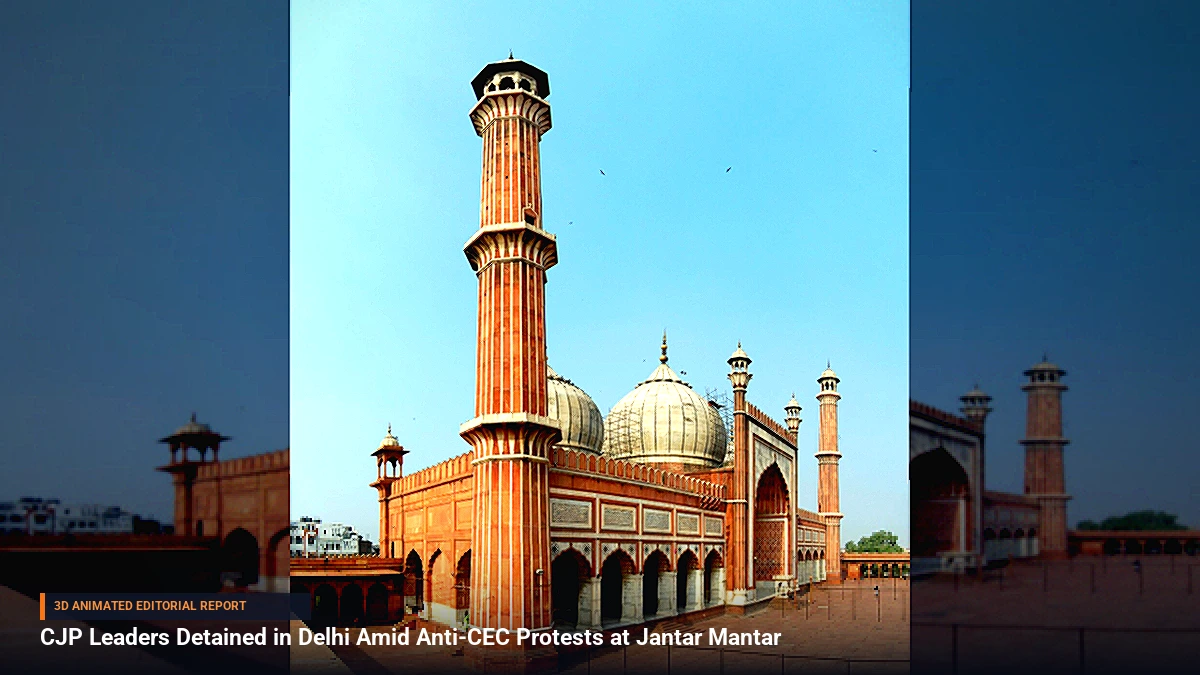
What Happened: The Core Developments
Tensions flared in the heart of New Delhi as security forces detained prominent Citizens for Justice and Peace (CJP) leaders, including Saurav Das and Ashutosh Ranka, during a high-stakes demonstration. The protest was organized to voice vehement opposition against Chief Election Commissioner (CEC) Gyanesh Kumar.
Demonstrators attempted to breach the barricades and scale the gates of Jantar Mantar—India's traditional epicenter for public agitation—after authorities moved to block access. Eyewitness accounts and video footage captured activists defying orders and climbing security fences in an effort to "reclaim" the space, triggering swift intervention and subsequent detentions by law enforcement personnel stationed heavily across the capital.
Background & Key Context
The flashpoint at Jantar Mantar does not exist in a vacuum; it arrives amid a deteriorating climate for public demonstrations in the national capital. Authorities have increasingly clamped down on dissent, underscored by moves seeking an extension of Central Armed Police Forces (CAPF) deployment and the reported denotification of Jantar Mantar as an authorized protest venue.
For decades, Jantar Mantar served as the primary democratic valve for citizens, activists, and labor unions seeking to air grievances before the central government. However, recent administrative and security measures have progressively hollowed out its status, pushing civil society organizations into direct confrontation with municipal and law enforcement agencies over constitutionally guaranteed rights to peaceful assembly.
Key Takeaways
- High-Profile Detentions: CJP leaders Saurav Das and Ashutosh Ranka were taken into police custody after scaling gates at Jantar Mantar.
- Target of Protest: The demonstrations directly challenged Chief Election Commissioner Gyanesh Kumar over electoral and administrative accountability.
- Erosion of Public Space: The confrontation follows contentious moves by authorities to denotify Jantar Mantar as an official protest venue.
- Heightened Security: Heavy police deployments and security lockdown measures swept across Delhi, alongside moves to extend the presence of Central Armed Police Forces (CAPF).
- Civil Society Pushback: Activists have fiercely rejected restrictions, framing the denial of traditional protest spaces as an assault on democratic rights.
Impact, Analysis & Global/National Reactions
The crackdown has ignited fierce debates among legal experts, civil rights advocates, and political observers regarding the shrinking space for dissent in contemporary India. Critics argue that systematically stripping away historical demonstration sites converts the capital into a fortress, alienating the citizenry from institutional accountability.
Prominent voices within the resistance movement have taken to public platforms to challenge the legality of these restrictions. "Resistance cannot be denotified," remarked activist Abhijeet Dipke, capturing the defiant mood rippling through civil society groups. Analysts warn that clamping down on peaceful assemblies against crucial constitutional bodies like the Election Commission risks deepening public distrust in democratic institutions.
What's Next: Looking Ahead
As the fallout from the Jantar Mantar detentions reverberates through political circles, civil liberties groups are weighing legal challenges against the denotification of the historic protest site and the sweeping police actions.
Stakeholders will closely monitor whether the judiciary intervenes to protect the right to peaceful assembly or if authorities continue tightening security parameters ahead of upcoming political cycles. The broader question remains whether alternative spaces will be sanctioned for public dissent or if New Delhi is moving permanently toward a zero-tolerance policy for street-level activism.

Be the first to comment
Start a useful conversation around this story.