
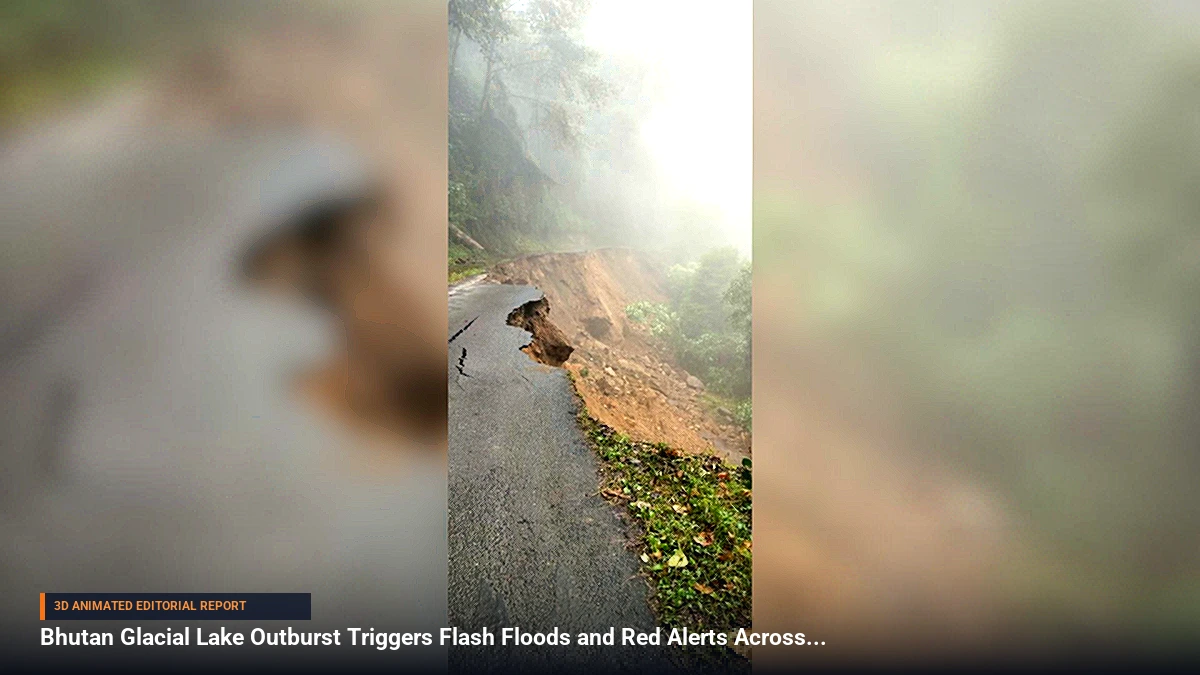
What Happened: The Core Developments
A catastrophic glacial lake outburst in the remote heights of northern Bhutan has sent a massive surge of water cascading downstream, triggering sudden flash floods and severe downstream warnings across northeastern India. The unexpected deluge has severely impacted border areas, compelling regional authorities in West Bengal and Assam to activate emergency response protocols.
Rescue and disaster management teams have been deployed along major drainage arteries, most notably the Sankosh River, which serves as a critical conduit connecting Bhutanese runoff to the Indian plains. Evacuations are currently underway in vulnerable low-lying settlements across five border districts as water levels continue to fluctuate dangerously.
Background & Key Context
Himalayan ecosystems are increasingly susceptible to climate-induced anomalies, with rising global temperatures accelerating the melting of glaciers and the rapid expansion of unstable glacial lakes. These bodies of water are typically held back by fragile moraine dams—natural barriers composed of loose rock and ice that can breach suddenly under pressure from seismic activity, heavy precipitation, or excessive meltwater.
In recent years, scientists and environmental monitors have cataloged dozens of high-risk glacial lakes across Bhutan and the broader eastern Himalayan range. The latest incident highlights the perpetual and immediate threat these transboundary water bodies pose to millions of downstream inhabitants in India and Bhutan, where early warning systems face severe logistical hurdles due to rugged terrain.
Key Takeaways
- Transboundary Disaster: A sudden glacial outburst in northern Bhutan directly triggered downstream flash floods in India.
- High-Alert Zones: Five key districts spanning northern West Bengal and Assam have been placed under strict red alerts.
- Targeted Evacuations: Disaster response teams have initiated mass evacuations, focusing heavily on vulnerable areas along the Sankosh River basin.
- Climate Vulnerability: The event underscores the escalating danger of climate change-driven glacial lake outburst floods (GLOFs) in the Himalayas.
- Coordinated Monitoring: Cross-border authorities are closely tracking water flow rates and reservoir levels to mitigate further loss of life.
Impact, Analysis & Global/National Reactions
The unfolding crisis has exposed the profound vulnerabilities embedded in transboundary river basin management. Environmental analysts note that because glacial hazards originate in high-altitude sovereign territories outside India's immediate administrative control, real-time communication and early warning integration between Thimphu and New Delhi remain a matter of absolute survival.
Local administrative bodies in districts such as Alipurduar have canceled leave for emergency personnel, deploying civil defense teams to riverbanks to prevent residents from approaching swollen channels. While comprehensive damage assessments remain ongoing due to restricted access in remote sectors, the psychological and economic toll on agrarian and riparian communities is already severe.
What's Next: Looking Ahead
As the immediate flood wave traverses the lower reaches of Assam and West Bengal, disaster management agencies remain on high alert for secondary flooding and bank erosion. Immediate priorities include establishing relief camps for displaced populations, distributing essential supplies, and conducting structural integrity checks on bridges and embankments.
Over the longer term, this event is expected to reignite diplomatic and scientific discussions regarding enhanced bilateral early-warning infrastructure, automated sensor deployments in high-risk Himalayan lakes, and improved regional cooperation frameworks to preempt future climate catastrophes.



Be the first to comment
Start a useful conversation around this story.