
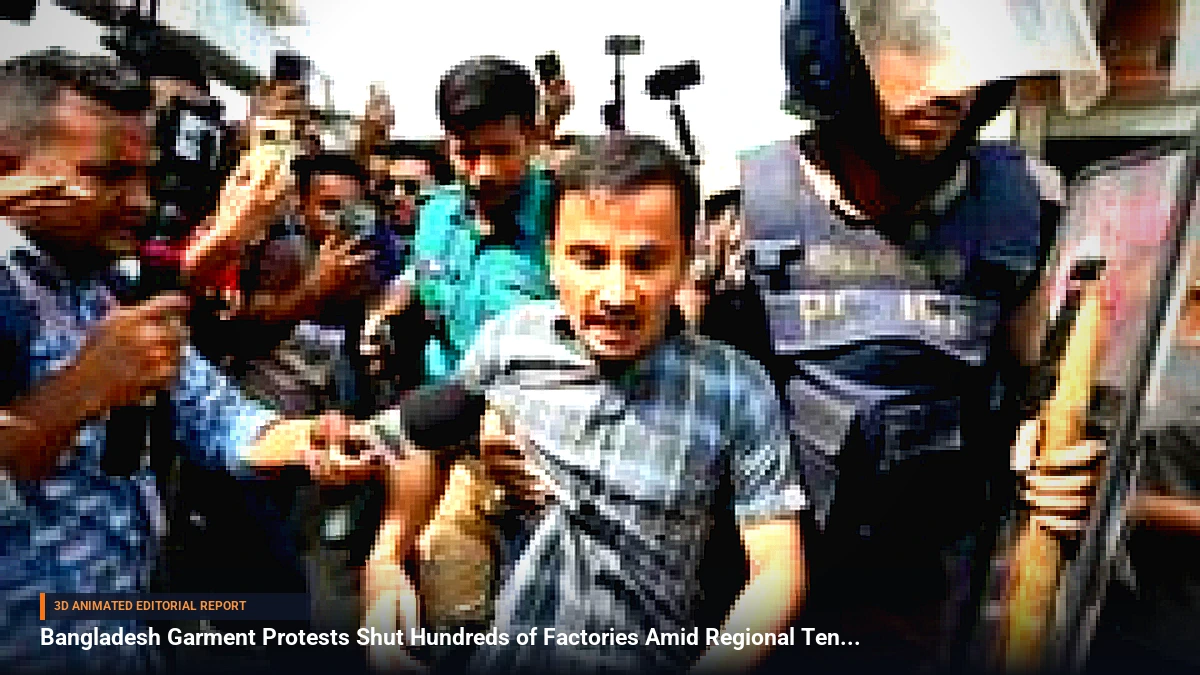
What Happened: The Core Developments
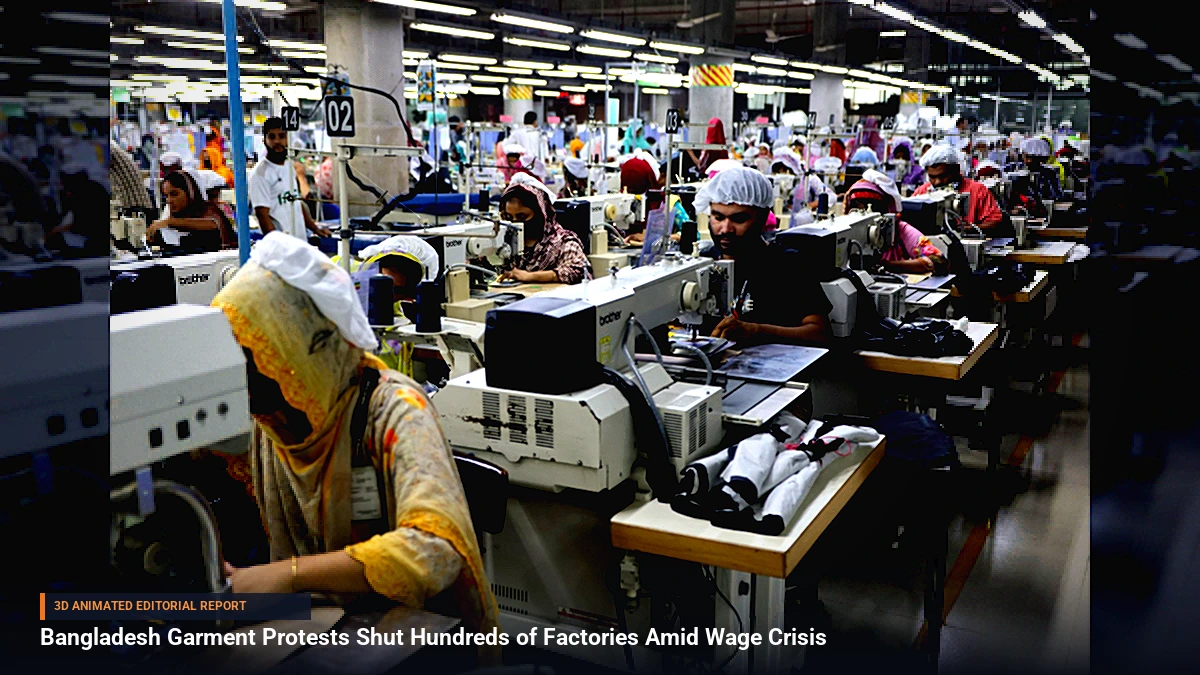
Industrial unrest in Bangladesh escalated significantly as garment workers took to the streets for the fourth consecutive day, demanding better wages and economic relief. The widespread demonstrations have paralyzed operations across key manufacturing hubs, forcing hundreds of factories to temporarily suspend production. These facilities form the backbone of the nation's multi-billion-dollar apparel export economy, supplying major international retail giants including H&M and Uniqlo.
The protests have disrupted supply chains and raised concerns among international buyers who rely heavily on Bangladeshi manufacturing. While workers report that current wages are insufficient to cover basic survival needs amid rising living costs, the disruptions have created a severe operational bottleneck in industrial zones surrounding Dhaka and other manufacturing centers.
Background & Key Context
Bangladesh's ready-made garment (RMG) sector is the second-largest in the world, employing millions of low-wage workers—predominantly women—and accounting for the vast majority of the country's export earnings. However, the sector has frequently been a flashpoint for labor friction, driven by historical wage stagnation, inflation, and disputes over minimum compensation standards.
This latest wave of labor agitation unfolds against a fragile political backdrop. Following the ouster of former Prime Minister Sheikh Hasina, the country has experienced political transition and administrative restructuring. The current interim authorities are grappling with both economic revival and political security, making labor strikes a critical test of state stability.
Key Takeaways
- Four Days of Unrest: Continuous wage protests have forced the shutdown of hundreds of garment manufacturing facilities.
- Global Supply Impact: Affected factories produce apparel for major multinational brands such as H&M and Uniqlo.
- Economic vs. Political Drivers: While workers highlight severe economic hardships and inadequate pay, government officials attribute the scale of the disruption to organized political destabilisation.
- Regional Diplomacy: Neighboring India has formally stated it is closely monitoring the situation while emphasizing a desire for constructive bilateral ties.
Impact, Analysis & Global/National Reactions
The intersection of labor rights and political instability has triggered multifaceted reactions domestically and internationally. Representatives of the current Bangladeshi administration have publicly blamed former leader Sheikh Hasina and her loyalists for orchestrating and stoking the unrest to undermine the interim government.
Meanwhile, regional powers are watching developments closely. India's Ministry of External Affairs (MEA) issued a statement acknowledging that New Delhi is following the situation in Bangladesh closely. The MEA reiterated India's commitment to fostering positive and constructive ties with its neighbor, underscoring the strategic and economic importance of stability in the region.
Global brands sourcing from Bangladesh are facing mounting pressure to ensure ethical supply chain management and worker welfare, even as production delays threaten inventory timelines for upcoming retail seasons.
What's Next: Looking Ahead
Resolving the current stalemate will require immediate dialogue between factory owners, labor representatives, and government mediators to address baseline wage concerns. Failure to reach a sustainable agreement could lead to prolonged supply chain disruptions, impacting international retail markets and further straining Bangladesh's recovering economy. Observers will closely monitor upcoming policy announcements from Dhaka regarding wage revisions and security measures in industrial districts.
Be the first to comment
Start a useful conversation around this story.