
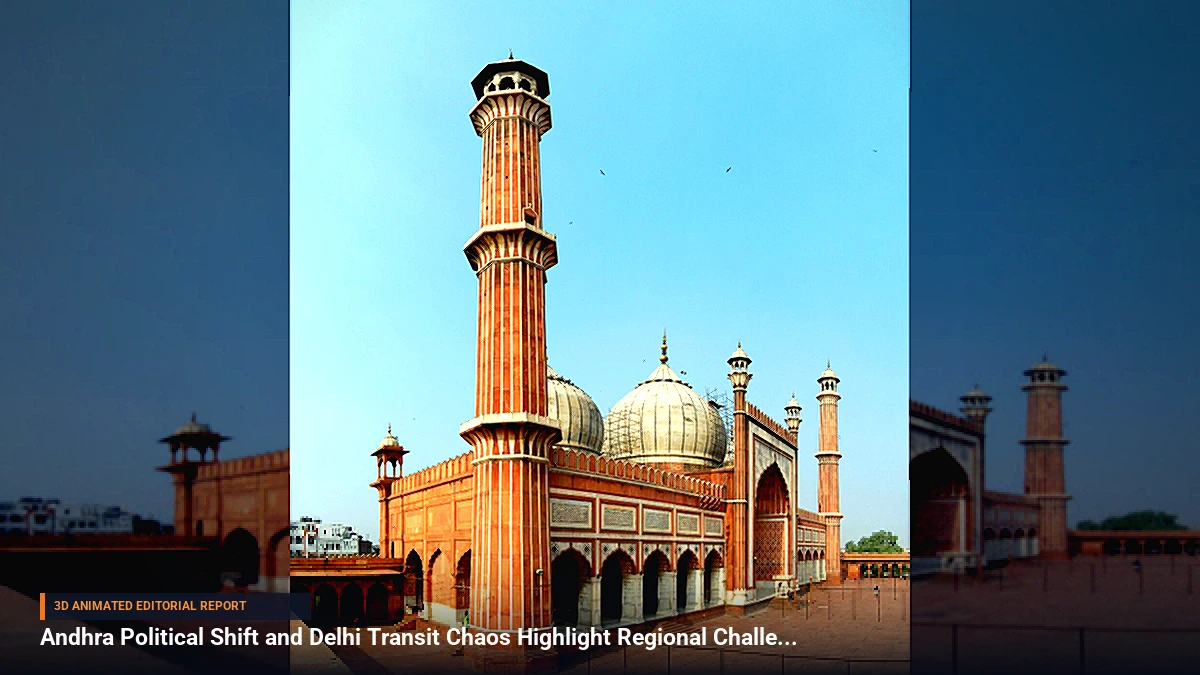
What Happened: The Core Developments
India's sociopolitical and urban landscape witnessed notable friction points as regional political dynamics shifted decisively in southern India while capital commuters dealt with heavy transit disruptions. In Andhra Pradesh, the Telugu Desam Party (TDP)-led alliance secured a commanding and sweeping victory across local administration structures. The counting processes for 92 Urban Local Bodies (ULBs) across the state registered a substantial overall voter turnout of 62.16%, underlining strong grassroots engagement despite opposition contestations and allegations.
Simultaneously, hundreds of commuters faced prolonged delays at the critical Delhi-Gurugram border crossing. The congestion was heavily exacerbated by the enforcement of strict anti-pollution mandates, including rigorous checks and restrictions targeting pre-BS-VI diesel and petrol vehicles entering the National Capital Region (NCR). While transport and traffic authorities maintained that targeted compliance checks were not the sole catalyst for the massive tailbacks, vehicular bottlenecks persisted through peak hours.
Background & Key Context
The dual occurrences reflect deep-seated structural transitions in both regional governance and metropolitan environmental management. In Andhra Pradesh, the local body elections served as an essential barometer of public sentiment following major legislative shifts, with the YSRCP experiencing significant electoral setbacks and raising questions regarding future opposition strategies. Local polls in the state are traditionally hard-fought, serving as vital indicators of rural and semi-urban voter sentiment.
In the National Capital Region, the traffic snarls stem from emergency anti-pollution measures enacted during periods of severe air quality deterioration. Delhi and its surrounding satellite cities like Gurugram routinely grapple with toxic smog during the cooler months, prompting judicial bodies and administrative commissions to enforce stringent bans on older, highly polluting commercial and private transport vehicles. These measures, while critical for public health, continuously strain interstate transit corridors where daily economic activity heavily relies on seamless vehicular movement.
Key Takeaways
- Decisive Mandate: The TDP-led alliance achieved a sweeping electoral victory across 92 Urban Local Bodies in Andhra Pradesh.
- Strong Voter Participation: Electoral engagement remained robust, with total voter turnout for the ULB counting phases hitting 62.16%.
- Capital Transit Disruption: The Delhi-Gurugram border experienced persistent traffic bottlenecks driven by anti-pollution checks and pre-BS-VI vehicle restrictions.
- Environmental Enforcement: NCR authorities continue to balance strict air quality protocols with the logistical realities of interstate commuting.
- Political Fallout: Major setbacks for regional opposition parties in Andhra Pradesh signal shifting power dynamics at municipal and district levels.
Impact, Analysis & Global/National Reactions
The developments in Andhra Pradesh and the NCR highlight the delicate balance between political transitions and metropolitan management in contemporary India. Political analysts note that the TDP-led alliance's sweeping success validates its localized campaign strategies and demonstrates public appetite for administrative shifts. Meanwhile, local opposition figures have voiced concerns over procedural fairness, keeping political tensions elevated.
From an urban planning perspective, the persistent gridlocks at the Delhi-Gurugram border expose the infrastructural vulnerabilities associated with sudden environmental crackdowns. Transport officials maintain that while checking compliance for pre-BS-VI vehicles is legally mandatory under clean-air directives, better digital integration and lane management are urgently required to prevent economic friction. Urban mobility experts have repeatedly emphasized that regional coordination between Haryana and Delhi administrative bodies remains essential to mitigate daily commuter hardship during environmental crisis responses.
What's Next: Looking Ahead
As the dust settles on the Andhra Pradesh civic polls, the newly empowered local leadership will face immediate administrative challenges regarding municipal development, infrastructure funding, and public service delivery across the victorious urban centers. Stakeholders will closely monitor how local governance transitions are executed on the ground.
In the National Capital Region, the enforcement of anti-pollution transport policies will remain dynamic depending on daily air quality index (AQI) fluctuations. Commuters and transport operators must prepare for continued scrutiny of vehicle emission standards, while municipal authorities explore technological solutions to streamline border checks and reduce peak-hour congestion.


Be the first to comment
Start a useful conversation around this story.