
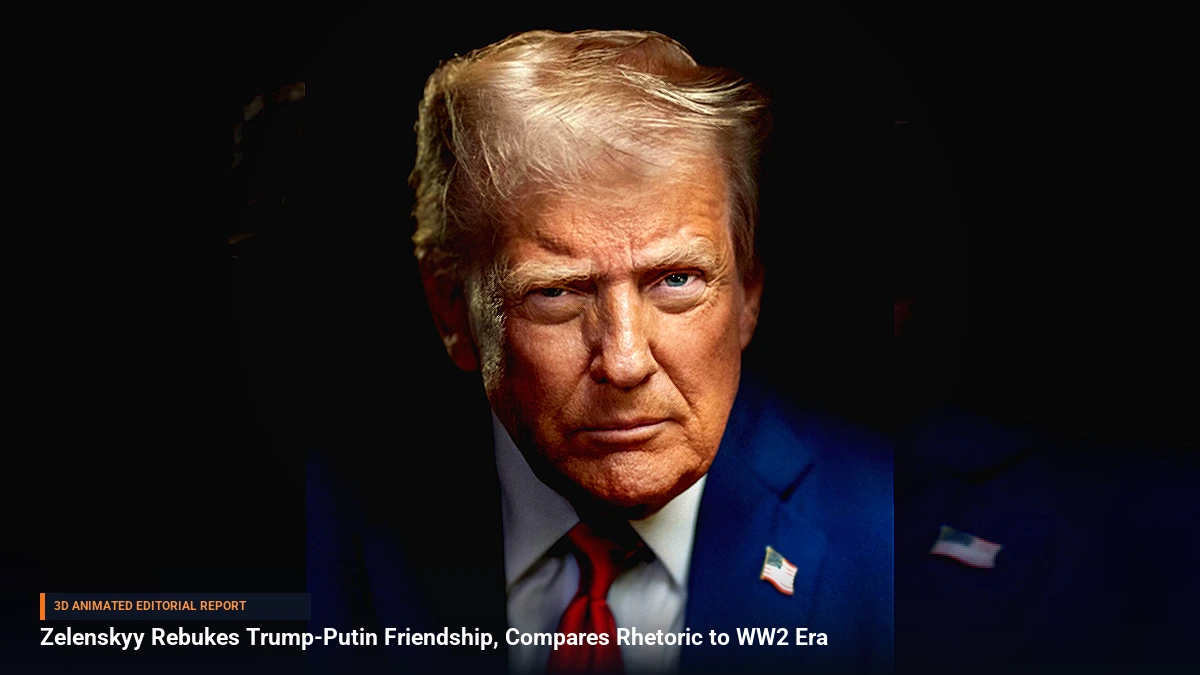
What Happened: The Core Developments
Tensions between Kyiv and Washington have reached a new high following a candid interview given by Ukrainian President Volodymyr Zelenskyy to the BBC. During the broadcast, Zelenskyy openly criticized Donald Trump's amicable approach toward Russian President Vladimir Putin, labeling the rhetoric as "strange" and deeply troubling for European security.
In a striking historical comparison, Zelenskyy asserted that describing Putin as a friend is equivalent to declaring friendship with Adolf Hitler during World War II. The remarks underscore Kyiv's mounting anxiety over shifting geopolitical priorities in Washington, especially as ongoing military clashes continue to ravage Ukraine.
Simultaneously, U.S. leadership has maintained that diplomatic channels remain active. Donald Trump recently stated that he directly urged Vladimir Putin to pull back military aggression in Europe amid a fresh wave of attacks, though Ukrainian officials argue that these appeals fall far short of the decisive pressure required to alter Moscow's calculus.
Background & Key Context
The war in Ukraine has entered a critical phase, with both sides bracing for severe escalations. Ever since the conflict's full-scale eruption, Kyiv's defense has heavily relied on Western military aid, intelligence sharing, and diplomatic solidarity. However, shifts in political leadership and foreign policy agendas in Western capitals have repeatedly introduced uncertainty into Ukraine's strategic planning.
President Zelenskyy's latest remarks highlight a persistent fear in Kyiv: that international attention is fragmenting. With mounting crises in the Middle East demanding substantial diplomatic bandwidth and military resources from Western allies, Ukrainian leadership fears that support for their frontlines may be deprioritized.
Key Takeaways
- Sharp Historical Analogy: Volodymyr Zelenskyy compared Donald Trump's friendly posture toward Vladimir Putin to befriending Hitler during World War II.
- Diplomatic Frustration: The Ukrainian president criticized Washington for being overly focused on Middle Eastern affairs rather than intensifying pressure on Moscow.
- Calls for Action: Kyiv continues to urge the United States and its Western allies to adopt a far tougher stance in peace negotiations to end the war.
- U.S. Counter-Stance: Donald Trump maintained that he has directly urged Vladimir Putin to dial back military aggression in Europe.
- Escalating Rhetoric: The exchange marks a significant public strain in relations between Ukrainian leadership and influential American political figures.
Impact, Analysis & Global/National Reactions
The public rebuke reflects deeper anxieties among Eastern European stakeholders regarding the reliability and steadfastness of Western security guarantees. Analysts note that as political landscapes evolve, leaders in Kyiv feel compelled to voice their apprehensions openly, even at the risk of alienating key international partners.
While Washington maintains that its diplomatic engagements are designed to de-escalate hostilities, critics within Ukraine argue that softer diplomatic tones embolden the Kremlin. International relations experts suggest that balancing domestic political messaging with the complex demands of a multi-front global strategy will remain a formidable challenge for the U.S. administration.
What's Next: Looking Ahead
As diplomatic friction persists, all eyes will be on upcoming international summits and bilateral talks between Ukrainian and Western representatives. Policymakers in Washington and European capitals must navigate these compounding tensions carefully to maintain a unified front on European security and sustain critical aid pipelines as the conflict enters its next unpredictable chapter.




Be the first to comment
Start a useful conversation around this story.