
What Happened: The Core Developments
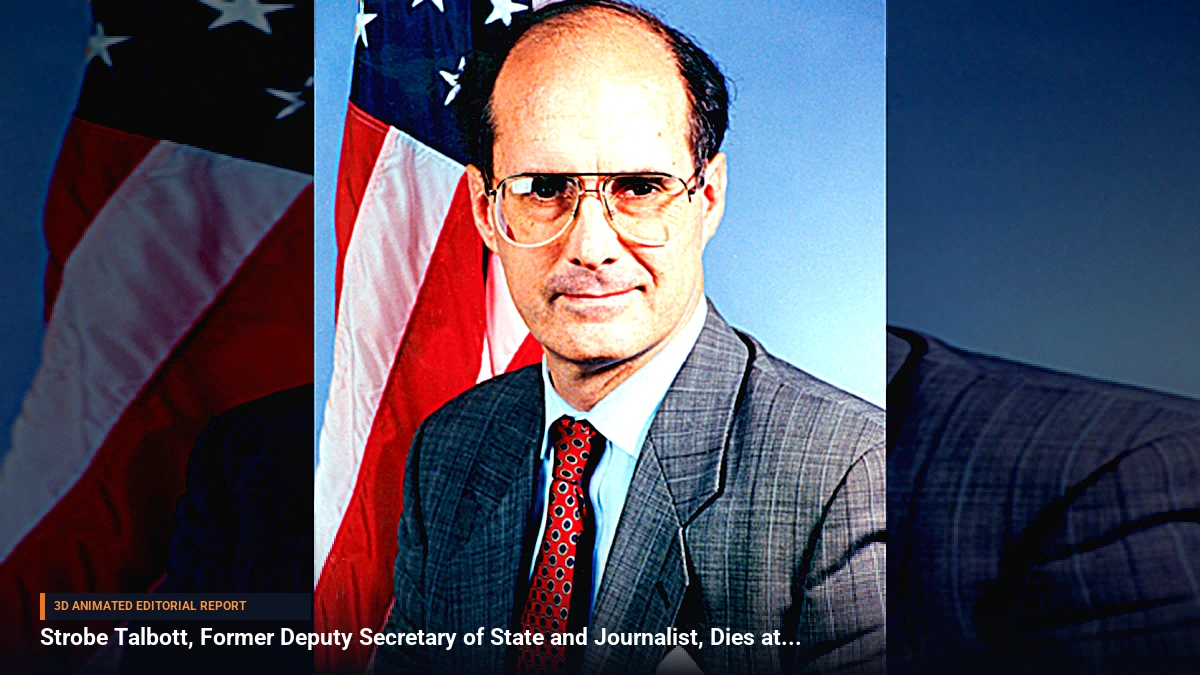
Strobe Talbott, a towering figure whose career bridged elite journalism and high-stakes international diplomacy, has died at the age of 80. According to confirmation from his son, Devin Talbott, he passed away peacefully following a long illness at his residence in East Hampton, New York. Talbott leaves behind a complex, defining legacy spanning decades of profound geopolitical transformation, particularly concerning relations between the United States and the Soviet Union.
Background & Key Context
Before entering the upper echelons of American foreign policy, Talbott spent 21 years as a prominent reporter for Time magazine. During his tenure in journalism, he specialized in Soviet affairs and arms control, developing deep insight into superpower dynamics during the height of the Cold War. His translation and editing of Soviet leader Nikita Khrushchev's memoirs further cemented his reputation as an authoritative voice on Eastern Bloc politics.
In 1994, Talbott transitioned directly from journalism into government service, joining the Clinton administration as the Deputy Secretary of State under Secretary Warren Christopher and later Madeleine Albright. In this role, he was a chief architect of post-Cold War U.S. foreign policy, focusing heavily on NATO expansion, Russian integration, and the management of nuclear arsenals across former Soviet states. Following his government tenure, Talbott served as the president of the Brookings Institution from 2002 to 2017, guiding the influential Washington think tank through a critical era of public policy research and debate.
Key Takeaways
- Lifelong Diplomatic Legacy: Strobe Talbott passed away at the age of 80 in East Hampton, New York, following a long illness.
- Dual Career Path: He spent 21 years reporting for Time magazine before stepping into official government diplomacy.
- Clinton Administration Role: He served as Deputy Secretary of State from 1994 to 2001, playing a pivotal role in post-Cold War European security and arms control.
- Think Tank Leadership: Talbott directed the Brookings Institution as president for 15 years, shaping global policy discussions.
- Family Confirmation: His death was officially confirmed by his son, Devin Talbott.
Impact, Analysis & Global/National Reactions
Talbott's career serves as a quintessential example of the intersection between media analysis and statecraft. Observers note that his unique background allowed him to navigate complex diplomatic channels with a distinct narrative clarity. While his advocacy for NATO expansion and closer Western integration with post-Soviet Russia drew both praise and scrutiny over the ensuing decades, his contributions undeniably shaped the security architecture of modern Europe.
Colleagues and foreign policy experts have highlighted his intellectual rigor and dedication to international peace. Throughout his time at the State Department and the Brookings Institution, Talbott championed multilateral cooperation and strategic dialogue, leaving an indelible mark on how Washington approaches global security challenges.
What's Next: Looking Ahead
As the international community reflects on Talbott's passing, tributes and formal recognitions from academic institutions, diplomatic circles, and former colleagues are expected to follow. His archives and published works will undoubtedly continue to serve as vital reference points for historians and students of international relations seeking to understand the turbulent transition of the post-Cold War geopolitical landscape.




Be the first to comment
Start a useful conversation around this story.