
What Happened: The Core Developments
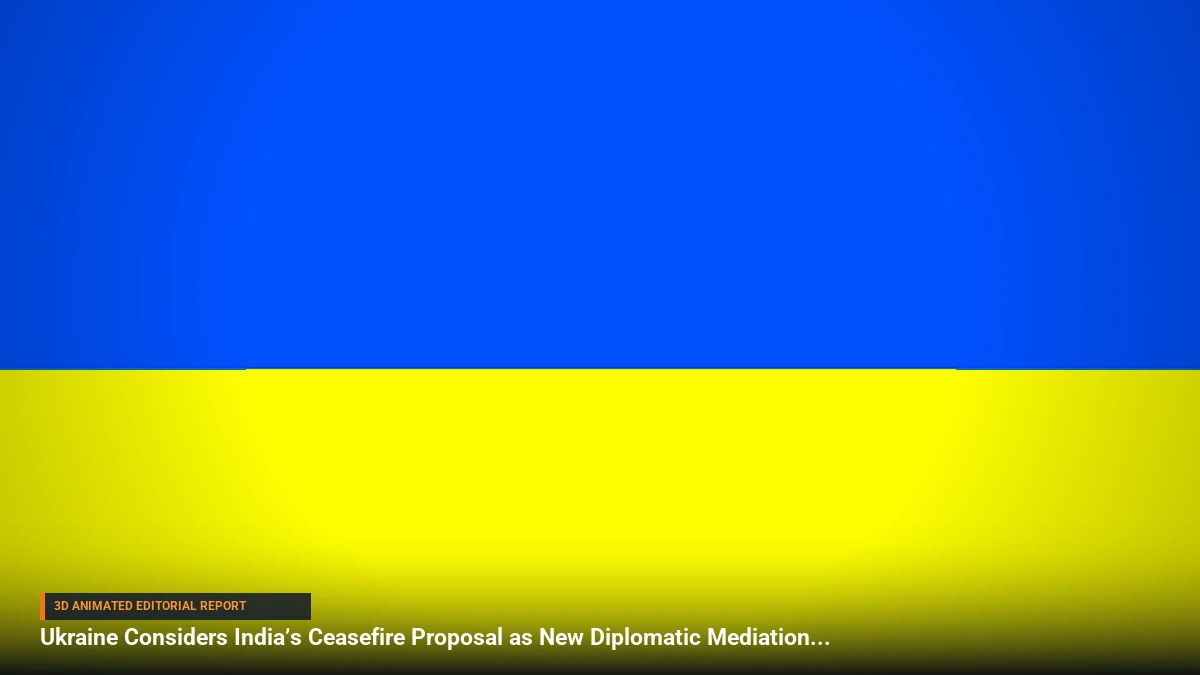
Ukraine has formally signaled its willingness to evaluate India’s proposed roadmap for ending the protracted military conflict with Russia. Speaking on recent diplomatic breakthroughs, Ukrainian Foreign Minister Andrii Sybiha acknowledged that New Delhi's diplomatic initiatives are under serious review in Kyiv.
Furthermore, Ukrainian leadership has characterized the Indian peace proposal as the "most comprehensive" plan brought forward by an external nation thus far. Beyond broad peace frameworks, diplomatic sources confirm that India is actively engaged in mediating specific sectoral agreements, notably an energy truce in the Black Sea designed to protect vital maritime infrastructure and secure regional supply chains.
Background & Key Context
Historically, New Delhi has maintained a delicate balancing act in the Russia-Ukraine conflict, abstaining from harsh Western-led condemnations of Moscow while consistently calling for dialogue, diplomacy, and the preservation of territorial sovereignty. India has leveraged its long-standing strategic and economic ties with both nations to maintain open lines of communication.
As the war entered prolonged phases of attrition with devastating impacts on global energy and food security, middle powers like India have stepped into diplomatic vacuums. New Delhi's quiet diplomacy has gradually evolved into formal mediation efforts, positioning the South Asian giant as a credible bridge-builder between the Global South and Western-backed capitals.
Key Takeaways
- Ukraine's Openness: Ukrainian Foreign Minister Andrii Sybiha confirmed that Kyiv is ready to consider India's ceasefire initiative.
- Comprehensive Blueprint: Ukrainian authorities have labeled the Indian peace blueprint as the most comprehensive proposal presented to date.
- Black Sea Energy Truce: India is playing a direct, active mediating role in negotiating and sustaining an energy truce within the strategic Black Sea corridor.
- Strategic Shift: The development marks a significant elevation of India's role from a neutral observer to an active international mediator in the European conflict.
Impact, Analysis & Global/National Reactions
The endorsement of India's diplomatic strategy by Kyiv underscores a growing appetite among international stakeholders for alternative mediation channels outside traditional Western and Eurasian blocs. Analysts suggest that India’s unique geopolitical standing allows it to formulate proposals that address security concerns acceptable to various factions.
While official responses from Moscow are still pending as of this reporting, the inclusion of a Black Sea energy truce highlights the immediate pragmatic goals of New Delhi's mediation: mitigating global inflation, stabilizing energy markets, and protecting critical infrastructure from collateral damage. Global policy experts view this development as a testament to the rising diplomatic influence of non-aligned nations in resolving intractable modern conflicts.
What's Next: Looking Ahead
As diplomatic channels remain active, international observers will closely monitor bilateral talks between New Delhi and Kyiv, as well as any potential formal responses from Moscow regarding the ceasefire terms. The implementation mechanics of the Black Sea energy truce will serve as an immediate litmus test for India's growing mediation clout on the global stage.
Be the first to comment
Start a useful conversation around this story.