
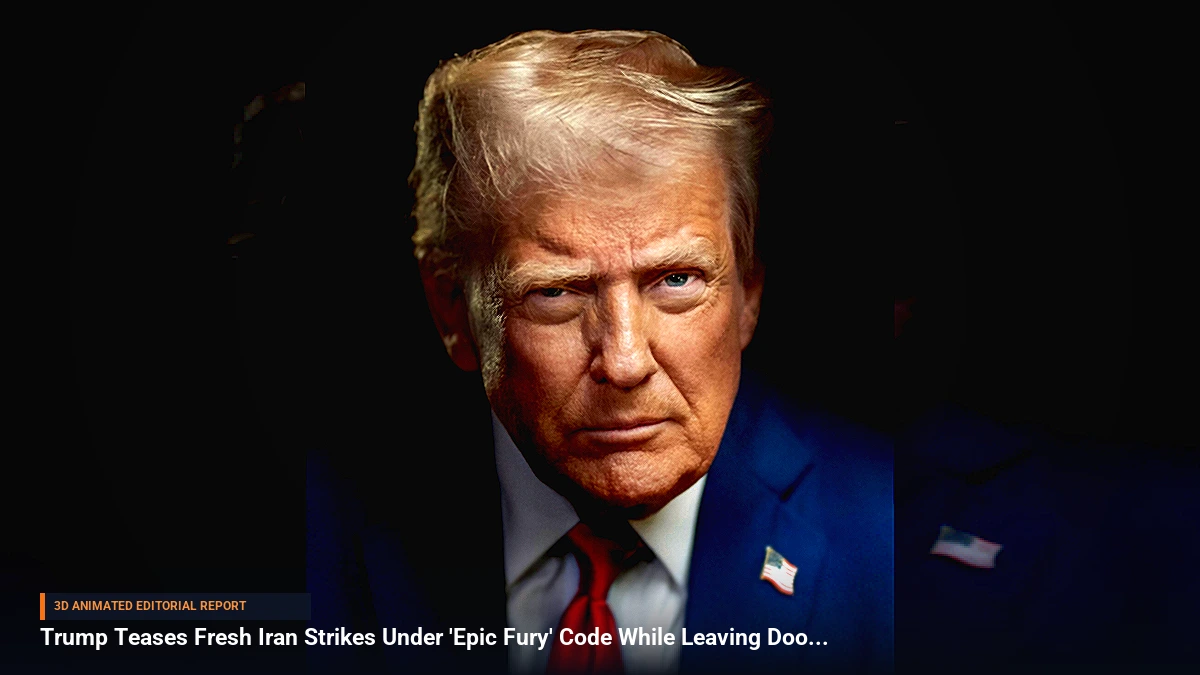
What Happened: The Core Developments
Tensions between Washington and Tehran have escalated sharply following remarks by US President Donald Trump regarding potential military action. Teasing a fresh round of operations referred to as 'Epic Fury', Trump stated that the United States could initiate strikes as early as Sunday, though he emphasized that the ball remains in Tehran's court regarding whether a diplomatic arrangement can be reached instead.
The warning follows heightened alert levels across the Middle East, precipitated by comments from US envoys cautioning of possible weekend escalations. In response to the intensifying pressure, Iranian authorities have stepped up psychological warfare. Notably, a prominent jail-themed billboard was erected in Tehran, depicting Trump behind bars following a controversial and deadly wedding strike, drawing substantial local crowds and international media attention.
Background & Key Context
The threat of renewed conflict arrives against a backdrop of prolonged friction and intermittent military engagements between the US and Iran. Previous operations and regional proxy conflicts have kept the Persian Gulf on edge, with both nations trading warnings over maritime security, critical infrastructure, and regional stability.
Tehran has increasingly utilized public art and state-backed messaging to counter Washington's economic and military pressure. The recent installation of the jail-mockery billboard—featuring a visual critique of American foreign policy and recent casualties—highlights the domestic posture adopted by Iranian leadership to rally public sentiment against US intervention.
Key Takeaways
- Military Threat: President Trump floated the possibility of launching a new wave of strikes, codenamed 'Epic Fury', potentially as early as a weekend deadline.
- Diplomatic Window: Despite the aggressive rhetoric, the US administration has left open the alternative of securing a negotiated deal with Tehran.
- Psychological Warfare: Iran responded to ongoing US pressures by unveiling a high-profile jail-themed billboard in central Tehran mocking the American president.
- Regional Jitters: Middle Eastern stakeholders remain on high alert as the threat of renewed kinetic operations risks wider regional fallout.
Impact, Analysis & Global/National Reactions
Global markets and international diplomats are closely monitoring the shifting rhetoric. Analysts suggest that Trump's dual-track approach—balancing severe military threats with the prospect of a last-minute settlement—is a hallmark negotiating tactic designed to force Iran back to the diplomatic table under maximum duress.
However, regional experts warn that the margin for error is shrinking. With Iranian officials cautioning Washington not to "play with fire" and local populations reacting strongly to both military moves and symbolic protests like the Tehran billboard, the potential for miscalculation grows. International bodies have called for immediate de-escalation to prevent a wider conflagration in an already volatile region.
What's Next: Looking Ahead
All eyes are on diplomatic channels and intelligence updates as the potential weekend window approaches. Stakeholders will be watching to see whether backchannel negotiations can yield a breakthrough framework or if the US military will operationalize the threatened 'Epic Fury' strikes. Regional defense postures and communications infrastructure in the Gulf will remain under intense scrutiny in the interim.

Be the first to comment
Start a useful conversation around this story.