
What Happened: The Core Developments
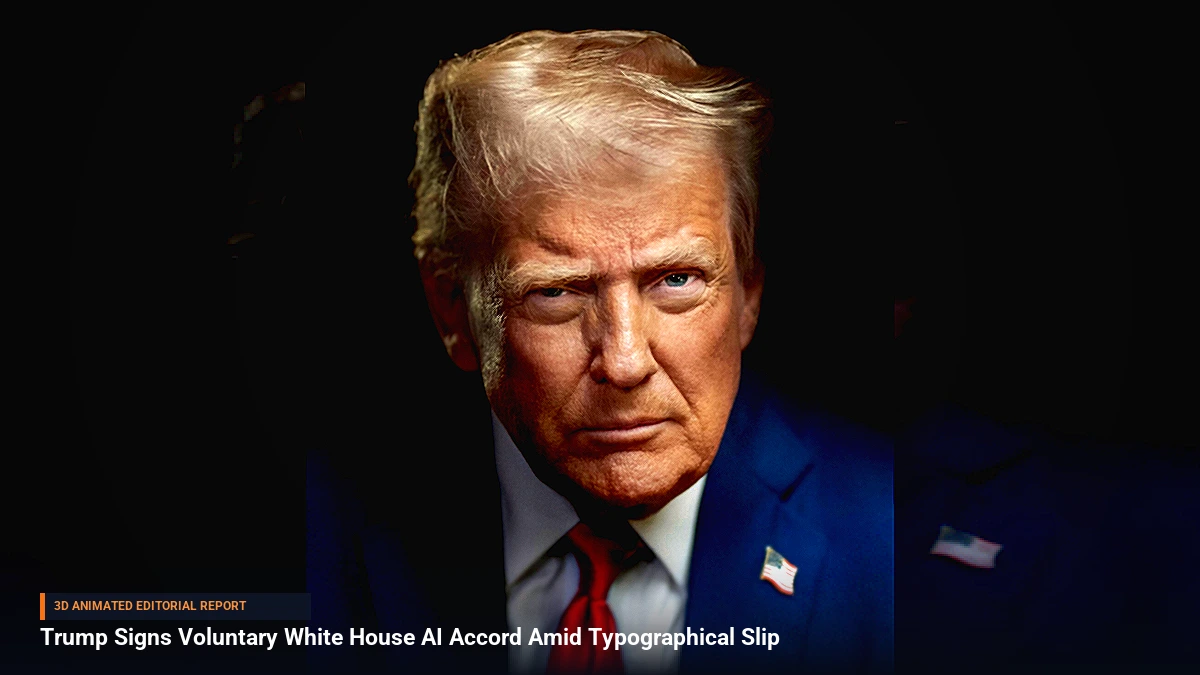
In a major gathering at the executive mansion, President Donald Trump joined six prominent technology executives to formalize a new voluntary pact concerning the future development of artificial intelligence. The agreement, colloquially rebranded by the administration as 'Super Intelligence', aims to foster cooperative tech development while avoiding heavy-handed legislative burdens.
However, the grand ceremony quickly shared the spotlight with an unexpected administrative gaffe. On the official, physical document signed by the executive branch, a stark spelling error was discovered directly beneath the presidential signature. Instead of reading the proper title, the text mistakenly printed the designation as “President of the Unites States.” The typographical oversight swiftly circulated across global media networks, momentarily overshadowing the core economic and technical goals of the newly minted framework.
Background & Key Context
The introduction of this voluntary accord highlights an ongoing philosophical debate within Washington regarding how best to manage the explosive growth of generative artificial intelligence and emerging machine learning frameworks. Rather than pursuing rigid federal mandates, strict legislative guardrails, or independent regulatory oversight boards, the current administration has favored voluntary self-policing mechanisms for industry leaders.
By engaging directly with foundational tech pioneers, the White House seeks to secure commitments on safety, developmental transparency, and data integrity without stifling market innovation or driving domestic research overseas. Yet, critics and technology policy analysts have long questioned the long-term effectiveness of voluntary agreements, arguing that without enforceable legal penalties, corporate self-regulation may fall short when commercial pressures escalate.
Key Takeaways
- High-Level Engagement: President Donald Trump and six key technology executives formalized a cooperative framework for artificial intelligence.
- Rebranding Strategy: The administration has officially adopted the term 'Super Intelligence' to describe advanced AI systems.
- Voluntary Framework: The accord relies entirely on corporate self-policing and voluntary compliance rather than binding federal regulation.
- Typographical Error: The physical document signed on Tuesday drew widespread attention due to a misspelling of the nation's title as “Unites States” under the presidential signature.
- Policy Debate: The event underscores a broader national conversation concerning the balance between fostering rapid technological innovation and establishing robust public safety protections.
Impact, Analysis & Global/National Reactions
While industry insiders welcomed the dialogue between the executive branch and Silicon Valley leaders, governance watchdogs raised concerns over the lack of hard enforcement metrics within the newly signed pact. The absence of binding commitments has led many critics to characterize the initiative as more symbolic than substantive.
Simultaneously, the administrative oversight regarding the spelling error on the official document sparked widespread discussion across social media and news outlets. Commentators noted that while typos on major legislative or executive documents are historically rare, they serve as a reminder of the frantic logistical pacing typical of high-stakes White House announcements.
What's Next: Looking Ahead
As the ink dries on the 'Super Intelligence' accord, attention shifts toward how participating technology firms will operationalize their voluntary pledges. Industry analysts will be monitoring whether these signatories implement verifiable safety protocols within their upcoming infrastructure rollouts.
Meanwhile, congressional lawmakers from both sides of the aisle continue to weigh whether federal statutory frameworks will be necessary to address deeper national security, privacy, and systemic risk concerns associated with advanced artificial intelligence. The administration's reliance on voluntary pacts will face intense scrutiny as these technologies continue to scale at an unprecedented rate.



Be the first to comment
Start a useful conversation around this story.