
What Happened: The Core Developments
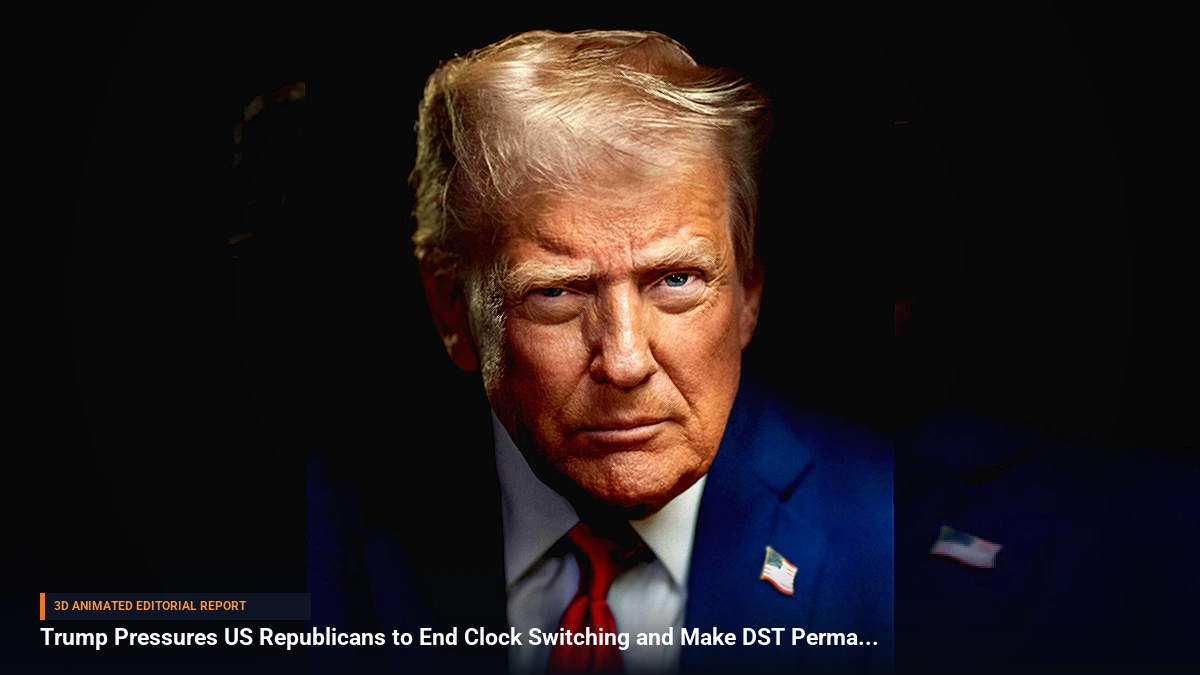
The debate over America's twice-yearly ritual of adjusting clocks has reached a new boiling point. US President Donald Trump has ramped up direct pressure on congressional Republicans, forcefully demanding that they pass legislation to make daylight saving time (DST) permanent and finally end the practice of clock switching. In an aggressive escalation of political strategy, Trump published a targeted lawmaker's cell phone number on public platforms, urging constituents to flood legislative offices with demands to move the long-stalled permanent DST bill across the finish line.
This high-stakes maneuver highlights the administration's frustration with legislative gridlock. By taking the fight directly to social media and bypassing traditional internal party communication channels, the executive branch has signaled that mundane administrative reforms—such as standardized timekeeping—are now central political battlegrounds. Lawmakers caught in the crosshairs find themselves managing an influx of public communications as the pressure mounts to break the long-standing inertia in Washington.
Background & Key Context
For decades, the ritual of springing forward and falling back has drawn widespread public annoyance, health concerns, and economic scrutiny. Critics of the current system point to disrupted sleep patterns, spikes in traffic accidents following the time changes, and minor economic productivity losses associated with the bi-annual adjustments. Despite broad bipartisan consensus among the public to abolish the practice, federal lawmakers have repeatedly stumbled over a crucial technical debate: should the United States adopt permanent daylight saving time or permanent standard time?
While proponents of permanent DST argue for brighter evenings and increased consumer spending during late-afternoon hours, sleep experts and chronobiologists overwhelmingly favor permanent standard time, arguing it aligns much better with human circadian biology. This underlying disagreement has historically crippled legislative momentum, causing previous iterations of time-fixing bills to languish in committee rooms despite occasional bipartisan flashes of agreement in the Senate.
Key Takeaways
- Executive Ultimatum: President Trump has escalated demands for Republicans to pass a permanent daylight saving time bill.
- Unconventional Tactic: The administration published a lawmaker's direct cell phone number to spur constituent lobbying.
- Legislative Gridlock: The push exposes deep-seated delays and disagreements within Congress regarding how to handle seasonal time changes.
- Public Frustration: The administrative ritual of clock switching remains widely unpopular among American voters and various business sectors.
- Policy Dilemma: Lawmakers remain divided on whether permanent DST or permanent standard time is the optimal policy choice.
Impact, Analysis & Global/National Reactions
Political analysts view Trump's aggressive push as a calculated risk designed to mobilize grassroots energy around an issue that affects every single American household. By turning a sleepy legislative debate into a test of party loyalty and responsiveness, the executive branch is forcing congressional leadership to re-evaluate legislative priorities. However, institutional traditionalists have privately expressed concern over the tactics used, noting that publishing personal contact details of legislators sets a volatile precedent for executive-legislative relations.
Business communities remain cautiously optimistic yet divided. Retail and tourism associations have traditionally favored permanent daylight saving time, arguing that extra evening daylight drives consumer foot traffic and boosts evening sales. Conversely, transportation networks and aviation industries often warn that shifting the morning sunrise too late into the morning hours during winter months could complicate scheduling and heighten safety risks.
What's Next: Looking Ahead
All eyes now turn to Capitol Hill to see how Republican leadership and targeted lawmakers respond to the intense public pressure. Whether this high-pressure strategy forces a breakthrough vote remains uncertain, as the fundamental split between advocates for permanent DST and those preferring permanent standard time has not magically vanished. As the next legislative window approaches, lawmakers will have to decide whether to brave the complex debate or risk further public backlash for maintaining the status quo of eternal clock switching.






Be the first to comment
Start a useful conversation around this story.