
What Happened: The Core Developments
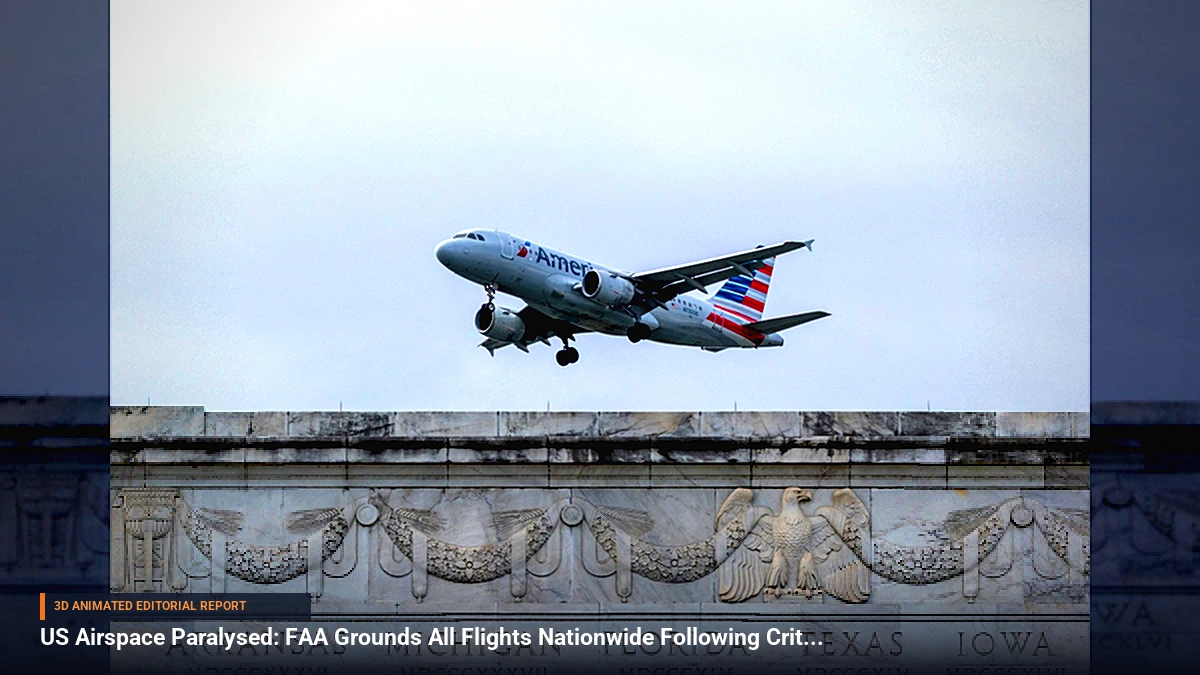
In an extraordinary move that immediately rippled across global aviation networks, the US Federal Aviation Administration (FAA) issued a nationwide ground stop, halting all departing flights across the United States. The drastic emergency action was triggered by a sudden and severe communication breakdown within critical air traffic control infrastructure.
Airports across the country experienced immediate logistical gridlock as departures were frozen to ensure passenger and crew safety. Flight tracking services and aviation authorities reported that the sudden stoppage caught airlines and travelers off guard, resulting in widespread tarmac delays and terminal congestion. US Transportation Secretary Sean Duffy stepped forward to address the unfolding crisis, confirming that the federal aviation agency had launched an immediate, high-priority investigation to isolate the root cause of the outage and restore normal operations safely.
Background & Key Context
Modern air traffic management relies on a complex, highly interconnected web of digital and voice communication networks designed to handle thousands of aircraft simultaneously. While localized technical glitches or temporary radar outages occasionally occur, a nationwide ground stop represents an extraordinarily rare intervention.
Historically, total airspace ground stops of this magnitude are reserved for catastrophic national security events—such as the airspace closures following the September 11 attacks—or systemic technological failures that threaten the fundamental safety of flight navigation. The latest incident highlights the enduring fragility of legacy infrastructure operating within modern high-density transportation networks, raising immediate questions regarding system redundancy and cybersecurity preparedness.
Key Takeaways
- Nationwide Ground Stop: The FAA ordered a complete halt on all departing flights across the United States due to an unexpected communication issue.
- Official Response: US Transportation Secretary Sean Duffy confirmed that federal authorities are actively investigating the technical failure.
- Safety First: Officials categorized the decision as an extraordinary measure necessitated by overriding safety concerns in air traffic management.
- Logistical Fallout: The sudden halt caused massive cascading delays, stranding passengers and disrupting flight schedules domestically and internationally.
Impact, Analysis & Global/National Reactions
The sudden grounding of the world’s busiest airspace sent immediate shockwaves through the global travel and economic sectors. Aviation analysts noted that even a brief interruption to US departures creates a massive backlog that can take days to fully untangle, affecting connection hubs worldwide.
Stakeholders ranging from major commercial carriers to international regulatory bodies expressed deep concern over the vulnerability of critical transport infrastructure. While federal officials emphasized that safety remains the absolute priority, the incident underscores the intense economic toll exacted by sudden technological failures. Industry experts point out that as air traffic volume continues to scale upward year-over-year, the pressure on ground-control networks to maintain infallible uptime has never been greater.
What's Next: Looking Ahead
As the FAA works around the clock to diagnose the communication breakdown and safely resume normal traffic flows, intense scrutiny is expected from lawmakers and oversight committees. Congressional briefings are anticipated once federal investigators determine whether the outage stemmed from hardware failure, software corruption, or external interference.
Airlines will face the monumental task of rescheduling thousands of delayed passengers and repositioning aircraft crews stranded out of place. Meanwhile, long-term policy discussions are certain to center on expediting planned technological modernizations across America's air traffic control system to prevent any recurrence of this unprecedented airspace paralysis.





Be the first to comment
Start a useful conversation around this story.