
What Happened: The Core Developments
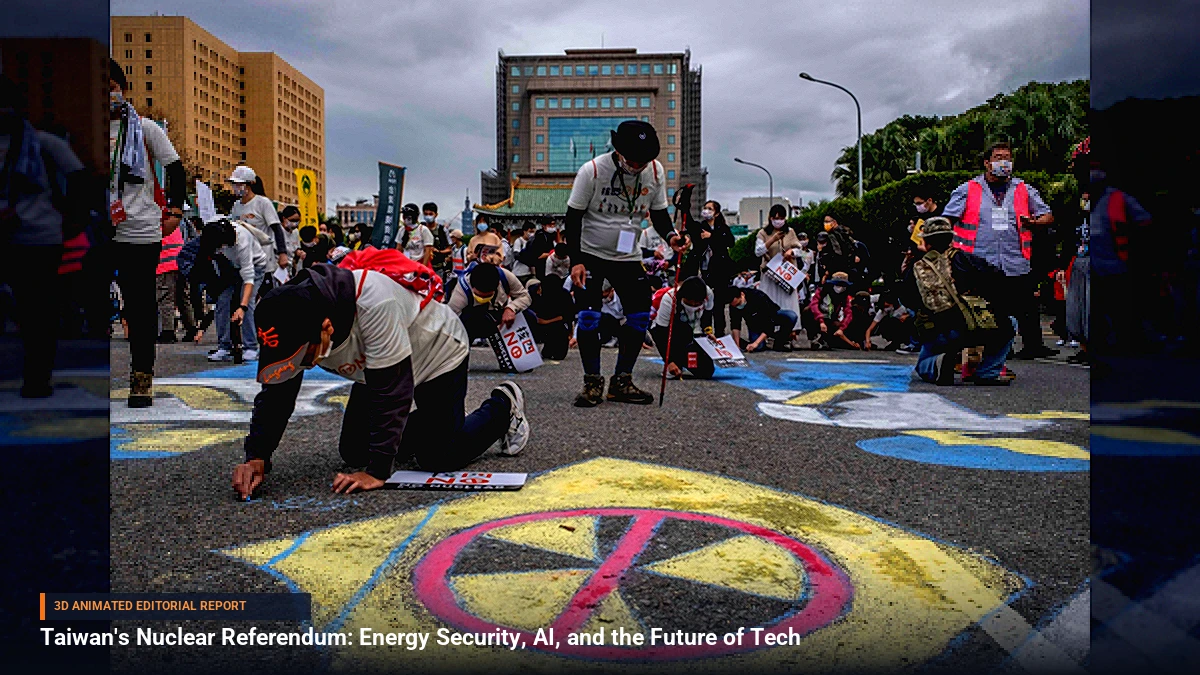
Taiwan is holding a high-stakes national referendum to determine whether the democratic island will formally scrap its mandated "nuclear-free homeland" policy. Voters are being asked to weigh in on a fundamental shift in energy direction, moving away from a strict phaseout of atomic energy and toward a potential revival of nuclear power generation.
The debate comes at a critical juncture for Taiwan's economy. While environmental and safety concerns have historically dominated local discussions about atomic energy, the rapid expansion of advanced technology industries has entirely transformed the island's energy calculus. With factories churning out cutting-edge microchips and artificial intelligence infrastructure expanding exponentially, the demand for stable, continuous electricity has reached unprecedented levels.
Background & Key Context
For years, Taiwan's energy roadmap was anchored by a progressive legislative goal to phase out nuclear power entirely by a designated target. This "nuclear-free homeland" framework was driven by post-Fukushima safety concerns, geopolitical anxieties, and commitments to modern environmental standards. However, the closure of older nuclear facilities placed an immediate burden on alternative sources, primarily liquefied natural gas (LNG) and coal, increasing carbon emissions and heightening vulnerabilities related to imported fuel dependencies.
Energy security is an existential issue for Taiwan, an island with an isolated power grid that imports the vast majority of its fossil fuels. As global manufacturing demands soared—particularly with Taiwan Semiconductor Manufacturing Company (TSMC) and other tech giants leading the global supply chain for AI hardware—industrial power consumption spiked dramatically, forcing policymakers to rethink whether a zero-nuclear strategy remains viable.
Key Takeaways
- Policy Shift: Voters are deciding whether to overturn the legally mandated "nuclear-free homeland" phaseout policy.
- The AI Driver: The exponential rise of artificial intelligence and semiconductor manufacturing has created an urgent, massive demand for reliable baseline power.
- Grid Vulnerability: Taiwan remains heavily dependent on imported natural gas, making energy diversification an issue of national security.
- Industrial Stakes: Tech leaders and global stakeholders are closely watching the vote, as stable electricity is vital for maintaining the global semiconductor supply chain.
Impact, Analysis & Global/National Reactions
Analysts note that the intersection of energy policy and the artificial intelligence revolution makes this vote far more consequential than a typical domestic referendum. Modern data centers and advanced chip fabrication facilities require uninterrupted, high-capacity electricity supplies that intermittent renewables alone struggle to guarantee without robust storage or baseline support.
Industry observers emphasize that tech heavyheads cannot afford power grid instability. A failure to secure reliable, low-carbon baseline energy could constrain production capacities for the very silicon chips powering the global AI boom. Consequently, international tech markets and multinational corporations have monitored the referendum closely, viewing the potential return to nuclear energy as a necessary pragmatic step to sustain high-tech economic growth while managing carbon reduction targets.
What's Next: Looking Ahead
Following the conclusion of the referendum, the focus will shift immediately to legislative implementation and regulatory timelines. If voters successfully dismantle the nuclear-free mandate, policymakers and state-run utility operators will face complex logistical challenges.
Recommissioning older plants or extending operational lifespans requires rigorous safety reviews, legislative amendments, and public trust-building. At the same time, the administration must balance this potential nuclear revival with ongoing investments in renewable energy infrastructure, ensuring that Taiwan’s power grid remains resilient, secure, and capable of fueling the next generation of technological innovation.




Be the first to comment
Start a useful conversation around this story.